Illustration: Xia Qing/GT
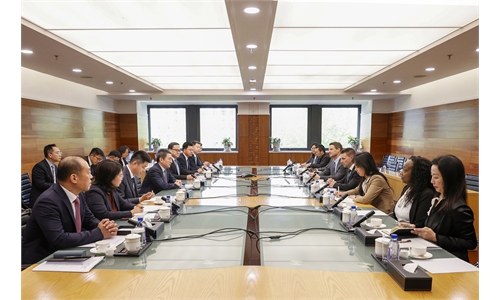
Ahead of the 139th Canton Fair, which opened in Guangzhou, South China's Guangdong Province, on Wednesday, customs authorities held consultations with an enterprise from Egypt, regarding the details of new tax exemptions for exhibit goods. The Egyptian firm, which plans to showcase household textiles such as carpets, sought confirmation on whether its products would qualify for the duty-free policy and if there were any restrictions on the exemption.According to a notice issued by the Ministry of Finance and other authorities, imported exhibits sold during the Canton Fair, within the specified quota, will continue to be exempt from import duties and some other relevant taxes. This exemption aims to facilitate smoother international participation by promoting favorable conditions for imports during the fair.
According to media reports, the Canton Fair introduced an import section for the first time at its 101st edition in 2007, transforming from a one-way export platform into a two-way trade venue. As China News Network reported, the inaugural import exhibition attracted 314 companies from 36 countries and regions. Participants widely acknowledged the event's value, with many highlighting notable gains in their understanding of the Chinese market.
Beyond the Canton Fair, an increasing number of platforms have been established to broaden the access of imported goods to the Chinese market. In 2018, the inaugural China International Import Expo was successfully held in Shanghai, becoming the world's first national-level trade event exclusively focused on imports.
Behind this series of exhibitions lies the continued growth of China's import market. As the country's consumer base expands and its preferences evolve, demand for foreign goods has steadily increased, offering international businesses greater opportunities to enter one of the world's largest and most dynamic markets.
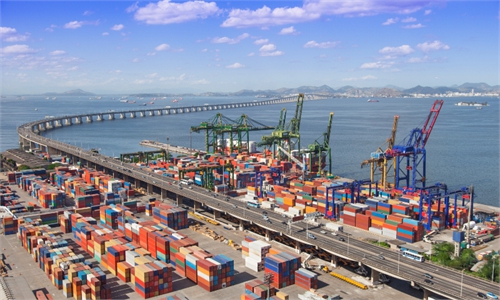
Data from the General Administration of Customs (GAC) shows that China's goods trade grew by 15 percent year-on-year in the first quarter of this year. Exports increased by 11.9 percent, while imports saw a more robust rise of 19.6 percent. Amid rising global trade uncertainties and weaker external demand, the nearly 20 percent growth in imports stands out as a solid performance.
Rather than simply expanding in volume, China's imports are increasingly driven by consumption upgrading and demand for higher-quality goods, reflecting a transition toward a more demand-led growth model. Data from the GAC shows that in the first quarter, imports of consumer goods, mechanical and electrical products, and high-tech items all maintained relatively fast growth, with the structure of imports continuing to improve.
Several trends are driving this growth, two of which are particularly noteworthy. First is the continued expansion of China's consumption potential, largely fueled by steady growth in household incomes. For example, in East China's Zhejiang Province, per capita disposable incomes exceeded 70,000 yuan ($10,262) in 2025, supporting consumption upgrading and expanding demand for higher-quality products. In the first two months of 2026, the province's food imports rose by 19.8 percent.
At the same time, consumer trends are evolving, with new patterns such as emotional spending gaining traction. These developments point to a broader shift in the Chinese market, as higher income levels not only encourage demand for better-quality products but also influence the way consumers approach purchasing, with an increasing focus on personal satisfaction and experiences.
Second, it is particularly noteworthy that this consumption upgrade and evolving trend are occurring alongside China's continuous efforts to deepen its high-level openness, providing international businesses with opportunities to engage and share in the benefits of China's expanding consumer market. Through measures such as trade facilitation and trade fair platforms, China is making it easier for developing countries and small and medium-sized enterprises to access its market, contributing to a more balanced global trade landscape.
For example, starting on May 1, China will implement zero-tariff treatment on imports from 53 African countries with which it has diplomatic relations, allowing more high-quality products from these economies to benefit from the growing opportunities in the Chinese market.
The interplay between consumption upgrading and high-level openness is clearly reflected in the Canton Fair and other trade events, offering companies valuable insights into China's evolving market. For international businesses, this presents a wealth of opportunities. The first step in capitalizing on these opportunities is gaining a deep understanding of China - its consumer trends, market dynamics, and continued openness.
The author is a reporter with the Global Times. bizopinion@globaltimes.com.cn
RELATED ARTICLES