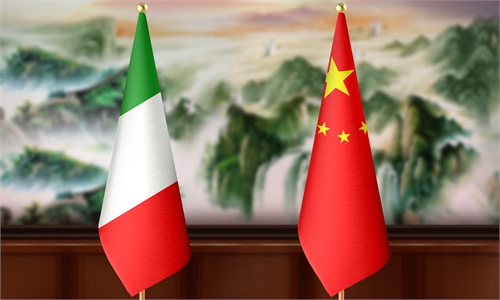
China’s urban regeneration initiative presents new opportunities for Italian companies
Design meets demand

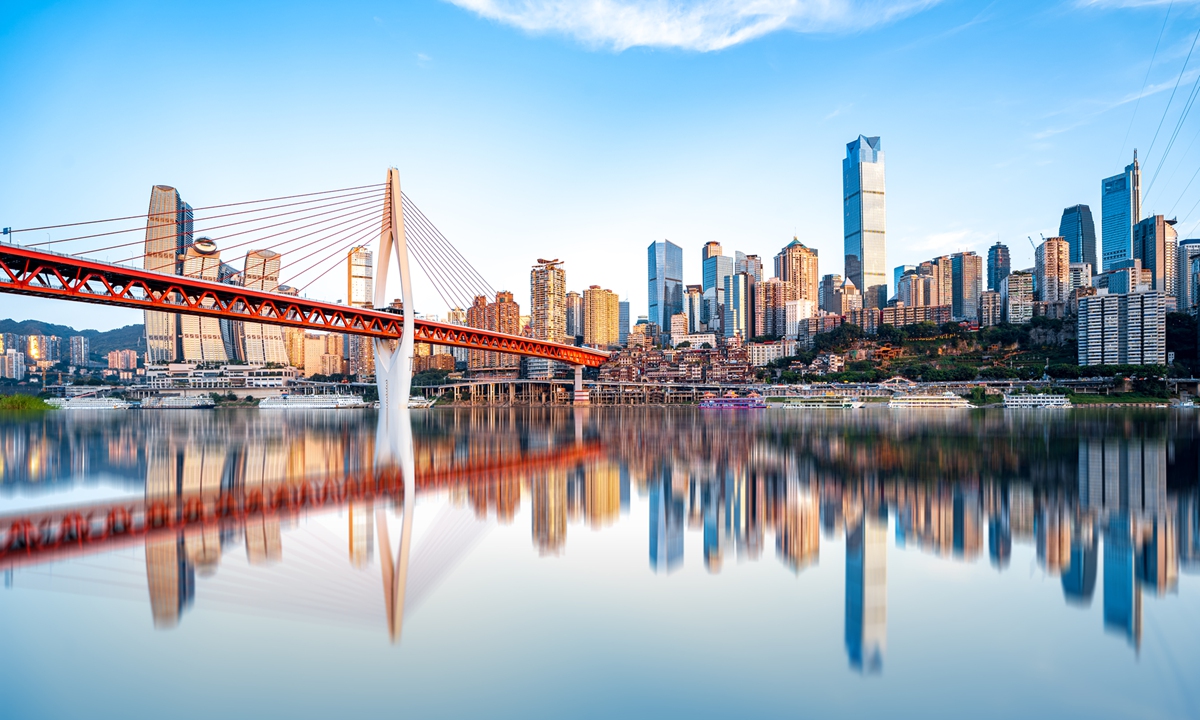
A view of Southwest China's Chongqing Municipality Photo: VCG
While China's real estate sector undergoes a profound structural reshaping, characterized by a stark market divergence, a distinct and promising dynamic is emerging within its urban regeneration drive, offering fresh potential for international players, including Italian companies.The luxury residential segment continues to show resilience. According to Chinese financial news outlet CLS, a development in Shenzhen achieved over 10 billion yuan ($1.46 billion) in sales within just two hours of its launch in December 2025, setting a record, Caixin Global reported.
This is not an isolated case. From January to November 2025, among the new home products with a total price of more than 10 million yuan, the number of new home transactions in the 10-20 million yuan price range in Beijing and Shanghai increased by 38 percent and 22 percent, respectively, year-on-year, according to China Index Academy.
This micro-segment vitality allows observers to perceive a notable shift: as reported by Xinhua News Agency, despite the overall nationwide real estate sales growth yet to turn positive, several hotspot cities have taken the lead in showing signs of stabilization, thanks to their solid fundamentals, supported by government's policy support.
Industry insiders have begun to reflect on the sector's evolving role. Over the past two decades, real estate has served as a pillar of China's thriving economy and a major driver of its economic growth.
Now, a series of recent government initiatives are poised to reshape this crucial sector. Among them, Document No 226 stands out as particularly pivotal. Issued jointly by the Ministry of Natural Resources and the Ministry of Housing and Urban-Rural Development in December 2025, the policy mandates the ecological renovation and redevelopment of existing urban areas. True to form in China's governance model, these strategic objectives are supported by substantial financial commitment.
Industry projections estimate the total market size for urban regeneration during the 15th Five-Year Plan period (2026-30) will reach 20 trillion yuan.
"The Document No. 226 represents, in this context, a significant institutional evolution. Urban regeneration in China is gradually moving from a phase of strategic orientation to one of procedural consolidation," said Massimo Bagnasco, an architect, partner at Progetto CMR in Beijing, and CEO of China Europe Carbon Neutral Technology in Chengdu, who has been professionally active in China for 20 years.
Essentially, what is happening is that the framework of urban regeneration in China is entering a more predictable phase, compatible with investments and integrated with sustainability objectives, where the alignment between urban governance, capital structuring, and environmental, social and governance (ESG) objectives generates new market opportunities.
"Italian companies, including many small and medium enterprises (SMEs), with specialized skills in sustainable materials, smart systems, adaptive reuse design and ESG certification could find greater compatibility with China's institutionalized urban regeneration model," Bagnasco said.
"There are therefore possible spaces in services related to environmental certification and ESG consulting, particularly for companies with experience in building environmental certifications, life cycle assessments, carbon accounting and ESG strategic consulting," the architect noted.
On the same wave-length were participants at the Italian Design Day 2026 held on March 10 in Southwest China's Chongqing where Chinese and Italian experts discussed urban regeneration, design innovation and sustainable development.
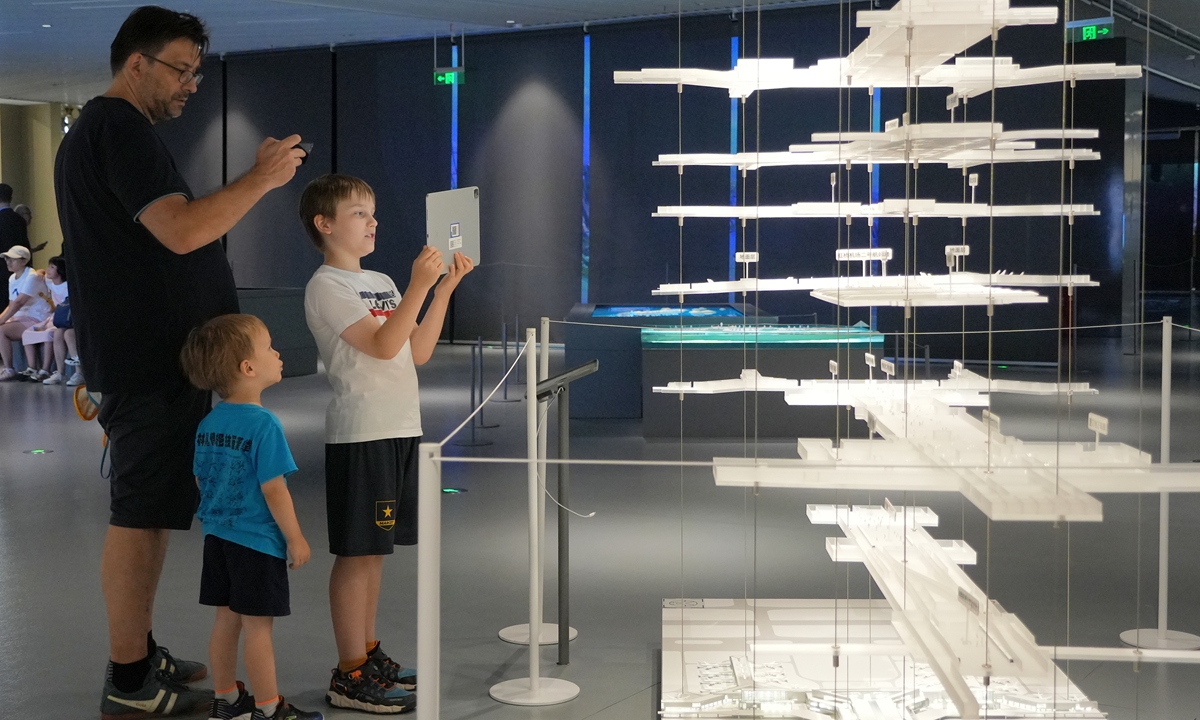
Foreign visitors view models of urban planning and construction at the Shanghai Urban Planning Exhibition Center, on August 10, 2025. Photo: VCG
In the round table on urban regeneration and the relationship between urban memory and innovation, as well as the role of design in promoting sustainable urban development, Roberto Podda, director of the Sino-Italian Urban Regeneration Hub at Xi'an Jiaotong-Liverpool University, said, "I have been deeply impressed by China's transformation since my arrival in the country in 2019.""It is a laboratory where we can test our new strategies." "Most importantly," he said, "the country is beginning to place greater value on older spaces and existing urban resources; technology is opening new possibilities for their renewal, and one way these ancient elements can be brought back to life is through technology."
Of course, not all glitters is gold, as China's domestic market has become increasingly competitive, partly due to the technological and qualitative advancement of local operators' products and services.
Opportunities will therefore concentrate on those companies capable of offering excellent solutions in terms of innovation, efficiency and quality-value ratio. On the other hand, Italian architectural and engineering firms with a proven track record of excellence in China will hold a distinct advantage.
Notable examples include the Tsientang Campus in Hangzhou designed by Renzo Piano, the Rehabilitation Center in Shenzhen designed by Stefano Boeri Architetti, and the Chongqing Jihua Yuelai Oxygen Tower designed by Massimo Roy for Progetto CMR. This phase will likely see the protagonists being those with experience in the redevelopment of brownfield areas, transformation of industrial heritage, mixed-use urban regeneration projects and low-carbon urban design.
RELATED ARTICLES