US troops in Middle East reportedly face food shortages, mail suspension as morale slips; Exposing lack of preparation for prolonged Iran operation: Chinese expert
By Feng Fan and Published: Apr 17, 2026 08:26 PM

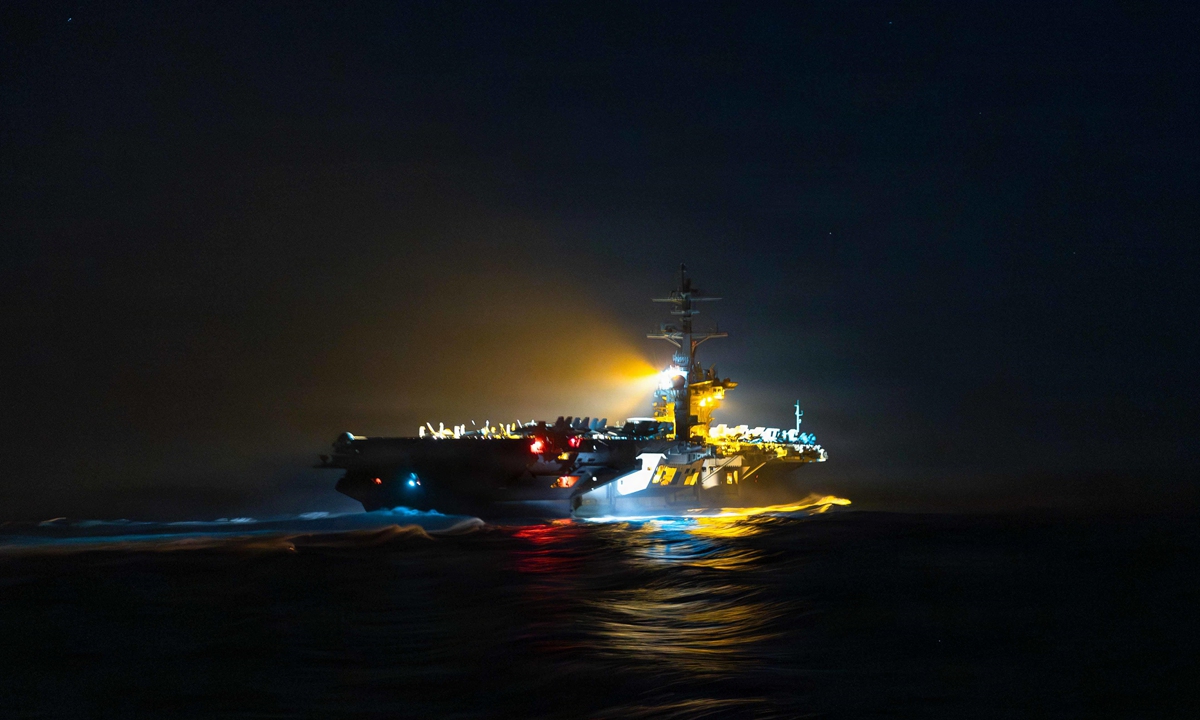
Nimitz-class aircraft carrier USS Abraham Lincoln (CVN 72) departs following a replenishment-at-sea with fleet replenishment oiler USNS Henry J. Kaiser (T-AO-187) during Operation Epic Fury, March 18, 2026. Photo: VCG
"Morale is going to be at an all-time low." A report by US media outlet USA Today has shed light on food shortages and suspended military mail services affecting US forces deployed in the Middle East, while a Chinese expert said the situation suggests the US military was not adequately prepared before launching operations against Iran.In a report published Thursday, USA Today detailed mounting supply problems aboard US warships operating in the region. According to the report, a US Marine aboard the USS Tripoli, a warship deployed in the joint US-Israeli military operation against Iran, shared a photo of a meal served on the ship showing a lunch tray two-thirds empty, with one small scoop of shredded meat and a single folded tortilla.
Another picture, showing a mid-April dinner aboard the USS Abraham Lincoln and shared by a service member with family members, was "similarly unappetizing," USA Today said. The meal reportedly consisted of a small handful of boiled carrots, a dry meat patty and a gray slab of processed meat.
"The report exposed that the US military apparently did not make sufficient preparations for a long-term campaign in the Middle East from the outset, leaving logistical support and follow-up arrangements insufficient," Song Zhongping, a Chinese military affairs expert, told the Global Times on Friday.
"The supply shortages now being reflected even in daily meals as indicated in the report show the US did not initially expect the military action to last longer. In that sense, these reported details reveal that the actual combat readiness of the US military is far from as strong as it previously portrayed," Song said.
According to USA Today, service members aboard the USS Tripoli were rationing food supplies, while fresh produce was nowhere to be found.
The outlet also reported that military family members worried that their loved ones deployed to the Middle East are going hungry and are filling boxes with items they hoped could help US service members ride out prolonged deployments in the Middle East. However, mail delivery to military ZIP codes across the region has been indefinitely suspended since April, and packages in transit now hang in limbo.
The report cited a Texas mother whose son, a Navy sailor also aboard the Tripoli, as saying that she panicked after learning he was hungry on the ship. Her family has spent at least $2,000 on care packages, but none have reached her son. According to USA Today, she asked to remain anonymous for fear her son could face retaliation.
The sailor said supplies "are going to get really low," and the crew did not anticipate any port visits until the ship returned from its mission, he wrote in a March 11 message. "Morale is going to be at an all-time low," he wrote, according to USA Today, citing the message exchanges that the mother shared with the media.
Compared with many other militaries, US troops traditionally enjoy greater flexibility in obtaining personal necessities and often rely on the military postal system for supplemental items, Song said.
"The reported suspension of military mail services is unusual and indicates serious problems in the broader US military system in the region. In particular, non-military support items are likely facing even greater delays," he said.
USA Today also quoted a pastor of a church from Shepherdstown, West Virginia, who said she was alarmed to hear from a community member whose son is in the Middle East aboard the USS Abraham Lincoln, describing the poor food conditions on the ship.
"The food is tasteless and there's not nearly enough and they're hungry all the time," said the pastor, according to the report. "That kind of breaks your heart."
Song said unclear objectives and an uncertain strategy in the Middle East and toward Iran may already be affecting US troop morale, while extended deployments would further undermine confidence among personnel.
That issue was also highlighted in the USA Today report. The USS Tripoli has been at sea for more than a month since leaving its home port in Japan to join the operations related to the Iran conflict.
Other warships have been at sea far longer. On April 15, the USS Gerald Ford broke the record for the longest deployment of any aircraft carrier since the Cold War - 295 days. The carrier retreated to Naval Support Activity Souda Bay on the island of Crete for maintenance work March 23. The US military claimed a laundry fire had erupted on the ship, and it was plagued with plumbing problems, according to USA Today.
Other international media outlets have also taken note. UK-based International Business Times ran the headline: "They're Hungry All the Time': US Sailors' Poor, Small Meals Near Iran Reveal a Crisis."
"Naval warships near Iran experience severe food rationing and halted mail services, impacting morale," the outlet reported.
RELATED ARTICLES