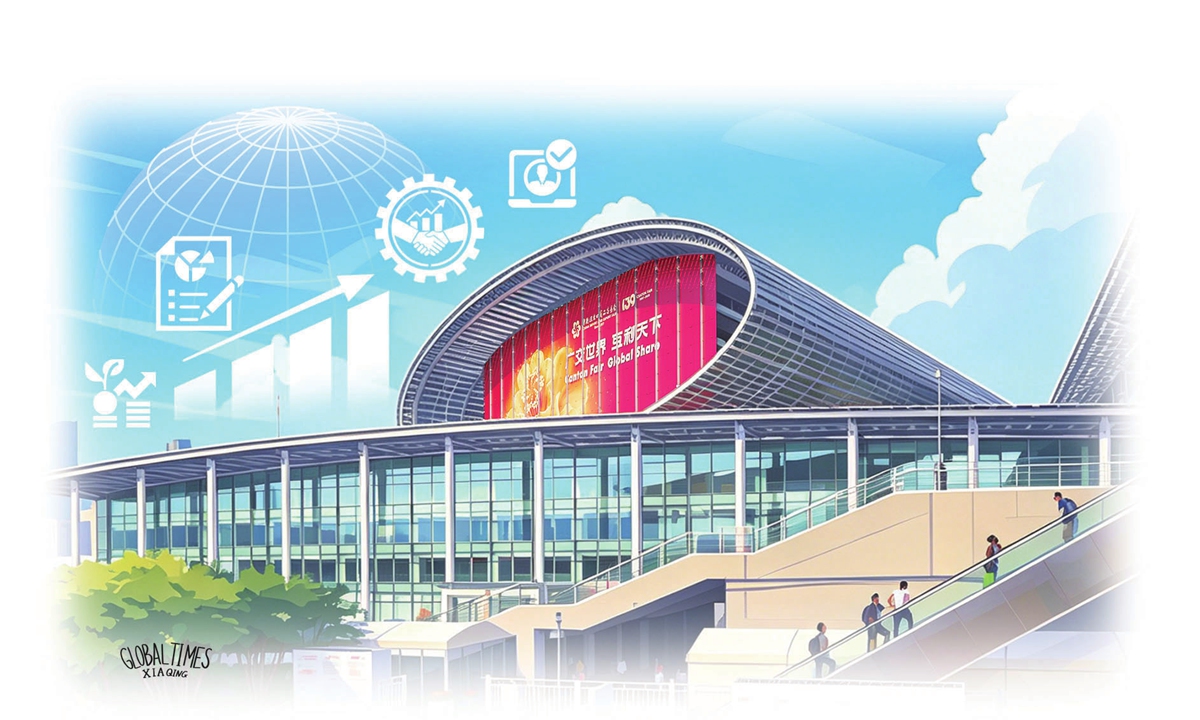
Illustration Xia Qing/GT
China's foreign trade sector continues to evolve, with an emerging trend toward greater integration between trade and investment. The state broadcaster CCTV News reported on Sunday that a research shows that nearly 20 percent of the companies attending the 139th Canton Fair are involved in foreign investment, collectively generating more than 200,000 local jobs.
This development reflects a broader trend among a good number of Chinese companies of pursuing trade and investment as complementary strategies for expanding their presence in the international market, while at the same time adapting to global supply chain evolutions.
The deepening integration of trade and investment reflects a continued advancement in the internationalization of Chinese companies. To put it into perspective, this approach is based on increasingly mutually beneficial cooperation.
For Chinese businesses, increasing investment abroad enables them to expand their supply and production networks in international markets. Being closer to local markets would provide them with deeper insights into local consumer behavior, enhancing their ability to respond effectively to local market changes. The approach also allows Chinese companies to offer a broader range of services, such as after-sales support and integrated supply chain solutions, creating added value to local consumers.
According to the CCTV News, a participant at the 139th Canton Fair mentioned another factor: logistics cost. For instance, by establishing a factory in Vietnam, the company said that it can reduce logistics costs by about 40 percent.
The development indicates a natural progression in China's foreign trade sector. As Chinese companies mature, they are making more efforts to optimize and upgrade their operations in order to stay competitive. This trend highlights how businesses are adapting to the evolving demands of an increasingly interconnected global marketplace, which will ensure their long-term sustainability and success.
For the recipient countries, the increase in local investment by Chinese businesses brings more tangible benefits, including more jobs and higher tax revenues. As local consumers gain access to high-quality goods and improved services, their cooperation with Chinese companies will strengthen, contributing to a more resilient and mutually beneficial economic landscape.
Official data showed that, in 2025, China's outbound investment maintained steady growth. Non-financial direct investment totaled $145.66 billion ($21.4 billion), up 1.3 percent year-on-year. Investments in Africa, Europe, and Asia grew by 41 percent, 20.9 percent, and 1.2 percent, respectively, driving local economic and social development while contributing to the stability of the global supply chain.
These figures reflect more than numbers - they represent real stories of integration and positive impact. Through increased outbound investment, China's industrial chain is continuing to be integrated with global supply chain, and it will also create more decent job opportunities for recipient countries.
As this mutually beneficial cooperation keeps on evolving, it is unfortunate that some in the West still hold onto their outdated and stereotyped views of China's foreign trade. They haven't stopped spreading their false narrative that China's exports are creating a shock to the global economy. This perspective is rooted in their zero-sum mentality, where one economy's gain is seen as another's loss.
In reality, global supply chains are becoming ever more interconnected now, with the trajectory of development moving toward mutual benefit and shared prosperity.
The interaction between China's foreign trade and foreign investment is part of the broader trend of global supply chain integration. In this context, China's export sector has strengthened its connection with international supply chain, helping accelerate mutually beneficial cooperation. This growing interplay between trade and investment highlights how China's export sector is evolving and contributing positively to the global economy.
And, the dynamic is creating new opportunities for the global economy. As more companies expand their international reach, this trend is likely to result in increased outbound investment, further enhancing the interconnectedness of the global economy.
For the investment recipient countries, the key to seizing opportunity lies in their creating a fair and transparent business environment for Chinese investment. By offering a level playing business environment, these countries can foster deeper cooperation, helping drive sustainable and shared growth with China.
The author is a reporter with the Global Times. bizopinion@globaltimes.com.cn
RELATED ARTICLES