ARTS / CULTURE & LEISURE
First cross-dialect ‘Gesar Epic’ database completes initial audio-video recording
By Published: Apr 19, 2026 09:52 PM

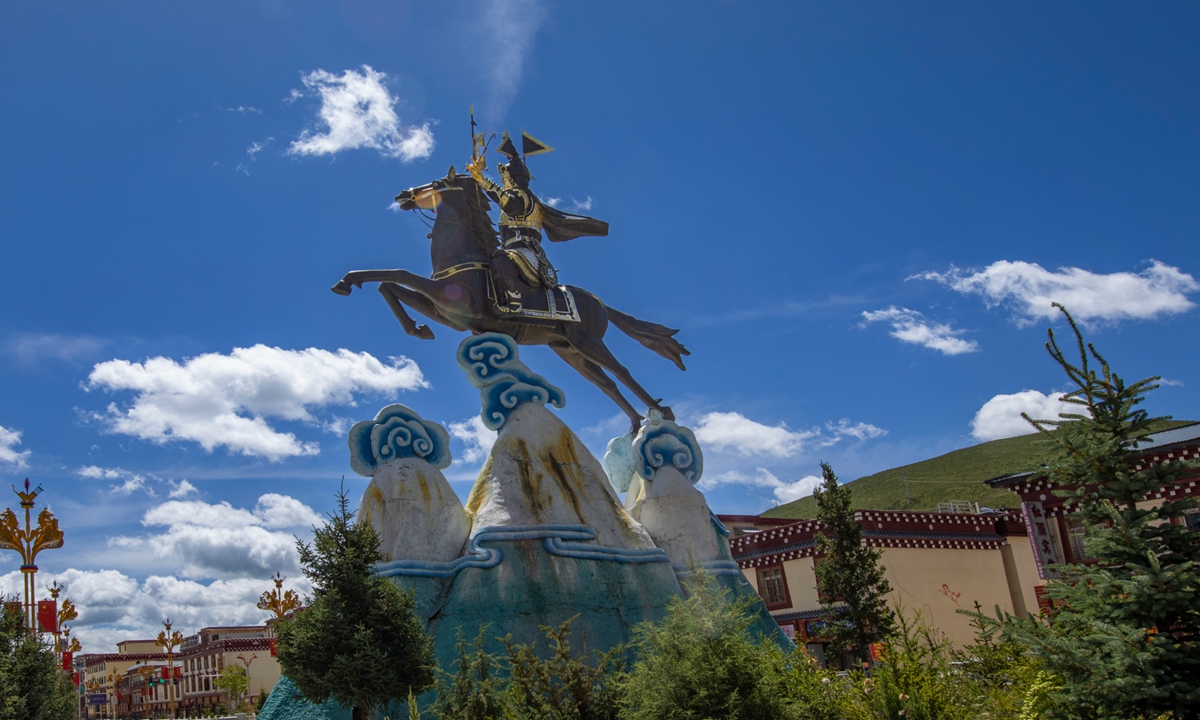
Statue of King Gesar Photo: VCG
China has completed the first round of audio and video recording for its first cross-dialect database of The Epic of King Gesar, covering multiple versions and artistic forms, according to a report by the China News Service on Sunday.According to the Gesar Epic protection and research center in Northwest China's Qinghai Province, the recording of the nine volumes of the epic include two Amdo dialect versions, one U-Tsang dialect version, two family inheritance versions, two children's versions, one original singer's version, and one storytelling version. Each dialect region recorded its own version independently. This approach ensures the performances remain pure and complete within each dialect group and lays a solid foundation for future comparative studies and cross-regional dissemination.
An ancient folk tale, The Epic of King Gesar was inscribed on the Representative List of the Intangible Cultural Heritage of Humanity of UNESCO in 2009. It is considered the longest and most voluminous "living" epic that humanity has ever possessed. The Epic of King Gesar was not originally written with a pen but sung by many folk singers and storytellers. Generations of master singers and storytellers have passed on the story for thousands of years and spread it far and wide. During its circulation, the epic has been constantly enriched.
To increase the professionalism and artistic value of the database, the project invited famous singers from Southwest China's Xizang Autonomous Region, Sichuan Province, and Qinghai Province to participate. Artists of all ages, from the elderly to the young, shared the stage for the performances. The project specifically introduced a "family version," inviting several families known for being traditional epic storytellers to record performances together as a family, the China News Service reported.
Currently, the environment for Gesar culture across the country has been restored. One national-level cultural ecology protection zone has been set up, and in seven provinces and regions, 15 folk organizations and communities, 20 research institutions, and government departments now work together in a network to coordinate protection efforts. Hundreds of epic singer-inheritors have been trained, adding vitality to the inheritance of the tradition, while thousands of hours of Gesar performance recordings have been collected, according to CCTV News.
Apart from creating the database and other digital means to preserve the epic, the report said that today's Gesar performers are also focusing on making written texts of oral tales, as well as using multimedia and stage innovations to reach new audiences.
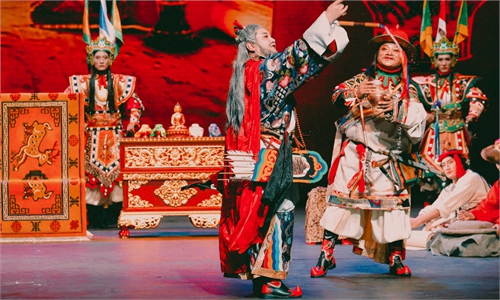
"Based on the traditional story of The Epic of King Gesar, we have made some innovations when it comes to costumes, stage setting and music. The results stunned us as most audiences said that they felt they were finally seeing the real Gesar on stage," Samdrop Lhom, head of the Yel Bumen Tibetan Opera Troupe, told the Global Times.
To improve the stage setting, the troupe head, who is also an inheritor of the Gesar Epic tradition, came up with many diverse innovations, including using a dynamic LED screen on the stage to make scenes feel more real.
RELATED ARTICLES