ARTS / CULTURE & LEISURE
Reading week launches with nationwide reading events
8.39 books read per capita in 2025, says survey
By Li Hang and Published: Apr 21, 2026 10:36 PM

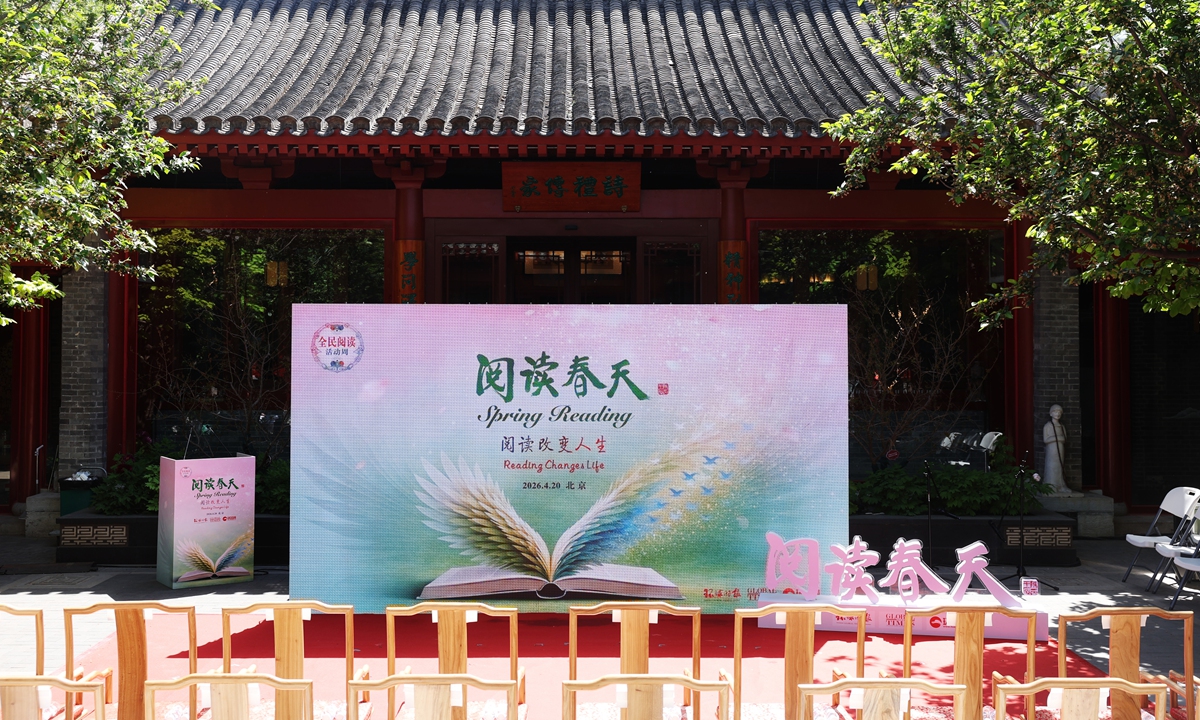
Photo: Cui Meng/GT
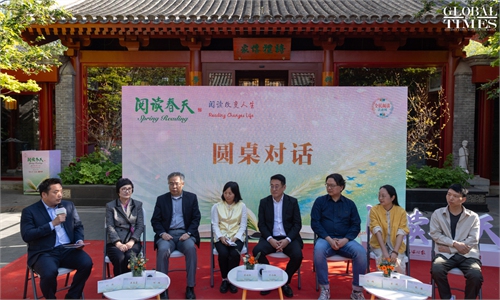
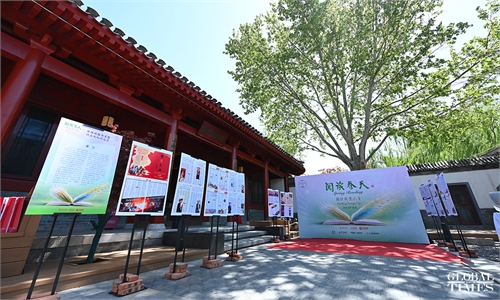
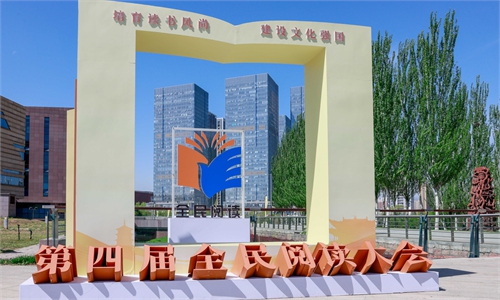
Book fairs, reading salons, recitation of classic works... Diverse reading-related events are being held across China as communities welcome the country's first National Reading Week, set for the fourth week of April every year.The fifth National Conference on Reading, which opened Monday in Nanchang, the capital of East China's Jiangxi Province, marks the official start of the week-long campaign.
In Beijing, the 12th Reader Open Day set to be hosted by the Zhonghua Book Company on Wednesday will feature exhibitions on traditional Chinese culture and talks by prominent authors. Meanwhile, the China Written Works Copyright association announced the "Top 10 Most Popular Authors and Works for 2025," sorted by copyright fee income and the frequency of article licensing usage.
The events come as China's reading habits continue to evolve. A national survey launched by the Chinese Academy of Press and Publication and released at the event showed that the comprehensive reading rate among Chinese adults reached 82.3 percent in 2025, up 0.2 percentage points from 2024.
The findings also showed that the average number of books read per person, including both print and digital formats, reached 8.39 in 2025.
According to the survey, China's mass digital reading market nearly doubled over the past five years, growing from 30.25 billion yuan ($4.4 billion) to 59.48 billion yuan. Meanwhile, the total number of digital reading titles exceeded 70 million, reflecting the growing popularity of online platforms. Last year, 80.8 percent of Chinese adult citizens reported engaging in digital reading. A growing number of people turned to audiobooks and video book reviews, with the figures rising from 38.5 percent and 5.7 percent in 2024 to 38.7 percent and 6.3 percent in 2025, respectively.
However, paper books retained their appeal, as 45.9 percent of Chinese adults still preferred physical books to other reading formats. Meanwhile, in terms of content, literature was particularly favored.
It can be seen from these figures that China's adult reading rate has shown a steady upward trend, with the foundation for nationwide reading continuing to strengthen, Zhang Peng, a cultural researcher and associate professor at Nanjing Normal University, told the Global Times on Tuesday.
Despite the convenience of digital reading, people's demand for deep engagement, structured learning, and meaningful intellectual and spiritual enrichment remains strong, noted Zhang.
These trends reflect a steadily strengthening reading culture in China, with broader participation in reading, deeper engagement among readers, and the rapid integration of digital reading into everyday life, Zhang said.
In 2025, the book reading rate among minors in China reached 86.7 percent from 86.6 percent in 2024. Average book consumption per capita rose to 11.72 volumes, an increase of 0.07 books compared with the previous year's 11.65.
It suggests that reading habits are becoming more diversified and accessible across age groups, including among minors, added Zhang.
In tandem with National Reading Week, local governments across China have rolled out a wave of innovative reading initiatives, making book culture a defining highlight of April.
In Beijing, the ongoing 2026 Spring Book Fair, which will run until May 17, has drawn participation from more than 2,000 brick-and-mortar bookstores. In Wuhan, Central China's Hubei Province, the 2026 "Bookish Wuhan: National Reading Month" campaign was officially launched, marking the start of a year-round, citywide effort to promote public participation in reading.
In Guangzhou, South China's Guangdong Province, a month-long reading program is holding nearly 1,000 events centered on bookstores and other cultural venues. In Hohhot, North China's Inner Mongolia Autonomous Region, a series of National Reading Season activities is underway, featuring well-known authors and interactive reading sessions aimed at bringing reading deeper into communities and closer to the public.
"The launch of the very first National Reading Week advances the goal of encouraging everyone to read, and it does so in an almost ceremonial fashion. From what I have observed, the impact of this event is already significant: A genuine atmosphere of reading now surrounds me in everyday life. This shows that reading is no longer just a slogan or a passing trend, it is something that truly touches people's hearts," Wang Yao, a Chinese writer and professor at Soochow University, told the Global Times on Tuesday.
Wang stressed that fostering a book-loving society requires beyond reading events to cultivate long-term reading habits, and eventually, to make reading a daily way of life. Only then will the fragrance of books and the spirit of culture take root in communities.
"I look forward to a time when everyone, in the broadest sense, becomes a true reader: Someone who embraces books, enjoys learning, and sees reading as an essential, natural part of living," said Wang.
RELATED ARTICLES