PLA holds exercises in waters east of Luzon Island, ‘a necessary action in response to the current regional situation’
Alarming Japan-Philippines military collusion binds strategic flashpoints, fuels regional risks: experts
By Published: Apr 24, 2026 06:59 PM


Latest news
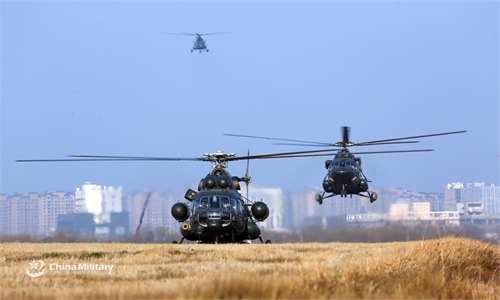
The Chinese People's Liberation Army (PLA) Southern Theater Command on Friday announced it has recently organized Task Force 107 to conduct military training exercises in the waters east of Luzon Island of the Philippines. The exercises focused on live-fire drills, sea-air coordination, rapid maneuvering, and underway replenishment, aiming to test the troops' integrated joint operational capabilities.The Command stated that this is a necessary action in response to the current regional situation and fully complies with relevant international law and international practice. In accordance with the needs of the security situation, the theater troops will routinely organize relevant military activities to safeguard national sovereignty and security as well as regional peace and stability.
The PLA's operation came amid the ongoing Balikatan military exercises hosted by the Philippines and US, in which Japan is also becoming a full active participant for the first time. Meanwhile, Japan-Philippines military collusion has been accelerating and upgrading markedly in 2026.
Analysts said that Japan and the Philippines are attempting to link major geopolitical flashpoints across the East China Sea, the Taiwan Straits and the South China Sea to forge a cross-regional military coordination framework. Such moves will markedly escalate regional tensions and greatly raise the risks of conflict escalation and spillover, requiring high vigilance from regional countries and the international community.
Alarming participation
The ongoing Balikatan 2026 joint military exercises, held from April 20 to May 8, have become a key window to observe the escalating military collusion between Japan and the Philippines.
According to the Phil Star, Japan is participating in this year's Balikatan, the largest edition in scale since 1990s, as active partners rather than observers.
"The most significant shift in this year's Balikatan is Japan's outsized role," the Phil Star commented, adding that besides deploying 1,400 troops, Japan will also have its forces fire Type 88 surface-to-ship missiles in a live-fire sinking exercise, the first time Japanese forces will have used the weapon system outside their territory.
Before taking part in Balikatan, Japan also sent about 420 members of the Japan Ground Self-Defense Force to participate in the US-Philippine combat drill "Salaknib," NHK reported.
NHK said that during the drill, Japan is "playing a major role for the first time" instead of taking part only as an observer like in the past editions. The Japan Times said the drill means that Japan is sending "combat-capable" troops to the Philippines for the first time since the end of World War II — not as occupiers, but as close partners.
In September 2025, Japan and the Philippines put into force a new cooperation pact called the Reciprocal Access Agreement, which facilitates procedures for deploying equipment and personnel between the two countries, NHK reported in a separate article.
In January 2026, Japan and the Philippines signed the Acquisition and Cross-Servicing Agreement (ACSA), a bilateral defense agreement allowing allied militaries to exchange logistics, supplies and services for joint exercises or crises, the Inquirer.net reported.
The two sides are also negotiating a General Security of Military Information Agreement (GSOMIA). Some analysts note that once the agreement takes effect, Japan and the Philippines will be able to share relevant intelligence in real time, according to media reports.
Japan's participation in the US-Philippines live-action military drills, coupled with the deepening military collusion between Japan and the Philippines recently, is most hazardous in that it militarily ties the situations of the Taiwan Straits and the South China Sea together, Ma Bo, an associate professor at the School of International Studies at Nanjing University, told the Global Times.
Similarly, Xiang Haoyu, a distinguished Research Fellow at the China Institute of International Studies, stated that once tensions flare up, Japan can use the Philippines as a springboard to integrate geopolitical flashpoints in the East China Sea, the Taiwan Straits and the South China Sea through military linkage, and build a cross-regional containment architecture targeting China.
The attempt would drastically raise the risks of uncontrollable conflicts and regional spillover. Regional countries and the international community should maintain high vigilance against such moves, Xiang said.
Alliance of troublemakers
Also on Friday, the Philippine Presidential Communication Office announced that President Ferdinand Marcos Jr. will make a state visit to Japan from May 26 to 29, upon the invitation of the Japanese government.
According to the official release, the two sides are expected to discuss the future trajectory of the Philippines-Japan Strengthened Strategic Partnership as well as international developments, "especially with regard to energy and food security, and maritime security."
Prior to the visit, Japan had already stepped up its military support to the Philippines and was actively intervening in South China Sea matters.
As the exercises were being held, the Japanese government officially revised "the three principles on transfer of defense equipment and technology" and their implementation guidelines on Tuesday to allow overseas sales of weapons, including those with lethal capabilities, despite waves of large-scale protests, local media reported.
In March this year, Japan handed over five coastal radar systems to the Philippines, which it said would strengthen the country's maritime domain awareness and coastal defense capabilities, according to multiple media reports from the two nations.
Japan and the Philippines have forged a very close quasi-military alliance and despite the absence of a formal alliance treaty their cooperation depth and institutionalization level have come close to the standard of a military alliance, Ma said.
According to the expert, given its inadequate military strength, the Philippines seeks to strengthen its capacity to advance "territorial claims" in the South China Sea and further stir up trouble in regional affairs through a closer strategic bonding with Japan on security and military aspects.
Regarding Tokyo, Xiang said Japan's calculation is to break through its post-war military constraints and expand its geopolitical influence.
"By leveraging the Philippines, it is attempting to realize overseas combat-oriented deployments, boost its military projection capability, and accumulate practical grounds for revising Article 9 of its pacifist constitution," Xiang said, "Taking the South China Sea as a strategic springboard, Japan eyes building the southern barrier of the 'first island chain' targeting China."
According to the expert, what deserves high vigilance is that the Japan-Philippines military collusion may further evolve toward greater alliance-like, combat-oriented, and normalized development.
For example, this could include enhancing joint command and combat capabilities, building a comprehensive intelligence-sharing network covering the Taiwan Straits and the South China Sea, advancing joint research and development as well as production of military equipment, expanding the scale and scope of live-fire drills, conducting joint patrols in disputed waters of the South China Sea, and ultimately possibly seeking to form a US-Japan-Philippines triangle military alliance.
On the other hand, Ma believes that the framework of Japan-Philippines military cooperation may largely remain confined to the broader US "Indo-Pacific strategic" framework. In a sense, Tokyo and Manila are strengthening their military collusion in the hope of again attracting greater US investment and engagement in "Indo-Pacific" affairs.
Washington hopes to leverage the special geographical positions of Japan and the Philippines, along with their strategic anxiety, to push them to the front line in confronting China. However, the US, which is already entangled in the Middle East, does not wish to be passively drawn into a direct conflict with China, due to Japan and the Philippines' tricks on the Taiwan Straits or the South China Sea, Ma added.
Regarding the ongoing Balikatan exercise, Chinese Foreign Ministry spokesperson Guo Jiakun said in a previous press conference on Monday that no military and security cooperation should be conducted at the expense of mutual understanding and trust as well as peace and stability in the region.
"Such cooperation should not target any third party or harm the interests of any third party. For countries that tie their own security to others, it is important to bear in mind that this may very well backfire," Guo said.
RELATED ARTICLES