Robot malfunction at Shaanxi university event sparks debate on AI awareness and safety in human-robot interaction
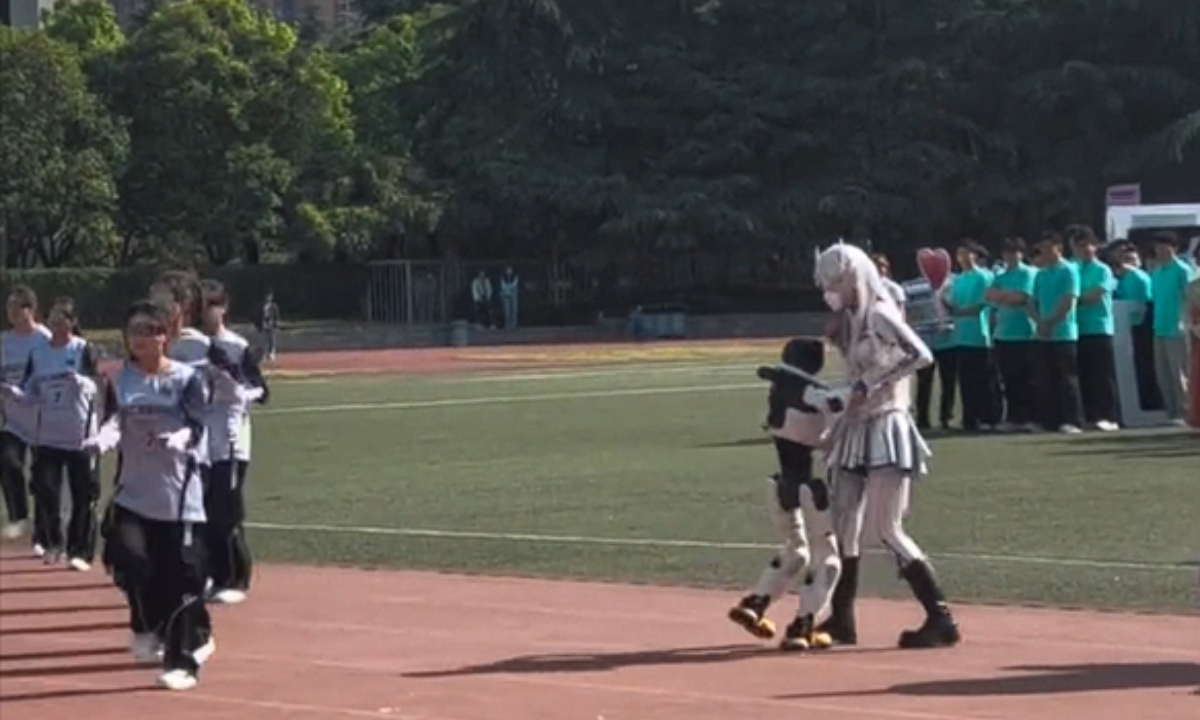
A humanoid robot, after suddenly deviating from its choreographed routine, turns and embraces a student during a dance performance at a university sports event in Xi’an, Northwest China’s Shaanxi Province, before on-site staff intervene. Photo: Video screenshot from Shangyou News
A female student was unexpectedly embraced by a humanoid robot during a dance performance at a university sports event in Northwest China’s Shaanxi Province, sparking discussion among Chinese netizens over whether the robot may have developed autonomous awareness and prompting experts to call for enhanced safety measures in human-robot interaction scenarios.
A video circulating online and reviewed by the Global Times shows a humanoid robot suddenly turning and hugging a female dancer standing nearby during a choreographed performance. On-site staff quickly intervened and pulled the robot away.
The incident took place on Thursday during the opening ceremony performance of a sports meet at Xi’an Eurasia University on Thursday, reported Shangyou News, a digital news platform.
A staff member quoted in the report said the joint performance between the robot and a student club was an attempt to innovate campus cultural activities. The student involved was not injured and later declined media interview requests.
The robot’s unexpected behavior has sparked discussion online. Some netizens wondered whether the robot had developed “independent awareness,” while others questioned whether the move was controlled by an operator or had been pre-arranged as part of the performance.
A university staff member denied that the move was pre-programmed, saying “based on what we understood at the time, the robot made a mistake,” according to the report. The staff member noted that the “mistake” was an AI program malfunction, adding that the robot turned during the dance and hugged the student, prompting on-site staff to intervene immediately and separate them.
The robot used in the performance was provided by an alumni-founded company and was returned after the event, the staff member said.
The university later contacted the company, which attributed the incident to signal interference at the venue, the Shangyou News report said.
According to the company, multiple drones were operating simultaneously during the performance, disrupting signals and leading to abnormal behavior of the robot. The company said it was not pre-arranged.
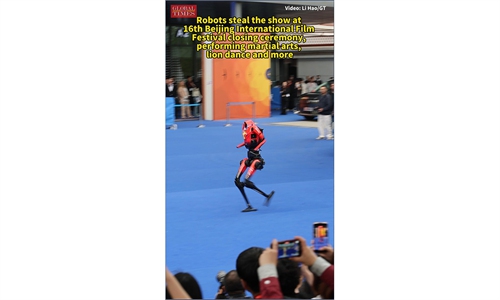
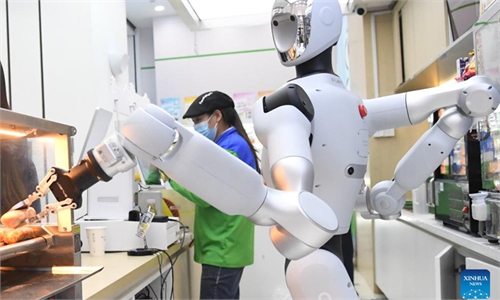
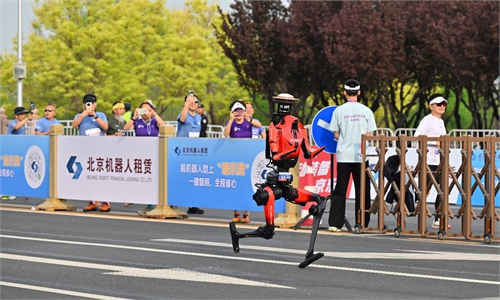
The incident came at a time when humanoid robots are appearing with growing frequency in public settings across China, from campus events and exhibitions to major televised performances and sports showcases.
Based on currently available information, the incident likely resulted from motion control anomalies, execution deviations or insufficient on-site safety redundancy, and should not be interpreted as the robot having developed independent awareness, said Gao Huan, a deputy director of the Intelligent and Cognitive Laboratory at Chongqing Normal University, during an interview with Shangyou News.
Gao noted that a more important question for AI practitioners is why the robot was still able to come into contact with a human after abnormal behavior occurred.
He explained that robots in stage performances typically operate based on pre-programmed motion scripts. If positioning errors, posture recognition deviations, execution sequence failures occur, or if human performers deviate from preset trajectories, unintended contact between robots and people may result.
Gao added that in open scenarios such as human-robot collaborative dance, exhibition interactions and campus performances, robots should not be treated merely as ordinary stage props, but as intelligent devices with inherent mechanical motion risks.
Organizers, operators and equipment providers should conduct prior risk assessments, including motion script testing, on-site rehearsals, setting safety distances, equipping emergency stop mechanisms, assigning human supervision and establishing contingency plans to handle unexpected situations, Gao said.
Global Times
RELATED ARTICLES