ARTS / ART
Reading's essence is a thirst for knowledge: Author Bi Shumin
By Published: Apr 27, 2026 04:43 PM

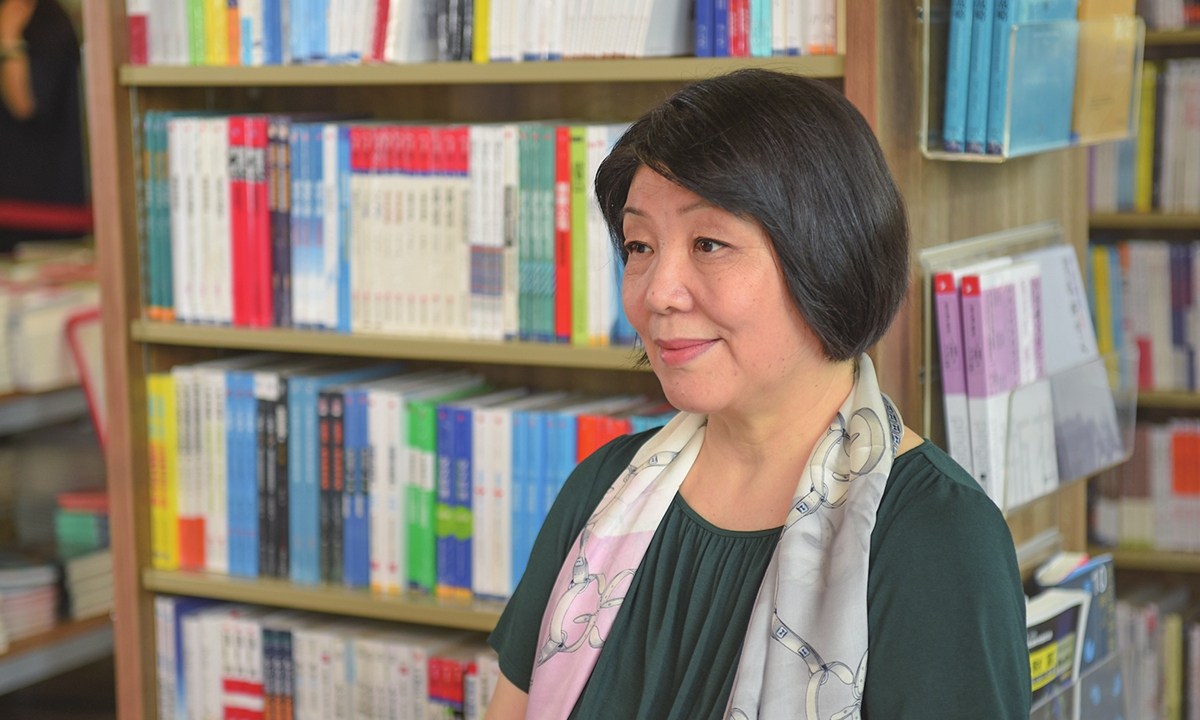
Writer Bi Shumin
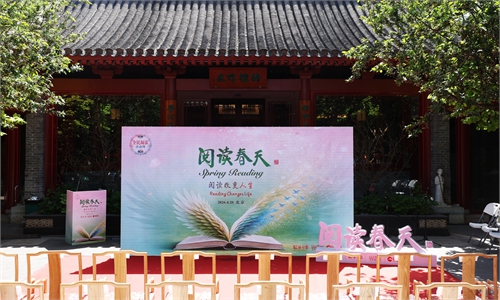
Acclaimed Chinese author Bi Shumin's literary journey did not commence in a well-stocked library, but rather in a place where books were scarcely found — the high-altitude, snow-covere Qinghai-Tibetan Plateau. While attending the Global Times "Spring Reading" event at the Guangcheng Academy in Beijing on April 20, she shared how a deep thirst for knowledge, first kindled in her youth, forged her lifelong relationship with reading and writing.At the age of 16, Bi worked in the Ngari Prefecture, Southwest China's Xizang Autonomous Region as a medical worker. Located 4,500 meters above sea level, the region used to be cut off by snow for nine months each year. Supplies arrived by truck, but books were never among them.
"The desire to read was exceptionally strong at that time," she recalled.
The turning point came from a dying patient who insisted on giving her his treasured copy of Maxim Gorky's My Childhood. Bi initially refused, but on the day he was transferred, she found the book under his pillow — a gift she could not decline. That single volume became her most precious possession.
Inspired by a creative idea, she announced: "I have a very good book. Whoever wants to read it, bring a book to exchange!" What followed was a primitive yet thriving book-exchange network that, over several years, allowed Bi to read nearly every privately owned book circulating among soldiers in Ngari.
The network even attracted a local herdsman, who offered a neatly folded standard eye chart in trade. When Bi questioned whether it could be considered a book, he replied earnestly: "It's printed material, with a designer and countless readers." She accepted, realizing that in places starved for knowledge, any medium carrying information could be a "book." The essence of reading, she understood, was the mind's thirst for knowledge.
"That was my beginning," Bi reflected. "From the accidentally acquired My Childhood to an eye chart treated as a treasure, I found a spiritual revival that has nourished me for life — even on a plateau without spring."
Today, Bi noted that the abundance of books modern readers enjoy is not a given, but a sign of progress and good fortune.
"With so many books, choice becomes essential," she noted. For her, reading has been the most sustained nourishment — a force that bridges distances and eras, quietly shaping one's vision and character through daily accumulation. "It helps us see clearly when lost and offers solace when lonely."
On topics like e-reading and AI-generated writing, Bi holds clear views. Now in her seventies, she prefers pen, paper, or her familiar computer to "write the life stories I ought to write."
"AI could not have written To the Mountains We Belong," she once told an AI expert. Bi finished the novel at age 72.
"Not to disparage the technology," she explained, "but because every word in it is soaked in the blood, youth, and loyalty of the border defense soldiers I saw with my own eyes. That story was earned through life experience. I want to remind everyone living in peace: Peace does not fall from the heavens."
RELATED ARTICLES