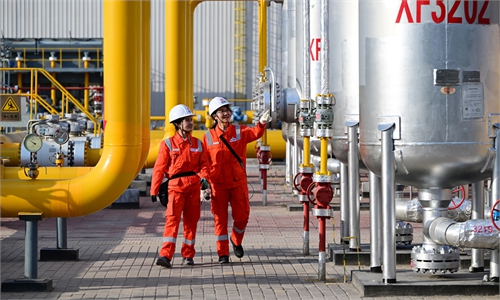
Natural gas output in Daqing Oilfield's Sichuan-Chongqing area exceeds 5 billion cubic meters, bolstering China’s energy security
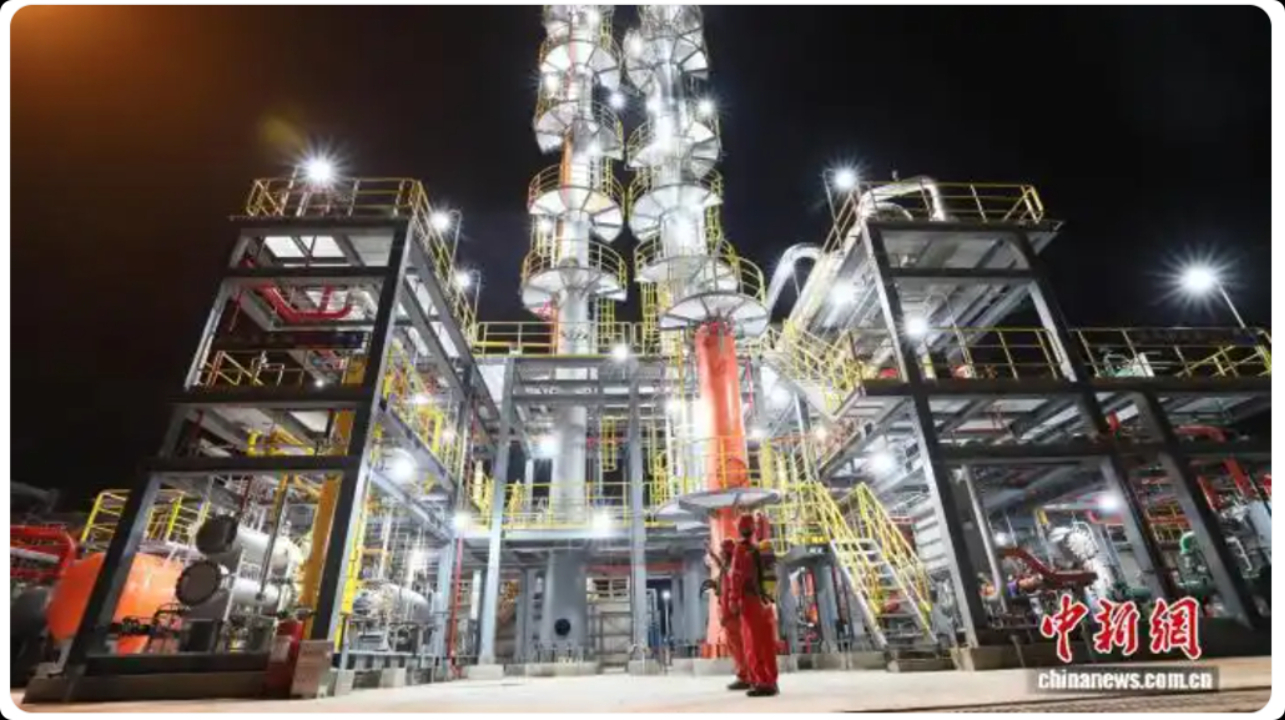
A view of the Sichuan-Chongqing exploration area of Daqing Oilfield Photo: China News Service
The cumulative commercial natural gas output in the Sichuan-Chongqing exploration area of Daqing Oilfield has exceeded 5 billion cubic meters. With a stable daily output of 5.7 million cubic meters, the exploration area has become a vital pillar for ensuring China’s energy security, China Media Group reported on Tuesday.
Daqing Oilfield has successively developed key production capacity in the Sichuan-Chongqing region since 2018 and lifted daily natural gas production capacity from 600,000 cubic meters to 5.7 million cubic meters. Currently, the oilfield is accelerating toward the goal of an annual natural gas output of 2 billion cubic meters.
Amid the Middle East conflict and volatile international energy markets, China’s energy system has demonstrated strong resilience, with effective guarantees for energy supply in the first quarter, officials from the National Energy Administration (NEA) told a press conference on Monday.
In the first quarter, the output of crude oil and natural gas from industrial enterprises above a designated size increased by 1.3 percent and 3.0 percent year-on-year, according to the NEA.
Zhang Xing, an official with the NEA, noted that the country has ensured the stable and orderly supply of oil and gas through measures such as increasing domestic production, diversifying imports and implementing temporary price regulation, effectively supporting stable economic performance and meeting people’s livelihood needs.
According to industry data, China's crude oil output reached 54.8 million tons in the first quarter, up 1.3 percent year-on-year; crude oil imports totaled 146.83 million tons, up 8.9 percent; and crude oil processing volume was estimated at 181.7 million tons, up 3.1 percent.
China has kept annual crude oil output above 200 million tons, and recorded nine consecutive years of natural gas production growth exceeding 10 billion cubic meters. The country has also built a nationwide oil and gas pipeline network of over 200,000 kilometers and established trade cooperation with nearly 50 countries, further strengthening energy supply resilience, Zhang said.
Meanwhile, China’s green energy transition has maintained steady progress. By the end of the first quarter, the total installed capacity of wind and solar power in the country reached 1.898 billion kilowatts, up 28.1 percent year-on-year. Renewable energy accounted for nearly 40 percent of total electricity generation in the first quarter, providing strong support for the development of a low-carbon and secure energy system, according to the NEA.
In 2026, the country's newly added power generation capacity is expected to exceed 400 million kilowatts, of which newly added renewable energy capacity is expected to surpass 300 million kilowatts, China Electricity Council said in a report released on Tuesday.
Solar power capacity is projected to exceed coal-fired power capacity for the first time in 2026. By the end of the year, the combined installed capacity of wind and solar power is expected to reach half of the country's total power generation capacity, according to the report.
RELATED ARTICLES