Yi poet Jidi Majia receives Cuban award
By Published: Apr 28, 2026 07:24 PM
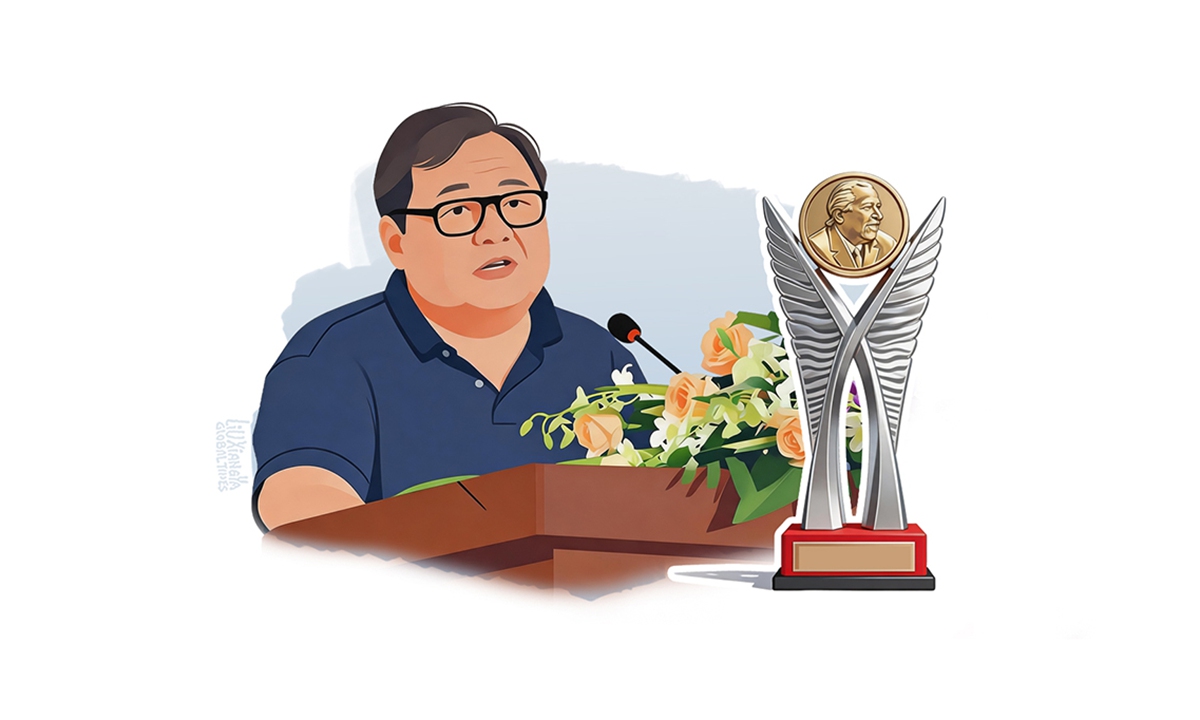
Illustration: Liu Xiangya/GT
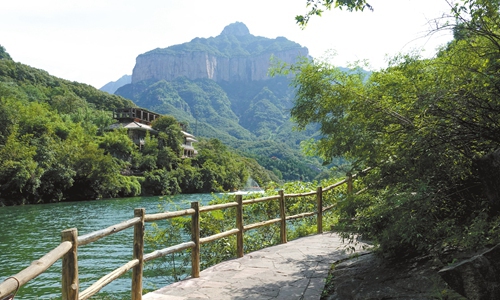
In the deep folds of the Daliangshan mountains in Southwest China's Sichuan Province, where emerald peaks rise against a spring sky, a rare moment of global literary recognition unfolded in late April. At the "International Poets' Home" in Bute county's Daji Shalu village, 61-year-old Chinese poet Jidi Majia, a leading voice of contemporary Chinese poetry and a proud son of the Yi ethnic group, accepted the Nicolás Guillén International Award from Cuba.The prize is named after the renowned Cuban national poet and revolutionary. Its arrival in the heart of the Yi homeland carries powerful symbolism: a bridge across the Pacific, linking the Caribbean island nation with one of China's culturally rich ethnic regions.
"I am very happy to receive this award in my hometown of Daliangshan," Jidi Majia told the Global Times in an exclusive interview on Monday. "Even more honored is the fact that my fellow compatriots witnessed this wonderful moment." For the poet, the award is not merely personal recognition but a vivid example of international cultural dialogue at a time when the world seeks a deeper understanding of China's development and changes.
Jidi Majia's work has been translated into nearly 40 languages, a testament to the universal resonance of poetry rooted in Chinese soil. He attributes the honor to "another generous gift from the poetry god," yet he frames its deeper meaning around shared humanity. "Poetry communicates through universal human nature and individual life experiences," he said. "When the world recognizes the value of our poetry, it means that life experiences originating from the Chinese land can evoke wider sympathy and resonance."
He once said, "I believe poetry will break all barriers and obstacles... to once again illuminate the path of humanity toward tomorrow." The statement captured the essence of a pressing question in today's turbulent world: What role should poets play?
Looking back at the 20th century, Jidi Majia recalled towering figures such as Pablo Neruda, Ai Qing and Nicolás Guillén himself - poets who embraced social reality with fervent concern. "Perhaps we are somewhat lacking in such great poets who hold immense passion for the times today," he observed.
Yet he remains convinced that a poet must be more than a "magician of language." A true poet, he argued, serves as "a spiritual torchbearer for a nation quietly advancing forward" and "a sensitive resonator of the era."
"Their mission is to build an immortal temple in the world of the heart through their unique language and rhetoric," he explained. "Their existence brings inner warmth to a world filled with materialization and instrumental rationality."
Beyond his creative output, Jidi Majia has emerged as a key architect of international poetry exchange. He founded the Qinghai Lake International Poetry Festival and the Liangshan Xichang Qionghai "Silk Road" International Poetry Week, both now established platforms for genuine dialogue between Chinese and foreign poets.
"China is a country of poetry," he said. "We have every reason to be culturally self-assured. An open China should, and must, have brand events in international poetry exchange."
He said such initiatives have moved beyond superficial exchanges into a phase of "deep interaction." Through face-to-face encounters, contemporary Chinese poetry is entering more linguistic worlds, creating what he calls a "two-way journey." "Poetry has become a carrier that is more easily accepted in building a community with a shared future for mankind and entering each other's hearts," he noted.
His own poetic voice was forged in the cradle of Yi culture. The Yi people, one of China's 56 ethnic groups, possess one of the richest traditions of creating epics, an ancient script dating back thousands of years, and the distinctive "Ten-Month Solar Calendar" - a significant marker in human civilization. Their narrative and lyric poetry, exemplified by classics such as Mama's Daughter and My Cousin, continues to be recited across generations.
Raised in Daliangshan, Jidi Majia openly credits the Yi spiritual and cultural traditions across millennia as the primary source of nourishment for his work. "In my youth, when I gazed for long periods at the boundless mountain ranges, the seeds of poetry were already planted in my heart," he recalled.
Yet Jidi Majia insisted that poetry cannot remain confined to literary circles. "Poetry must enter public life; this is the only way for it to regain vitality," he emphasized.
To that end, he launched the "Daliangshan Poetry Journey," an immersive program whose core idea is to "follow poetry to travel." Poets are invited to experience the region's cultural heritage and majestic landscapes firsthand while engaging in dialogue with local singers, intangible cultural heritage inheritors and ordinary residents. "Let the torch of poetry illuminate every person's life," he said. All participating poets' new works will be collected and published, creating a unique cultural legacy for the land.
Drawing on both his extensive translation experience and years of experience in organizing global poetry events, Jidi Majia offered pragmatic advice on how Chinese poetry can more effectively engage with the global literary agenda. "An open and inclusive attitude is most important," he stressed. "Civilizational mutual learning is not an abstract theory; it requires carriers."
Citing observations from an African poet, he acknowledged that China - as an ancient civilization and major world power - still has considerable room to enhance its cultural influence, particularly in the Global South, including Africa and Latin America.
Participation in global literary discussions, he argued, must translate into concrete projects. The key lies in "finding the greatest common denominator for dialogue with the other side," ensuring every deep exchange yields tangible results.
RELATED ARTICLES