ARTS / CULTURE & LEISURE
Italian Renaissance masterpieces debut in Beijing exhibition
By Published: Apr 28, 2026 09:33 PM

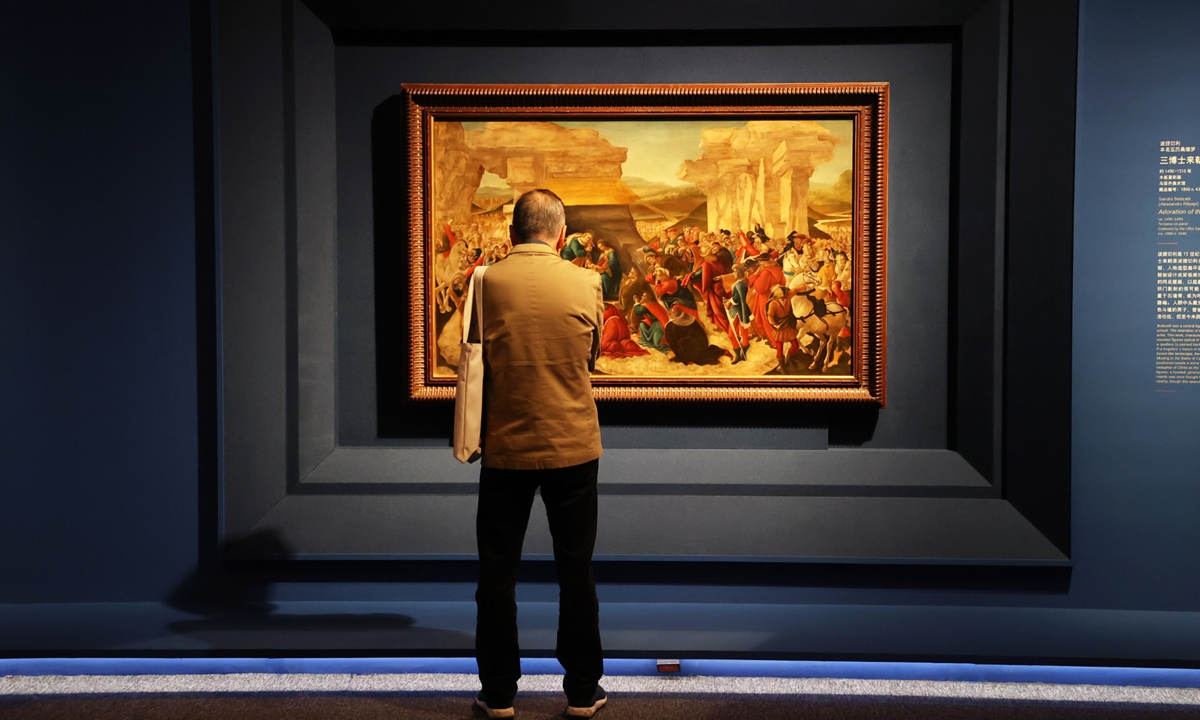
Photo: Courtesy of National Art Museum of China
An exhibition featuring 36 Renaissance masterpieces from Italy's Uffizi Galleries, including works by Leonardo da Vinci, Michelangelo, and Raphael, opened to the public at the National Art Museum of China on Tuesday, offering a rare glimpse into one of the most transformative periods in Western art history, according to a press release issued by the National Art Museum of China.The exhibition, titled Homage to the Virtuosos: From Leonardo da Vinci to Caravaggio - Masterpieces of the Italian Renaissance, is jointly curated by the National Art Museum of China and the Uffizi Galleries in Florence. It brings together paintings by more than 20 artistic giants of the Renaissance era.
The Uffizi Galleries, housed in Florence, is widely regarded as one of the world's most important museums of Renaissance art. Many of the works on display are traveling to China for the first time.
Pan Yikui, director of the National Art Museum of China, told the Global Times that the exhibition represents more than a gathering of Western art treasures.
"These works are not only gems of Western art, but also a shared spiritual wealth of human civilization," Pan said, adding that bringing these classics together in China does more than pay tribute to the masters and their timeless works, but also provides artistic nourishment and carries forward the humanistic spirit of the past.
The Renaissance, which placed humanism at its core, broke through the intellectual constraints of the Middle Ages and reshaped humanity's understanding of itself and the world. It produced a constellation of artistic giants and left behind works of enduring influence that remain cornerstones of global cultural heritage, the document noted.
The exhibition is arranged into three thematic sections that trace the evolution of Renaissance painting. The first chapter features works by Da Vinci and Michelangelo alongside creations by Florentine school masters such as Antonio del Pollaiolo and Sandro Botticelli, illuminating the artistic landscape of the early Renaissance.
The second chapter showcases three rare portraits by Raphael, including the portrait A Young Man with an Apple, Portrait of Elisabetta Gonzaga, and Portrait of a Young Woman. It also presents works by Mannerist artists Jacopo Pontormo, Agnolo Bronzino, and Rosso Fiorentino, charting the development of the Italian Renaissance and Mannerist painting.
The third chapter exhibits masterpieces by Venetian masters Giovanni Bellini, Giorgione, and Tiziano Vecellio, including Tiziano Vecellio's iconic work Flora. The section also features two celebrated portraits by Caravaggio, whose revolutionary use of chiaroscuro profoundly influenced 17th-century painting and offered insight into the trajectory of art beyond the Renaissance.
Portraiture occupies a prominent place in the exhibition. Organizers noted that these portraits not only render individual likenesses but also reflect the social structures, aesthetic sensibilities, and power symbols of their time. Viewed through the lens of humanism, the portraits serve as historical mirrors, guiding viewers toward an understanding of the Renaissance worldview.
During the exhibition, which runs until August 28, a series of academic lectures, thematic forums, multimedia experiences and public education activities will be held to further interpret the humanistic connotation and artistic value of the Renaissance. The museum will also launch a series of cultural and creative products, an organic extension of the exhibition's philosophy, the document noted.
RELATED ARTICLES