Innovation at highway service areas reflects potential of China’s consumption upgrade
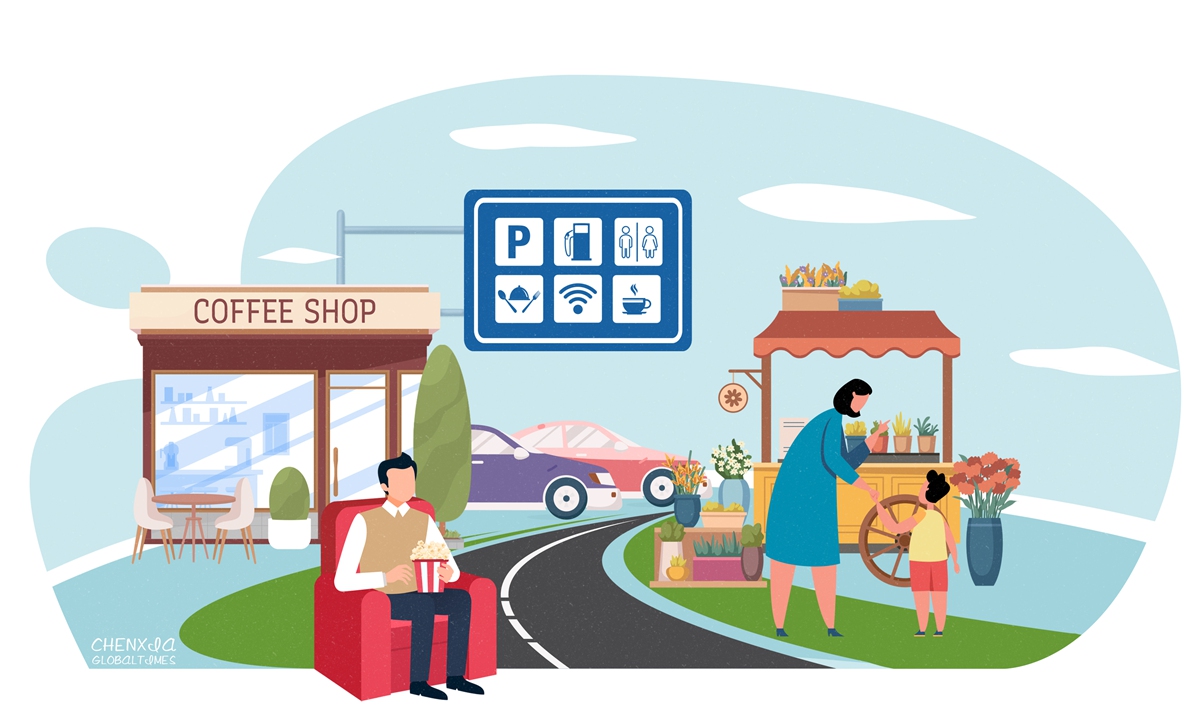
Illustration: Chen Xia/GT
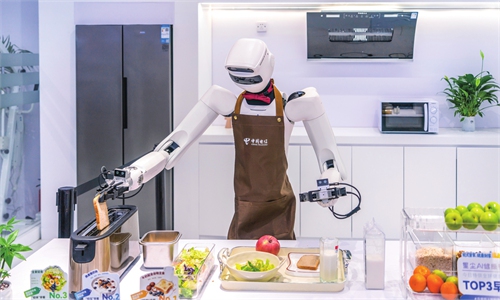
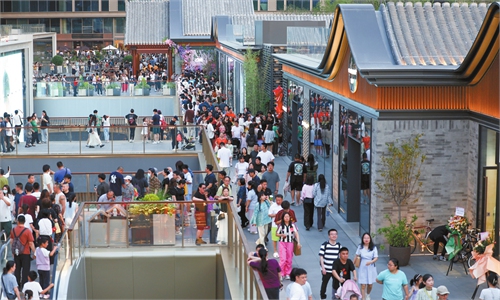
As the May Day holiday approaches, road trips in China are expected to rise, with highway rest areas set to benefit in unanticipated ways. According to a report by CCTV on Tuesday, data from the China Highway & Transportation Society shows that 79 rest areas across the country have been recognized as "featured service areas." Once viewed mainly as functional stops, these locations are now emerging as a microcosm of China's evolving consumer trends, where even the smallest parts of the infrastructure network are being reimagined to meet the changing expectations of today's travelers.Some highway rest areas have transcended their traditional role, becoming popular destinations in their own right. In Baiqiao, South China's Guangdong Province, a rest area featuring lychee-themed elements reportedly welcomed more than 4.6 million visitor trips between May and December 2025, generating revenue of 45 million yuan ($6.6 million). Similarly, in Heyuan, Guangdong, another rest area has introduced a dinosaur-themed lounge, incorporating design elements from theme parks to offer travelers a more engaging and unique experience.
The increase in spending at highway rest areas reflects a broader trend driven by the rising popularity of self-driving trips in China. The upcoming holiday offers an opportunity to observe this shift in consumer behavior. During the May Day holiday, passenger vehicles will be exempt from tolls on highways, a policy that has contributed to a rise in road travel. At a press conference held on Tuesday, Gao Bo, an official with China's Ministry of Transport, said that cross-regional travel is expected to reach a record high during the holiday.
On May 1, the first day of the holiday, it is predicted that cross-regional trips will total 344 million, a 3.3 percent increase from the previous year. Meanwhile, traffic on national highways is expected to reach 70 million vehicle trips, a 3.5 percent rise from last year, according to the Xinhua News Agency.
The rise in road travel is creating a broader network of consumer activities, from car sales to road infrastructure development, tourism, and even spending at highway rest areas. These trends open up new opportunities for businesses addressing the evolving needs of today's travelers.
The emerging consumption trends associated with road travel represent just one aspect of the broader consumption upgrade driven by rising incomes in China. As household incomes grow and lifestyles evolve, new opportunities are emerging across various sectors. China has no shortage of consumption potential; the key for businesses lies in how to capture and convert opportunities into tangible economic returns. To explore this further, we can once again turn to the microcosm of highway rest areas.
By tapping into local cultural and economic advantages, some highway service areas have developed distinct identities. In East China's Jiangsu Province, for instance, some service areas have become popular destinations for social media "check-ins." According to an October report by the People's Daily, one such service area - after being upgraded into a multi-functional complex - has successfully merged Suzhou's classical garden heritage with modern technological innovations. It now offers a blend of retail, cultural experiences, and tourism services. As a result, both visitor traffic and dwell times have increased in recent years, driving corresponding growth in revenue.
From lychees to dinosaurs to classical gardens, highway service areas are enhancing their unique identities while offering a range of services. Media reports indicate that some now provide more than just food and coffee; they host activities including movie screenings and even markets. Some service areas are focusing on developing distinctive themes, drawing on local advantages to offer differentiated services for travelers.
Some regions are also exploring a new model - the open service area. According to reports, this approach moves beyond the traditional closed model by integrating highway service areas more closely with local road networks, tourism resources, and regional economies. The goal is to create a more open and collaborative system, fostering better connections between highway service areas and local economies.
At its core, these trends point in one direction - highway service areas are continuously innovating to enhance their services. This upgrade on the supply side of services complements the growing demand from consumers, driving an increase in spending at these locations. From a practical and microeconomic perspective, they offer a clear example of how China's consumption opportunities are being realized, illustrating the interplay between services innovation and evolving consumer expectations.
The author is a reporter with the Global Times. bizopinion@globaltimes.com.cn
RELATED ARTICLES