14 types of minerals in China including rare earths rank first in the world in terms of reserves: Ministry of Natural Resources
By Published: Apr 29, 2026 10:45 AM

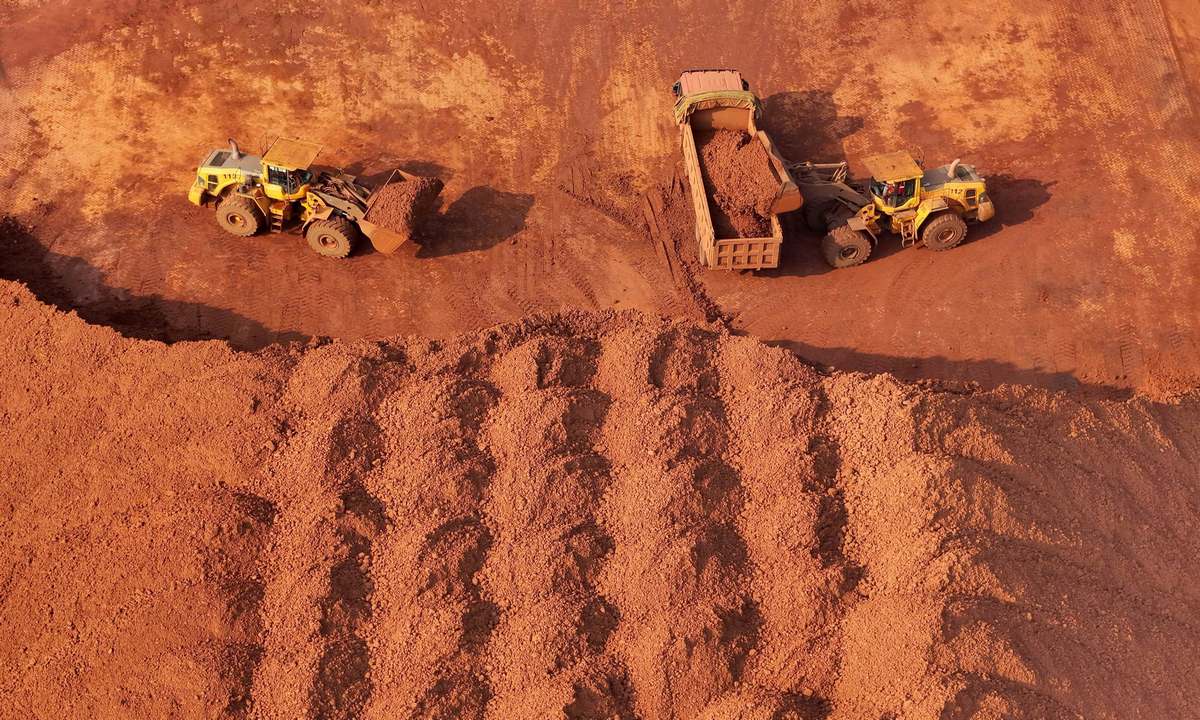
Rare earth resources Photo: VCG
China's Ministry of Natural Resources has recently revealed that, by the end of the 14th Five-Year Plan period (2021-25), 14 minerals, such as rare earths, tungsten, tin, and molybdenum, rank the first globally in reserves, and at the end of 2025, China led the world in the production of 17 minerals.
The ministry noted that the findings will provide solid support for China's high-quality development and it vowed to strengthen technological innovation in minerals exploration in the country.
The ministry announced the mineral resource results at a regular press briefing highlighting China's strategic mineral exploration achievements in the past five years, noting that the mineral reserves have risen significantly, making the country's mineral resource even more solid.
In breakdown, 14 types of minerals in China, including rare earths, tungsten, tin, molybdenum, antimony, gallium, germanium, indium, fluorite, and graphite, now rank the first in the world in terms of reserves at the end of 2025.
And, China ranks among the global top four in reserves of nine minerals, including coal, iron, manganese, titanium, lithium, zinc, phosphorus, and magnesite, the ministry said.
The substantial increase in resource reserves is a direct result of systematic exploration under the strategic mineral exploration action plan, which will lay a solid foundation for mineral resource self-sufficiency and national security, said Xiong Zili, an official with the ministry's geological exploration and mining management department. The ministry stressed that China's mineral production and smelting capacity remains the world's largest.
For example, in 2025, China ranked the first globally in the production of 17 minerals, including coal, vanadium, titanium, zinc, rare earths, tungsten, tin, molybdenum, antimony, gallium, indium, gold, and tellurium, the ministry added. Among them, the output of 11 major minerals - such as rare earths, tungsten, antimony, gallium, indium, and tellurium - accounted for more than 50 percent of the global total, the ministry said.
Regarding mineral smelting and processing, China's advantages are even more prominent. Manganese smelting products account for 99 percent of the global total, rare earth smelting products account for 94 percent, aluminum account for 60 percent, steel account for 53 percent, and copper account for 47 percent.
This shows that China is undoubtedly a global leader in minerals production and supply, which ensures the country's industrial supply chain stability and will help boost emerging industries, the ministry said.
"Minerals exploration and adequate supply is a must for the economy and other important fields," Wu Chenhui, a veteran industry expert, told the Global Times on Wednesday.
Getting to know the country's resource reserve will set the stage for better planning for the minerals needed in economic development, Wu said, adding that the results also showcase China's minerals strength.
"As the vital role of critical minerals in driving green energy transition, assisting advanced technological research and development, and in national defense becomes increasingly apparent, the importance of understanding, utilizing, and reserving these resources for China's future development speaks for itself," Wu noted.
During the 15th Five-Year Plan period (2026-30), the Ministry of Natural Resources will continue to push for new waves of strategic mineral exploration breakthroughs - focusing on critical short-supply minerals like copper, iron, lithium, cobalt, and nickel, while consolidating China's edge in rare earths, tungsten and tin, Xiong said.
And, the ministry will ramp up land-sea exploration coordination, expand exploration and development areas, and intensify geological surveying in order to identify more exploitable mineral deposits by 2030 and build up minerals production capacity, Xiong said.
Technological innovation is the key to major breakthroughs in the new round of mineral exploration. During the 2026 to 2030 period, "we will work to transform geological exploration from traditional approaches to new models driven by technology and data," said Xiong.
RELATED ARTICLES