ARTS / CULTURE & LEISURE
China’s new-style tea drinks become overseas queue magnets
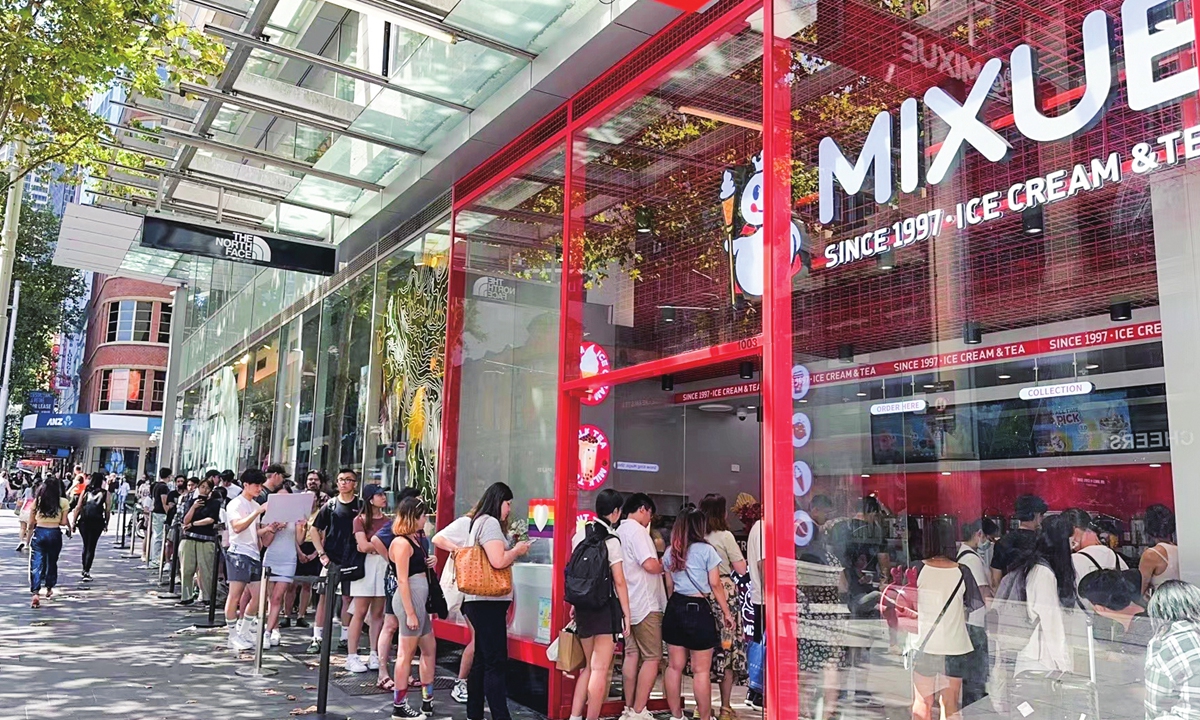
Customers line up outside a store of Chinese new-style tea brand Mixue in Australia.
This spring, China's new-style tea beverage brands have accelerated their overseas expansion. On February 16, Heytea unveiled its first pioneering concept store in Toronto, Canada; on April 11, Mixue launched its first store in South America in Sao Paulo, Brazil.The overseas expansion of new-style tea drinks has integrated Chinese tea culture into fashionable beverages loved by young people worldwide. According to the China Chain Store and Franchise Association (CCFA), new-style tea refers to freshly prepared beverages made with raw tea leaves or tea infusions and blended with fresh fruit, vegetable juices, dairy products or other ingredients - but not instant powdered drinks.
In April 2026, the CCFA released a list of the top 50 Chinese restaurant and new-style tea brands that are expanding globally. According to the list, Mixue has more than 4,000 overseas stores, and Chagee has over 200 overseas outlets. Brands such as Heytea, ChaPanda, Naisnow, Chahalo and Molly Tea have also opened overseas stores. Many consumers queue for hours in front of these stores just to get a taste of the "Oriental flavor." Chinese new-style tea drinks have become veritable queue magnets.
Genuine flavor
How popular are Chinese new-style tea drinks overseas?
In April 2025, Mixue opened its first Central Asia store in Almaty, Kazakhstan. In a review video, a local vlogger said, "If you see people queuing, Mixue is nearby."
Searching for Chinese tea drink keywords on overseas social media platforms, you will find many foreign consumers posting photos holding Chinese-style tea drinks and leaving positive comments such as "delicious," "beautiful" and "will definitely come back."
Why have Chinese tea drink stores become such a sensation overseas?
In November 2024, Singaporean Katrina walked into a Chagee store on Orchard Road and ordered a cup of fresh milk tea. "After the first sip, I turned to my husband and said, 'Now I know why people queue for this. You can really taste the pure, authentic tea flavor,'" She recalled.
Previously, most milk teas Katrina had tried were cloyingly sweet. However, this fresh milk tea, made from natural whole tea leaves, had a clean, refreshing taste that shattered her stereotype of milk tea - and directly led her to later join Chagee's Asia-Pacific operations team.
As an overseas promoter of a Chinese new-style tea brand, Katrina has a deep understanding: "To win over overseas consumers' taste buds, new-style tea drinks cannot do without the genuine tea flavor extracted from high-quality natural tea bases."
To ensure consistent quality, companies including Mixue and Guming have established direct procurement bases and in-house production systems in core tea-growing regions, achieving full-chain control from cultivation to sales. According to the 2026 White Paper on the New-Style Tea Industry jointly released by the China New-Style Tea Industry Alliance and China Insights Consultancy, new-style tea brands have reshaped the agricultural end through contract farming and technology empowerment, driving standardization of agricultural products. They have also built fully automated production lines, transforming tea from "agricultural commodities" into "standardized raw materials for consumer goods manufacturing."
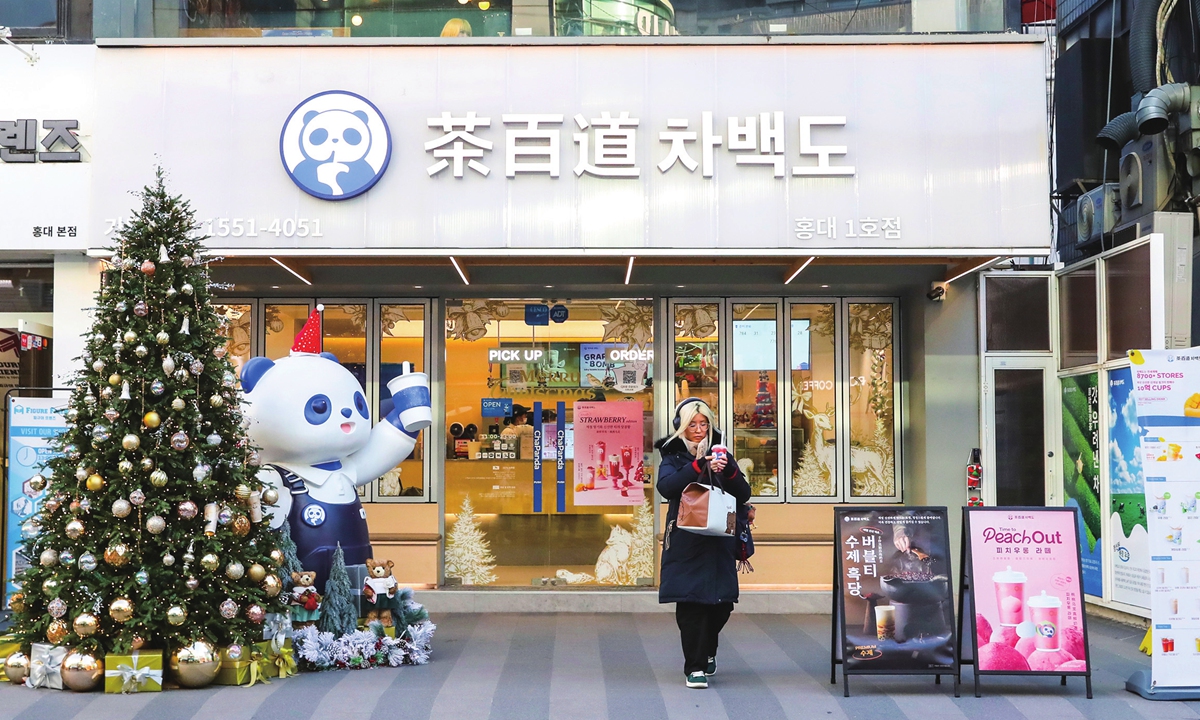
A store of Chinese new-style tea brand ChaPanda in Seoul, South Korea
Distinctive cultureChinese new-style tea brands blend traditional Chinese tea culture with modern elements through product packaging and store design, attracting legions of overseas consumers with their distinct "Chinese style."
Near the British Museum in London, there is a Heytea store themed around Chinese ink-wash painting. Interactive ceiling screens, rock garden displays and ink-wash-inspired circular seating together create a traditional Chinese aesthetic space for tea tasting, garden wandering and art appreciation.
Chagee names its drinks after historical allusions, turning products into vivid vehicles for cultural exchange. Thai university student Katiam said that Chagee's "Boya Juexian" is extremely popular among Thai college students.
"At first we just loved its refreshing taste. But after learning the cultural story behind it - about the legendary friendship between Yu Boya and Zhong Ziqi - we all order a cup when we get together to appreciate the feeling that a true bosom friend is hard to find. Many of us have also fallen in love with the profound Chinese tea culture because of this," Katiam said.
The art of tea making, which embodies meticulous craftsmanship, also exudes strong cultural charm. Heytea's Toronto store features a tea experience lab. While ordering and waiting, customers can view displays of tea varieties and brewing utensils, and watch the entire process of making a cup of tea from raw material selection and flavor testing to final preparation.
Experts point out that new-style tea drinks have created social consumption scenarios that foster a sense of identity through product culture. As topics related to Chinese culture gain popularity overseas, drinking Chinese new-style tea has become a new way for young global consumers to connect with China.
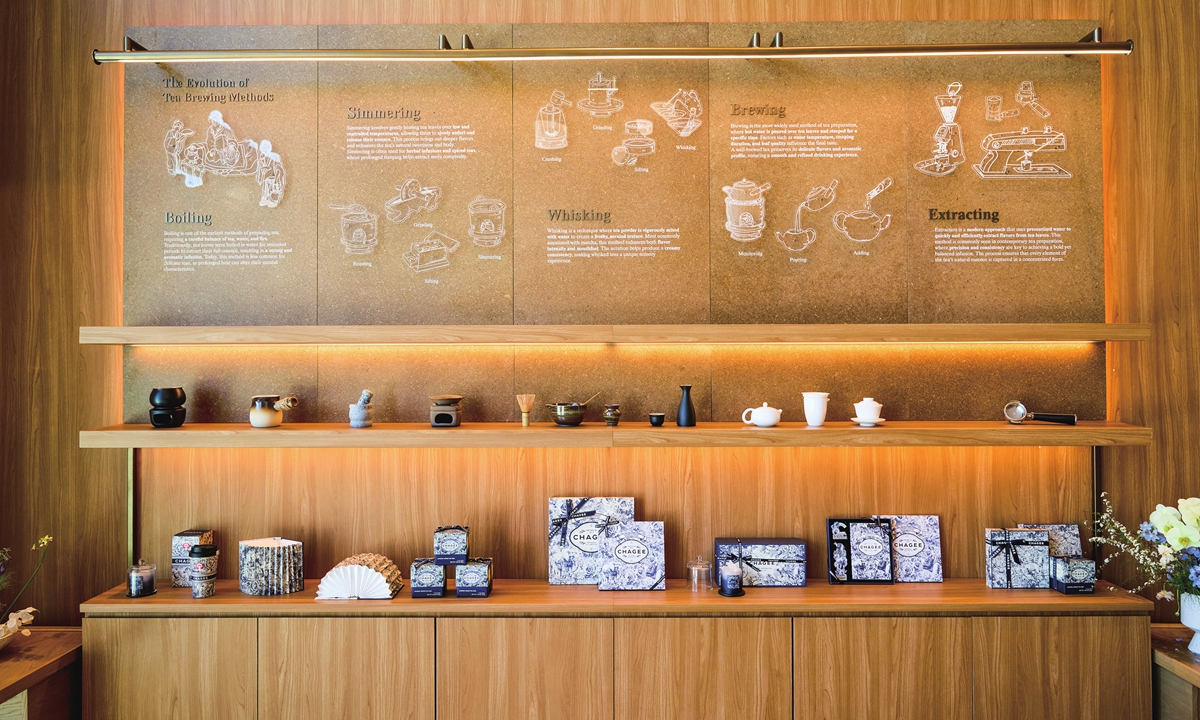
Tea ware on display at the first North American store of Chinese new-style tea brand Chagee
Local adaptationWhen expanding abroad, Chinese new-style tea brands take into full account local consumer preferences and actively pursue localized innovation.
"In-depth research and understanding of local consumers is the foundation of successful expansion," said Thomas, head of Molly Tea's Southeast Asia operations. As early as one year before opening its first Southeast Asia store, his team visited more than 490 relevant establishments in and around Bangkok, Thailand, conducting comprehensive market research on local consumer groups.
During the 2026 Ramadan, Chagee launched a limited-edition date milk tea series in Malaysia. "Dates are a traditional food for iftar (the breaking of the fast). Integrating this element into our drinks not only respects local traditions but also brings a fresh twist," Katrina said. The series was a runaway success during Ramadan.
Mixue's research found that Southeast Asian consumers generally prefer sweeter flavors. Therefore, after entering the region, Mixue adjusted its drinks to be slightly sweeter and incorporated local favorites such as lemongrass and pineapple. The team also sourced local ingredients including passion fruit and dragon fruit from farmers' markets to add to its fruit tea drinks, which have been widely embraced by local consumers.
A senior executive in charge of ChaPanda's overseas business said that after entering new markets, new-style tea brands typically adjust ice levels, sweetness and even brewing methods - but don't change too much to avoid losing their brand identity. The key is to find the right balance between adaptation and preserving the brand's core essence.
Industry analysts note that China's tea drink industry has achieved global leadership in supply chain integration, product innovation and digital operations. Rooted in quality and culture, Chinese new-style tea drinks are accelerating their journey to become a global phenomenon by integrating millennia-old tea heritage with modern consumer demands.
RELATED ARTICLES