The league, an amateur football tournament featuring 13 teams representing cities across East China's Jiangsu Province that was viral on Chinese social media in 2025, is more commonly known as the "Su Super League."
Unlike 2025's viral success with the "fragmented Jiangsu" meme, during this season, the league caught the audience's eyes with cutting-edge technologies such as artificial intelligence (AI) virtual hosts, digital replays and smart voice interaction, building a smarter viewing experience and bringing new energy to traditional football.
On the night of April 11, at the opening match in the Changzhou Olympic Sports Center, 200 quadruped robotic dogs and 90 humanoid robots made by Magic Atom, a local embodied intelligence technology company in Jiangsu, put on a show on the rain-soaked field.
It was the world's largest and most complicated outdoor coordinated robot performance ever, according to the website of the JSCL.
The robots moved in perfect sync, and the crowd was amazed by what felt like science fiction come to life, the JSCL said on its website.
During the same game, 13 heavy-loaded drones made by MOVA, another Jiangsu-based technology company, lifted 13 flexible LED screens, creating a stunning "flying screen" formation in the night sky. Each of the 13 screens clearly showed Chinese characters representing Jiangsu's 13 cities. This also set a world record for the most drones flying in formation with hanging display screens, according to the JSCL website.
As the league entered its fifth week, even more advanced tech was on show.
On the pitch, AI tools built by local Jiangsu tech firms have changed how fans watch the football games. A digital twin, a virtual replica of a physical object or system, allows audiences to view the real stadium match from any 360-degree angle. AI large models provide commentaries in local dialects and break down tactics. Smart interaction lets fans take part while they watch.
On the television screens, an AI virtual host named Le Yi made by a Jiangsu provincial television station is both professional and friendly. She knows the cultures of all 13 cities in Jiangsu. She can explain formations, player performance, and match stats, and chat with fans using the local dialects from Nanjing, Suzhou, and other cities. During live broadcasts, Le Yi works with real commentators, answers questions from comments right away, and makes watching feel like a two-way conversation.
Voice control makes watching the game easier. This year's JSCL viewing platform uses smart voice interaction. Fans don't need to tap their phones. They just speak to get player stats, schedules, possession rates, and more. The system can keep chatting, remember which team you support, send you updates, and even let you vote or join real time quizzes. Watching goes from "passive viewing" to "actively joining in."
Around the stands, smart robots and quadruped robotic dogs work as on site guides. They help police with crowd control and safety. They clearly show people where entrances and exits are, spread out crowds, ease the work of human staff, and make the stadium run more efficiently.
In training, digital twin technologies have changed how teams prepare. The system tracks more than 200 technical and physical stats for each player, makes personalized reports, and helps coaches plan tactics and prevent injuries.
From digital twins that recreate the whole field to AI hosts that make watching fun, to voice control that makes everything simpler, AI has given the JSCL a huge boost.
Beyond the pitch, Jiangsu's smart manufacturing has achieved an even more authoritative benchmark. The province is now home to more than 3,000 national-level specialized, sophisticated, unique and new "little giant" enterprises and 292 national-level manufacturing single champions, China Securities Journal reported.
The JSCL is emerging as a unique window to observe Jiangsu's economic leap from manufacturing to smart manufacturing and its transformation from industrial advantages to consumption advantages. It is more than just tech and sports coming together. It's the fruit of Jiangsu's investment in technology and a demonstration of its smart manufacturing strength.
Global Times
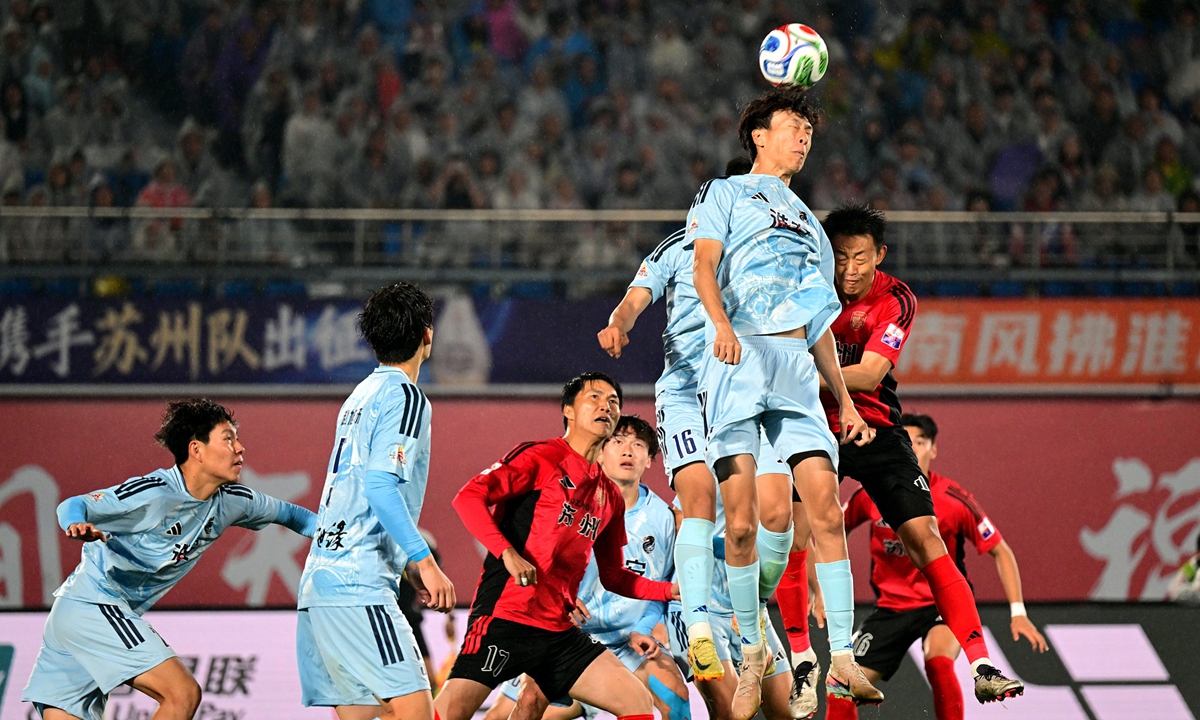
Players from the Suzhou and Huai'an teams vie for the ball in a match of the Jiangsu Football City League (JSCL) in Suzhou, East China's Jiangsu Province, on May 2, 2026. Photo: VCG
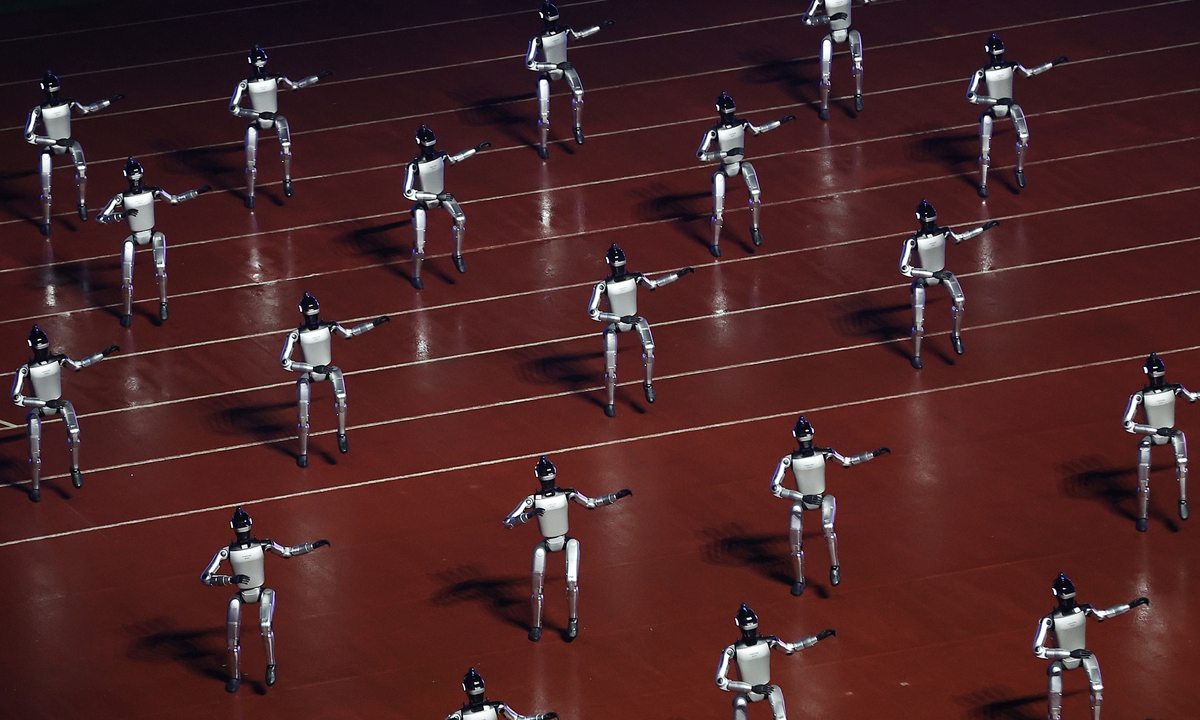
About 90 humanoid robots put on a show during the opening match of the JSCL on April 11, 2026, in Changzhou, Jiangsu. Photo: VCG
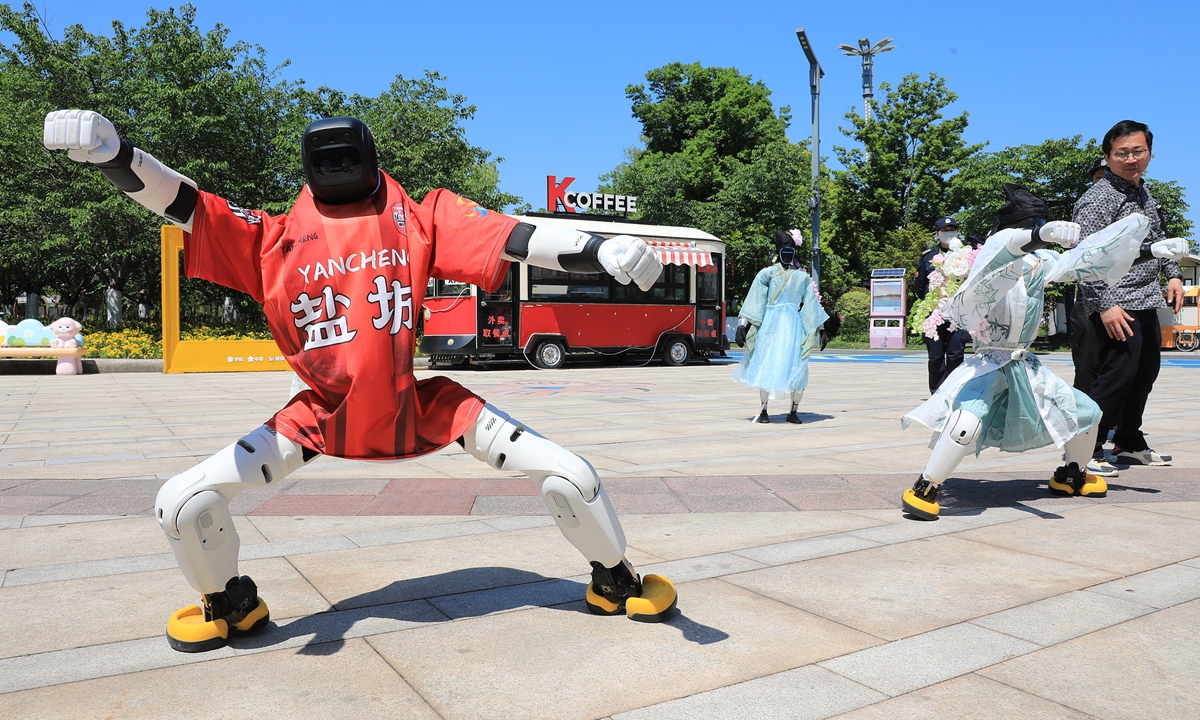
A robot wearing the costume of the Yancheng team of the JSCL performs at a scenic spot in Yancheng, East China's Jiangsu Province, on May 4, 2026, to cheer for the league. Photo: VCG
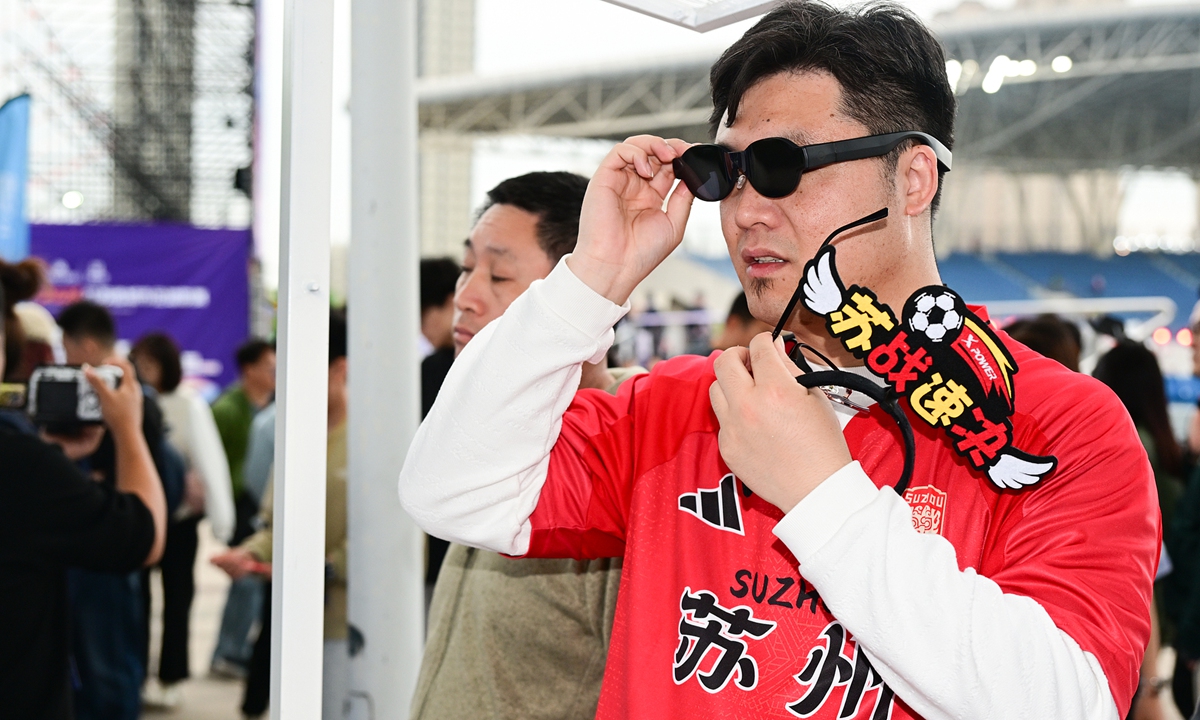
A fan experiences AI smart glasses before a JSCL match between Suzhou and Huai'an teams held in Changshu, Jiangsu, on May 2, 2026. Photo: VCG
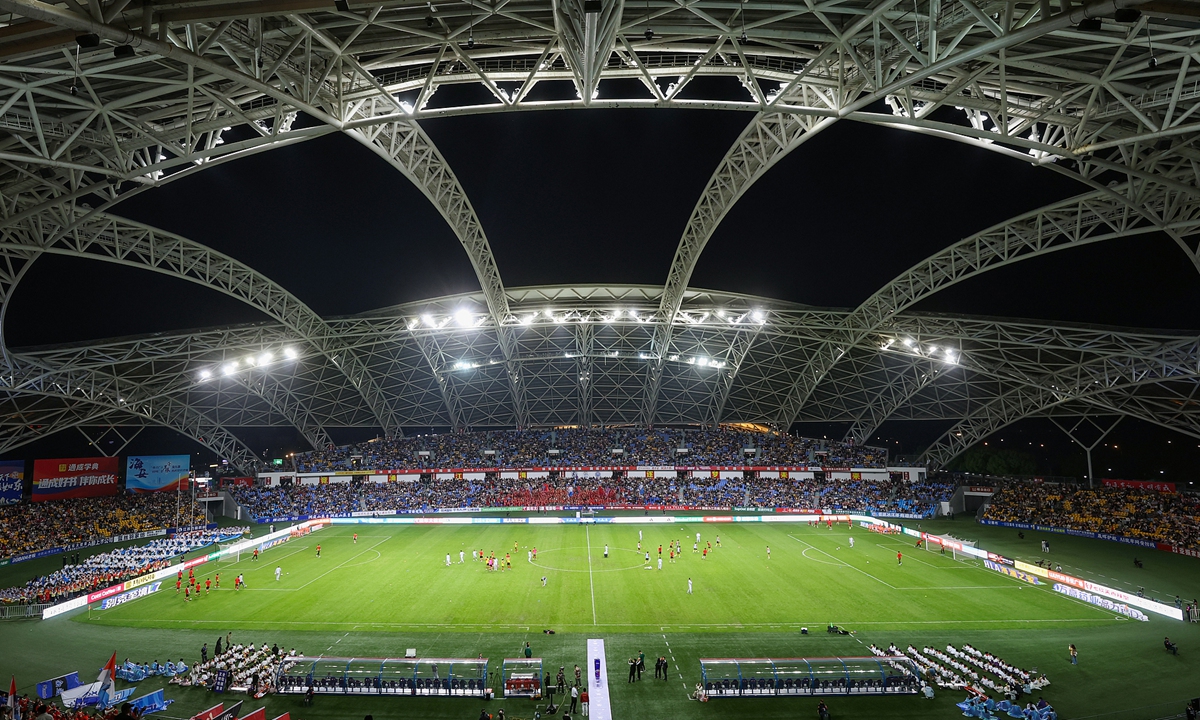
A JSCL match between Nantong and Xuzhou teams takes place at the Nantong Sports Conference and Exhibition Center on April 25, 2026. The center is China's first retractable-roof stadium and has been technically upgraded for the 2026 JSCL. Photo: VCG
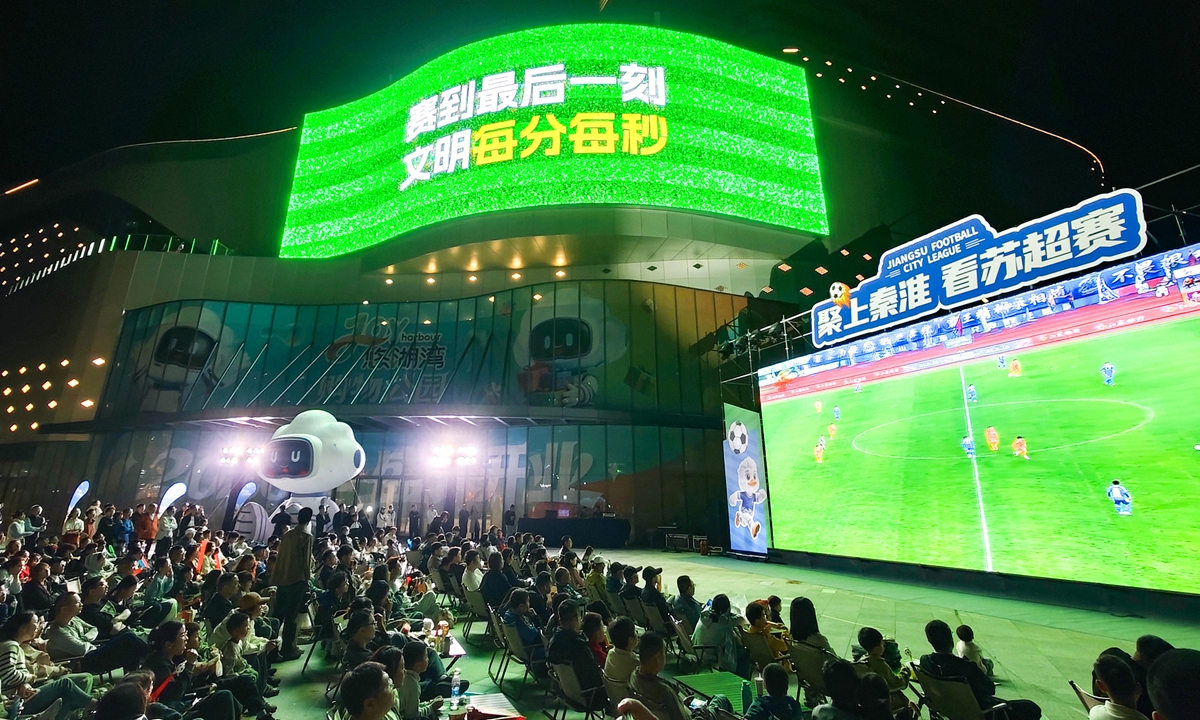
Residents in Nanjing gather at a local park to watch a JSCL match between the Nanjing and Suqian teams held in Suqian, Jiangsu, on April 18, 2026. Photo: VCG
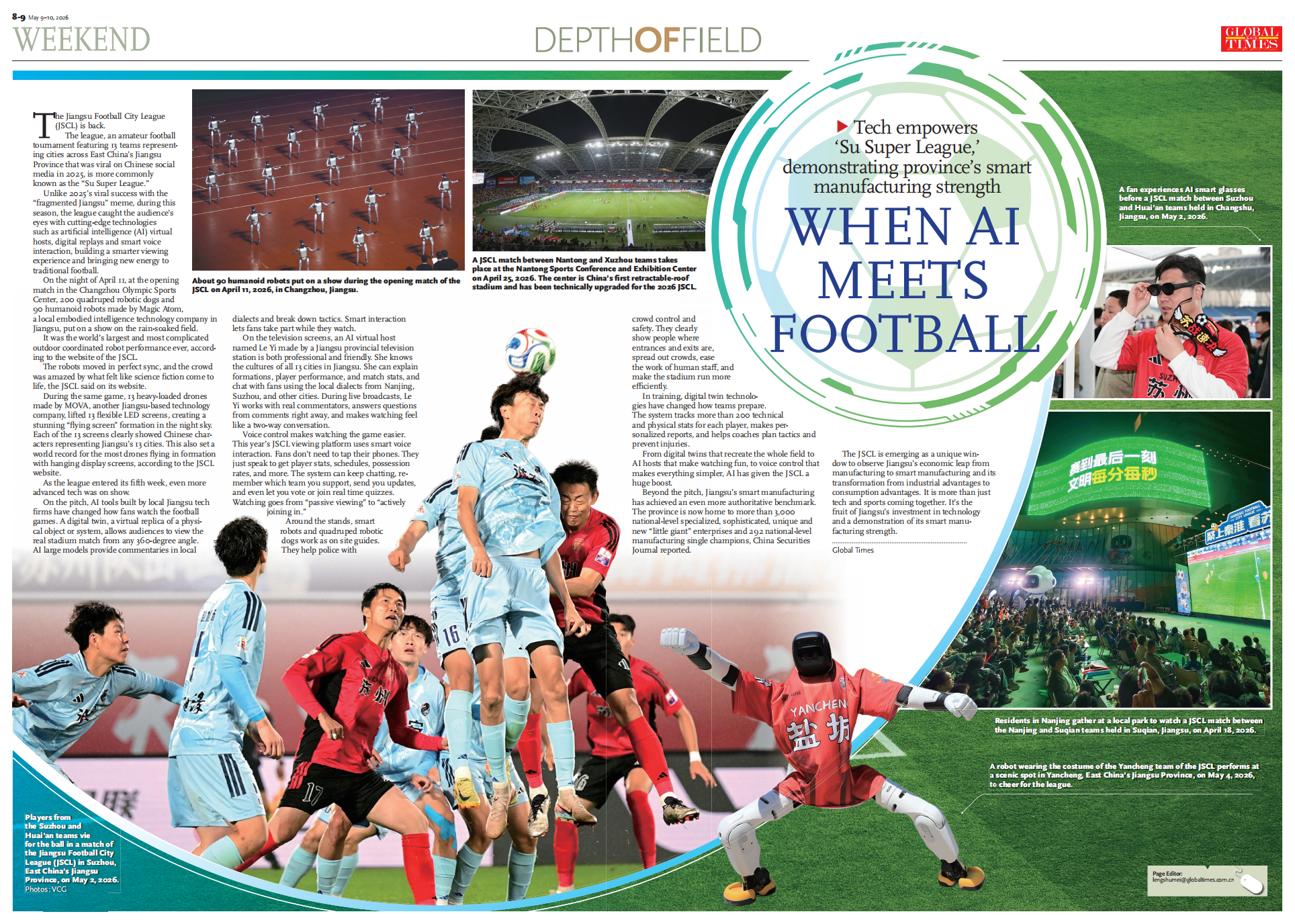
When AI meets football