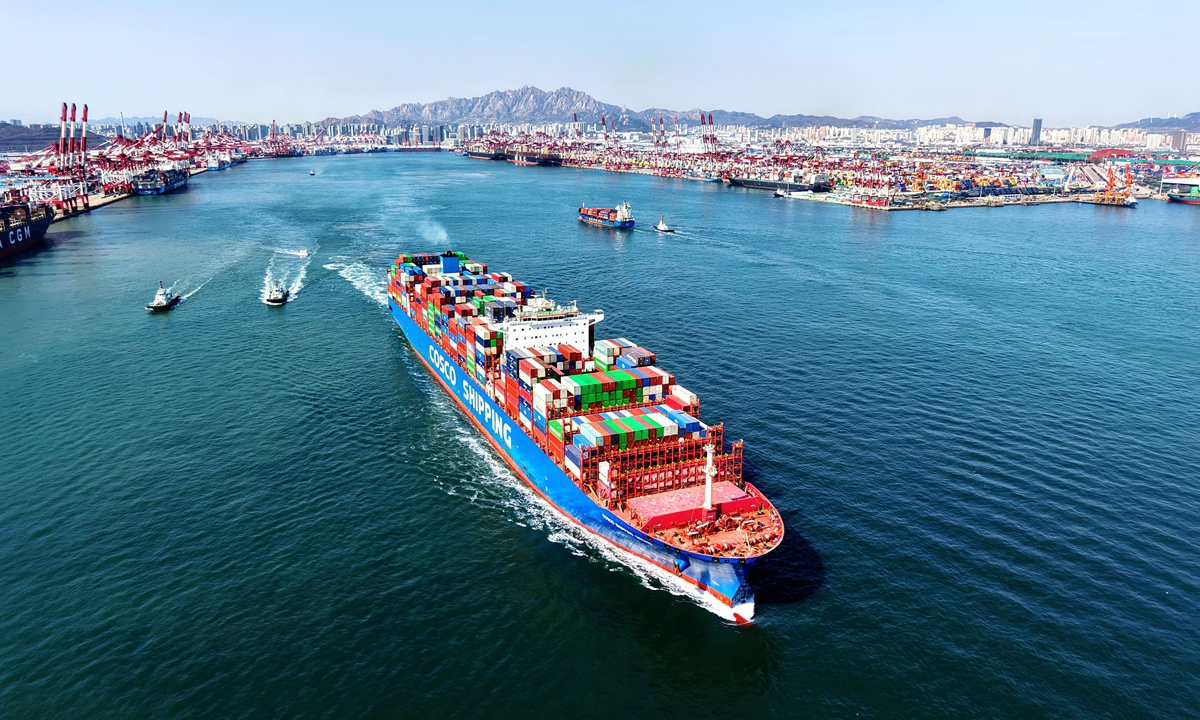
View of a container vessel near Qingdao port in East China's Shandong Province on April 7, 2026 Photo: VCG
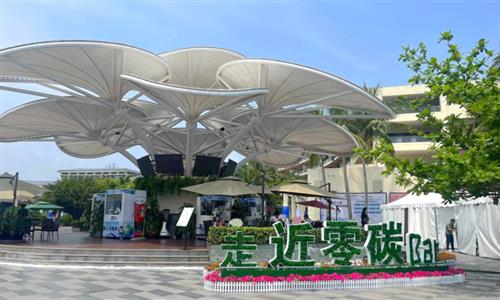
Construction of China's first zero-carbon industrial park evaluated under national standards was recently completed in the Xiong'an New Area in North China's Hebei Province, according to the Science and Technology Daily.
More than a local green milestone, it exemplifies broader green progress. From East China's Shandong Province to South China's Guangdong Province, China's zero-carbon industrial park development is accelerating toward the goal of establishing about 100 zero-carbon industrial parks during the 15th Five-Year Plan period (2026-30).
The progress and the economic practice of zero-carbon industrial parks demonstrate that China's dual carbon goals - peaking carbon dioxide emissions before 2030 and achieving carbon neutrality before 2060 - are not merely an environmental governance agenda or an emissions reduction commitment; rather, they represent a systematic transformation deeply embedded in industrial upgrading, green energy use, and global supply chain cooperation.
The significance of zero-carbon industrial parks lies not only in cutting emissions, but also in reorganizing production. Traditional industrial parks usually treat energy as an external input: electricity is generated elsewhere, transmitted to factories and then consumed by enterprises.
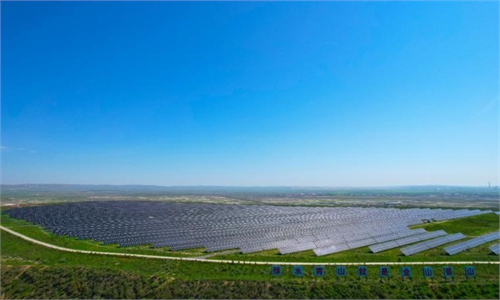
Zero-carbon industrial parks are changing the logic. Through green power direct supply, distributed energy systems, energy storage, smart micro-grids and deeper integration between renewable power and industrial processes, parks can become bridges between clean electricity and manufacturing demand. Energy is no longer merely a cost; it becomes part of industrial competitiveness.
This shift is closely linked with the next stage of China's green development. During the 15th Five-Year Plan period (2026-30), the low-carbon transition will enter a critical window for reaching the goal of carbon peaking before 2030. Building zero-carbon industrial parks, planning zero-carbon transport corridors, improving green electricity supply and upgrading energy efficiency are not isolated measures. Together, they form a new industrial model in which green power, advanced manufacturing, digital management and low-carbon logistics reinforce one another.
The national carbon market will support this process. China is set to expand its national carbon market to cover all major emitters by 2027 amid efforts to leverage market mechanisms for low-carbon green transition. This means that carbon reduction will increasingly be guided by market signals. Zero-carbon industrial parks provide the scenarios for companies to respond to such signals in real production.
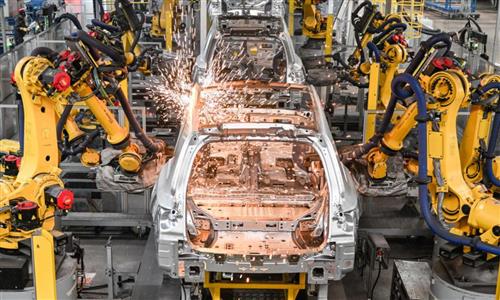
For traditional energy-intensive sectors such as steel, petrochemicals, chemicals, building materials and digital infrastructure, this is particularly important. Their transformation requires stable green power supply, process innovation, carbon data management, equipment upgrading and industrial-chain coordination. A zero-carbon industrial park can bring these elements together at the production-site level. It allows enterprises to reduce their carbon intensity while improving efficiency, compliance capacity and product competitiveness.
This progress is taking place amid a more complicated international environment. The global low-carbon transition has entered a crucial period, but trade protectionism and other barriers are rising. Some Western economies are tightening market restrictions in the name of green competition, making low-carbon technology diffusion and industrial cooperation increasingly difficult.
If low-carbon rules become tools for excluding competitive products or shifting transition costs to the developing economies, the world will not move faster toward carbon neutrality. Instead, global supply chains may become more fragmented, green products may become more expensive, and the developing countries may face a narrower path to industrialization.
By building zero-carbon industrial parks, expanding green power supply and improving carbon market mechanism, China is advancing its own green transition while offering a true playbook for global industrial decarbonization efforts. The value of this practice lies in its industrial depth: it connects renewable energy with manufacturing, carbon markets with enterprise management, and domestic industrial transformation with global supply-chain cooperation.
For the world, it matters. Many developing countries need industrialization, jobs, infrastructure and affordable energy, while also facing pressure to reduce carbon emissions. A transition model dominated by high barriers and expensive compliance isn't feasible. What is needed is scalable technology, lower-cost green products, open industrial cooperation and practical pathways for cutting emissions in real production systems.
China's zero-carbon industrial parks show that green development can be built into production. Against global protectionist headwinds, China's zero-carbon industrial park demonstrates that low-carbon transition can still move forward through scale, innovation, openness and cooperation. This is not only a Chinese industrial story, but also a practical contribution to a more affordable and inclusive global green transition.
The author is an associate professor at the School of Carbon Neutrality and Environment, Beijing Jiaotong University. bizopinion@globaltimes.com.cn
RELATED ARTICLES