ARTS / CULTURE & LEISURE
Jingpo festival song carries ethnic heritage to world
Mountain melody sensation
By Published: May 13, 2026 11:12 PM

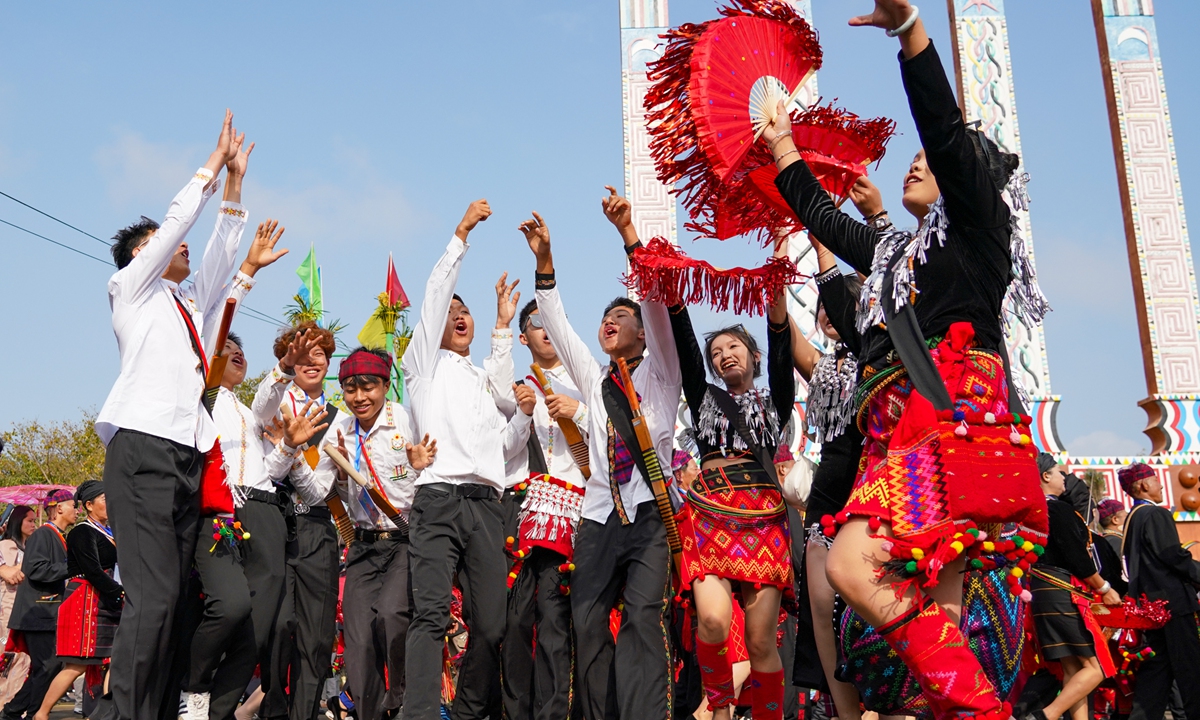
People dance to the music of Munao Zongge in Dehong Dai and Jingpo autonomous prefecture, Southwest China's Yunnan Province in 2026. Photo: Courtesy of the local publicity department
A vibrant, rhythm-driven melody steeped in ethnic charm has recently taken the internet by storm.Known as "Munao Zongge," the song, paired with scenes of the Jingpo people, one of the ethnic groups in Southwest China's Yunnan Province, dancing in elaborate costumes adorned with peacock feathers, has won widespread praise from netizens.
This song has garnered more than 3 billion streams on various platforms, and countless user-generated adaptations have flooded social media.
The music has leapt across continents, captivating audiences in African nations like Nigeria and Rwanda, where local performers are putting their own spin on it.
The song "Munao Zongge," which means "all people gather and dance together," takes its name from the most solemn traditional festival with the same name of the Jingpo people.
State broadcaster CCTV reported that in 2006, the festival was inscribed on China's first list of national intangible cultural heritage.
On the 15th day of the first lunar month, the Dehong Dai and Jingpo autonomous prefecture in Yunnan holds a grand Munao Zongge festival.
The "Munao Zongge March" - a piece composed by Jingpo musician Shi Legan - echoes throughout the festivities and is widely considered the source of the viral song.
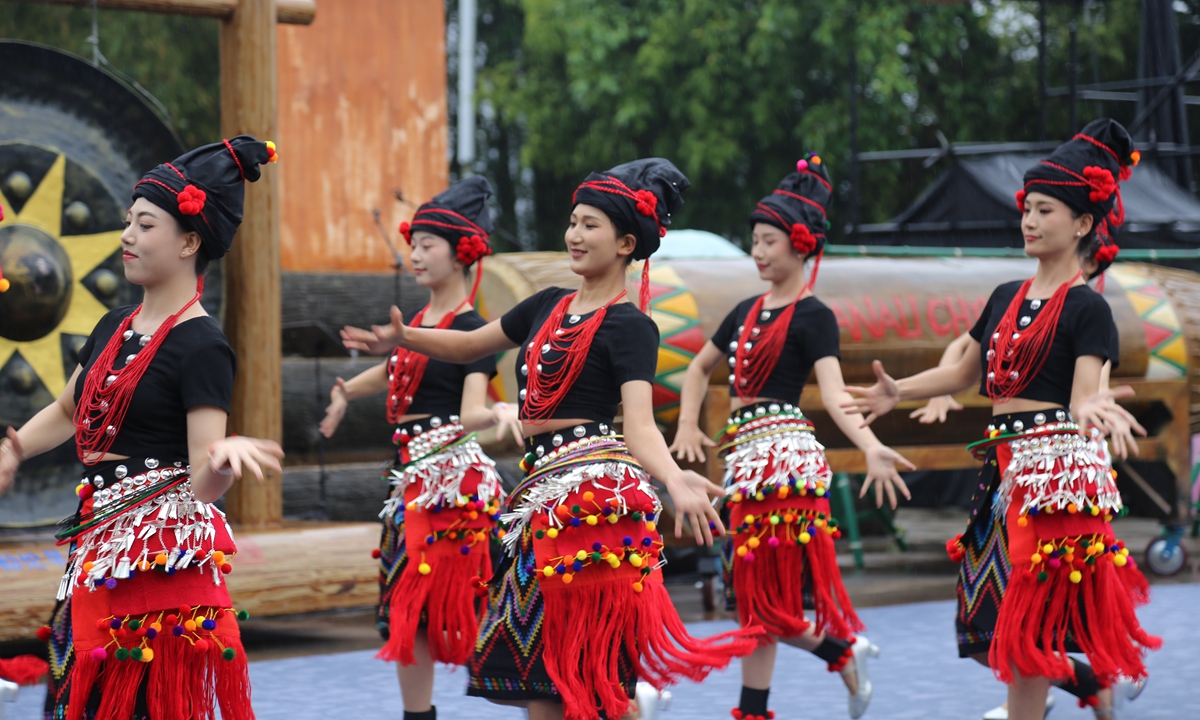
People dance to the music of Munao Zongge in Dehong Dai and Jingpo autonomous prefecture, Southwest China's Yunnan Province in 2026. Photo: Courtesy of the local publicity department
Ethnic rootsFor 70-year-old Shi, who was born and raised on Dehong's Jingpo Mountain, "Munao Zongge March" represents a lifelong commitment to his ethnic roots.
Shi said he drew from the oral traditions etched in his memory, Jingpo's fire pit culture, marriage customs, rituals and the heroic stories of the Jingpo people resisting British invaders during the 19th century and Japanese invaders in World War II.
"It is this deep connection to my hometown that enables my music to resonate with the Jingpo people," Shi said.
Determined to compose a powerful background melody that embodied the Jingpo people's customs, legends and heroic spirit, Shi experimented with various folk tunes before breaking free from traditional frameworks.
He blended ethnic elements such as the rhythm of machetes used in mountain work and the big drums of the Munao Zongge festival with modern composition techniques, even incorporating Western symphonic arrangements and brass instruments like trombones and trumpets.
After a lot of revisions, he completed his first draft in 1991. The melody quickly spread in Dehong and even to Jingpo communities in Myanmar.
In 2006, when China established its first batch of intangible cultural heritage, Shi invited musicians from Yunnan's song and dance troupe to record it, officially renaming it the "Munao Zongge March." It has since become the iconic music of the Munao Zongge Festival and a vital carrier of Jingpo culture.
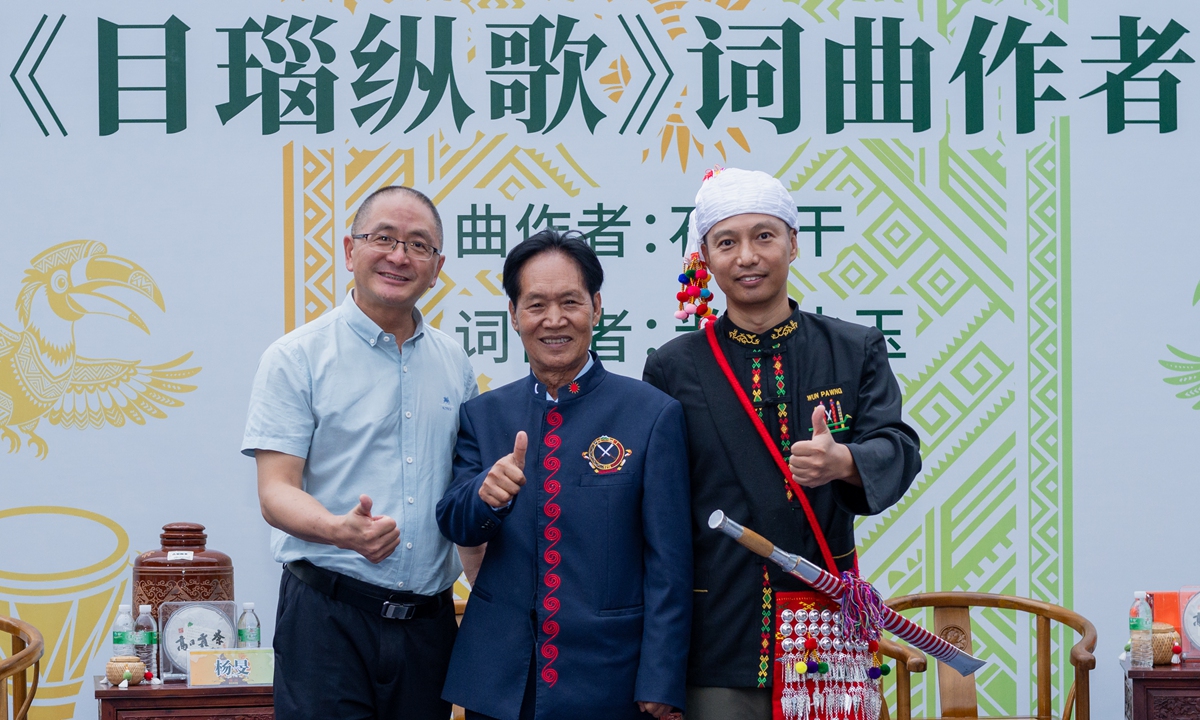
Musicians Zhen Zhen (right) and Shi Legan (middle) pose for a photo with local official Yang Min in Dehong, Yunnan Province on May 1, 2026. Photo: Courtesy of Zhen Zhen
Cross-generational echoShi never imagined his mountain-grown march would travel beyond Asia, let alone ignite dance floors in Africa. He has always encouraged innovation.
This openness paved the way for Zhen Zhen, a 46-year-old independent musician from Beijing, to use AI to adapt the instrumental piece and add lyrics reflecting the Jingpo people's migration history and fire pit culture. But he soon came to realize that AI was a double-edged sword.
"AI often mixes up elements of the De'ang and Dai ethnic groups with those of the Jingpo group due to information pollution," Zhen told the Global Times. "If you're not careful, you might cause a cultural offense."
What truly drew Zhen into the project was Jingpo's courageous history. Through old films and documents, he learned about their struggle against foreign invaders.
When British invaders pushed into the frontier armed with guns, and later when Japanese invaders massacred villages, the Jingpo people, who were still living by slash-and-burn farming, fought back with long knives and bird muskets.
"Hundreds of people would fall in one burst of gunfire, but they never retreated," he said. "'Munao Zongge' comes across as cheerful on first listen, but the more you hear it, the more you feel the weight of history behind it. It's a tribute to their bravery," said Zhen.
Zhen recalled that when he finally met Shi in person, the old composer clasped his hands and held on silently for a long moment.
Two generations, separated by decades, discovered themselves in a deep, unspoken bond and a shared conviction - both driven to give voice to the Jingpo people's indomitable will to overcome all hardships. Zhen described this creative journey as a "profound, soul-stirring experience."
Liu Yan, director of the local culture and tourism bureau, noted that the Munao Zongge Festival carries a meaning far beyond song and dance as it is not only an intangible cultural heritage treasure, but a profound expression of "the Chinese nation's sense of community."
The most distant echoes have sounded in Africa. Ni Mengxiao, a Chinese expatriate who has lived in Nigeria for 23 years and now heads the Huaxing Arts Troupe Nigeria, first heard the new track on his phone.
"I loved the rhythm and the cultural strength behind it," he said, noting he began posting videos of his Nigerian performers dancing to the tune, and they quickly drew a curious, enthusiastic online crowd.
"At first it sounds purely joyful and infectious, but once you understand the stories, it becomes profoundly moving," Ni said. "That resonates deeply with African tribal experiences. It's a feeling we recognize."
Determined to turn a viral moment into something lasting, Ni wove in elements from Nigeria's ethnic cultures. His troupe is now preparing a formal stage production that fuses Jingpo ritual choreography with Nigerian dance traditions. "The music of the Munao Zongge Festival is not only from Yunnan, it belongs to a vision of shared human heritage, cultural integration and world peace," Ni said.
RELATED ARTICLES