Let 2026 be a historic, landmark year that opens up a new chapter in China-US relations: Global Times editorial
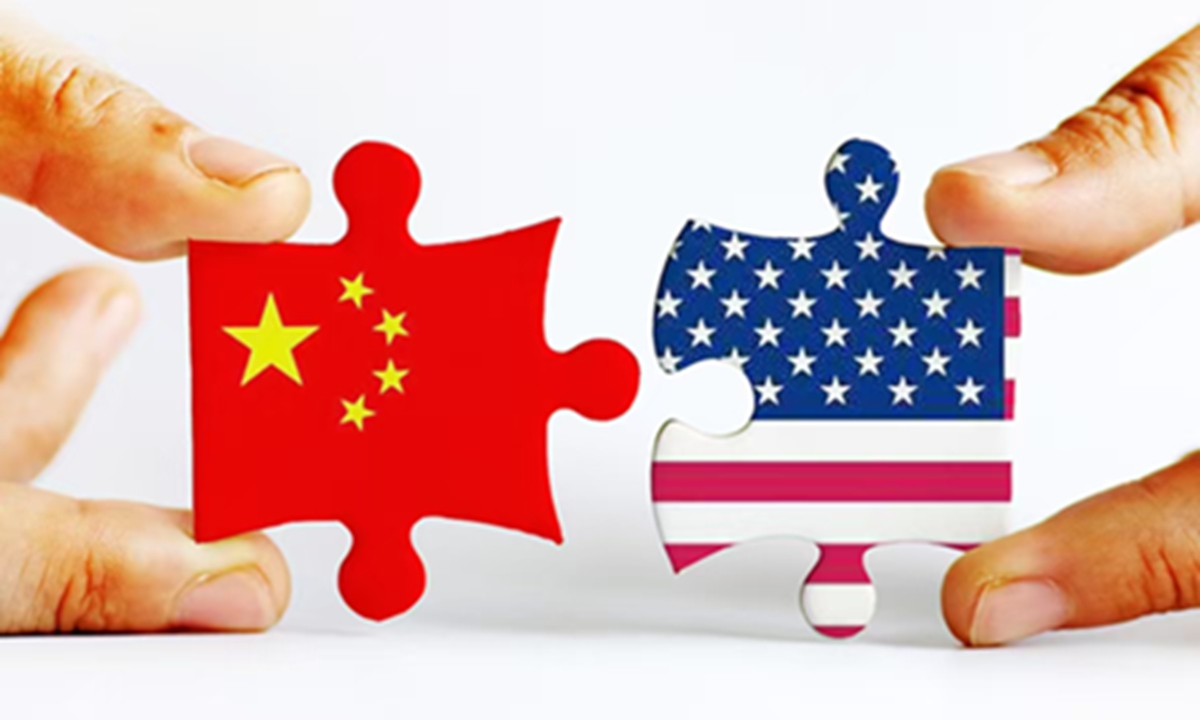
China US Photo: VCG
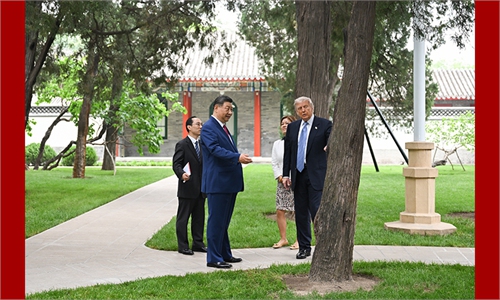
US President Donald Trump concluded his state visit to China on Friday afternoon and departed Beijing on Air Force One. During this historic and landmark visit, mutual respect, valuing peace, and exploring cooperation were the overarching themes of the summit. The agreement reached by the two heads of state to build "a constructive China-US relationship of strategic stability" is the most important political consensus and has attracted widespread attention from the outside world. An editorial in the South China Morning Post said this is "a realisation that the China-US relationship is so complex and consequential that they need to keep it stable - not only for the sake of the two peoples, but also for the international community." The article said that the summit in Beijing "heralds the start of constructive, stable relations."
Chinese President Xi Jinping used "four stabilities" to elaborate on the core essence of "a constructive relationship of strategic stability": a positive stability with cooperation as the mainstay, a sound stability with moderate competition, a constant stability with manageable differences, and an enduring stability with promises of peace. Some foreign media said that this is a layered structure of premise, pathway, key, and goal. Many analysts believe that the creative use of the concept of "strategic stability" by both sides has transcended the original meaning of crisis management between major powers during the Cold War, and has provided a new strategic framework for expanding pragmatic cooperation through healthy competition among major powers and managing differences in the new era.
It is not difficult to see that "a constructive relationship of strategic stability" has a rigorous theoretical logic and rich practical implications. The "four stabilities" mean that both sides should continuously enhance the resilience of China-US relations through exchanges and cooperation, avoid a zero-sum game, and ensure that bilateral policies do not fluctuate wildly, let alone lead to conflict, confrontation, or even war. These four stabilities are interconnected and organically unified, setting up a crucial protective net for China-US relations when facing storms and reefs, and providing fundamental impetus for this giant ship to sail in the right direction. Under the strategic guidance of this new positioning, this "most important bilateral relationship in the world today" has become more certain and predictable, which in itself is an important public good provided to the international community. It conforms to the trend of the times, responds to the greatest concerns of all parties, and its widespread welcome is inevitable.
The new positioning of China-US relations represents a recalibration of each side's goals and modes of interaction under new circumstances, addressing the overarching question of whether China and the US are rivals or partners. For some time, certain people in the US have viewed China's development as a "threat," defined China as a "rival," made "competition" the dominant framework of their China strategy, and even attempted to promote "decoupling" and the severing of supply chains. Facts have proven this way of thinking entirely wrong. China's growth is part of the historical trend, and any attempt to contain or suppress China is doomed to fail. "Decoupling" and supply-chain disruption ultimately harm both sides. The concept of "a constructive China-US relationship of strategic stability" transcends the narrow zero-sum mindset of "your loss is my gain" or "your rise means my decline." It restores clarity to the true nature of China-US relations and reflects a sense of responsibility toward history, the people, and the world.
Positive cooperation, healthy competition, managing differences, and enduring peace are fully consistent with China's long-standing principles and propositions. These ideas have been widely welcomed by the international community and continuously tested in practice. This also demonstrates that China and the US are moving beyond a cycle of confrontation and negotiation toward gradually building consensus and clarifying direction, while deepening exploration of a new model for major-country relations. Today, dialogue between the two sides is more equal, communication more pragmatic, and red lines clearer, showing the possibility for China-US relations to open a new chapter through resilience.
The proposal to build a "constructive China-US relationship of strategic stability" underscores China's consistent commitment to head-of-state diplomacy and its active efforts to promote a China-US relationship that is strategic, constructive, and stable, so that positive interaction between the two countries can bring greater stability to an unsettled world.
The US side has agreed to define the building of a "constructive China-US relationship of strategic stability" as the new positioning of bilateral ties. US President Donald Trump said that China-US relations will get "better than ever before." Responding to media questions on Thursday, US Secretary of State Marco Rubio said that bilateral relations are important and constructive, adding that world stability is in everyone's interest.
A "constructive China-US relationship of strategic stability" should not be a slogan, but must become a shared objective upheld by both sides and translated into joint actions. As permanent members of the United Nations Security Council and the world's two largest economies, China and the US should achieve peaceful coexistence and mutually beneficial cooperation on the basis of mutual respect, and find the right way to get along with each other. This is what the peoples of both countries desire and what people around the world hope to see. Expanding the list of cooperation while reducing the list of problems will require concrete actions to realize "constructive strategic stability" in China-US relations.
China hopes the US side will demonstrate the responsibility expected of a major power through practical actions, work with China along the direction charted by the two heads of state, continue enriching the substance of this new positioning, and translate it into concrete policies and practical measures, jointly opening a new chapter in China-US relations. There is reason to believe that 2026 will become a historic, landmark year that opens up a new chapter in China-US relations.
RELATED ARTICLES