ARTS / CULTURE & LEISURE
A documentary decodes Ivens’ ‘New Man’ spirit via his stories in China
‘Flying Dutchman’ on the spotlight
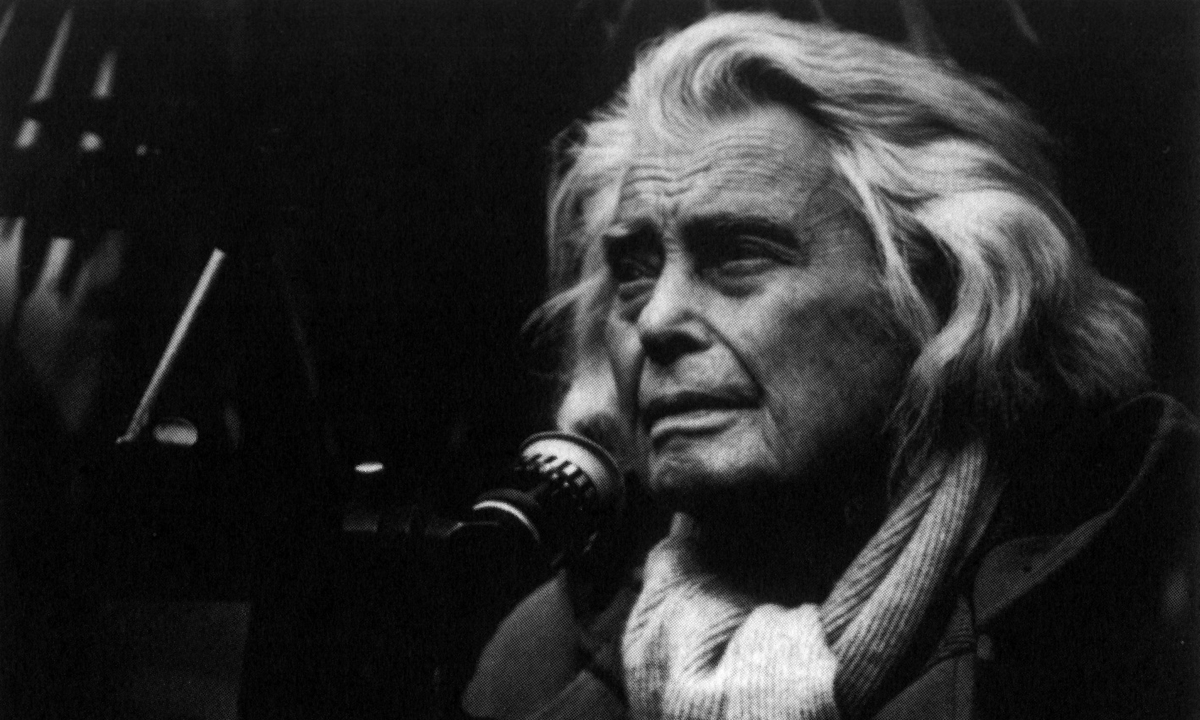
Dutch documentary filmmaker Joris Ivens Photo: Courtesy of Zhang Tongdao
Nearly 40 years after his passing, Joris Ivens, a filmmaker once alienated by his homeland the Netherlands, still lives in today's documentary cinema through the film legacies he left behind.Ivens was born in 1898 and died in 1989. His nickname, "The Flying Dutchman," describes his globe-trotting 60-year film career. And the Netherlands had ultimately awarded him a knighthood in 1989.
In his 1932 film Song of Heroes, a young industrial worker causes Ivens to fall into deep contemplation. Living on a mere 150 grams of meat a week and enduring relentless cold, the worker defies the brutality of reality like a hero all for the sake of his passion for life.
Ivens called the worker, or rather, the spirit the worker embodied, the "New Man." In this worker, Ivens saw himself in the world of cinema. Yet, what he likely did not anticipate was that, six years later, his time filming in China would deepen his belief in this "New Man" spirit.
Filmed in 1938, the documentary The 400 Million was Ivens' first work in China. At a time when the common Western impression of Chinese was still trapped in the biased imagination of "Fu Manchu," Ivens, through his lens, witnessed the true integrity of China's soldiers and its people displayed during the War of Resistance against Japanese Aggression (1931-45).
In the years that followed, he created three more major works in China. A 50-year connection with this country showed him a nation that was sprouting new ideals out of the shadow of war.
The "New Man" he found in China was no longer the spirit of one man, but one shared by the entire people.
Nearly four decades after Ivens' passing, the new documentary Ivens Meets China revisits that enduring connection and asks why China remained central to the Dutch filmmaker's life and work.
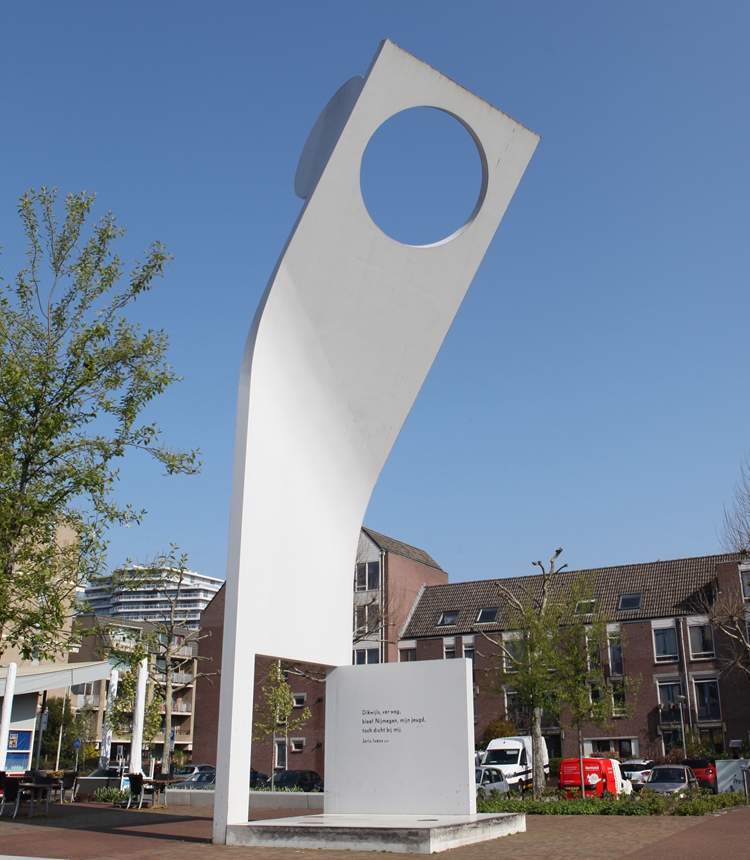
A monument commemorating Joris Ivens in his hometown Nijmegen, the Netherlands Photo: VCG
The call from ChinaDebuting worldwide in countries like Germany, France and beyond, Ivens Meets China was directed by Chinese documentary director Zhang Tongdao, with Dutch filmmaker René Seegers as the narrator.
It was through their shared icon - Joris Ivens - that Zhang and Seegers came to know each other.
Zhang's exploration of Ivens began long before his 2026 work. In 2001, he told the story of Ivens in his Jingdian Jilu, or Classic Documentary, a documentary series on 16 filmmaking masters. In 2008, he organized an academic conference in honor of Ivens before creating the TV documentary Ivens on China.
While Zhang's works approach Ivens from different angles, the four films the Dutch master made in China - The 400 Million, Letters from China, How Yukong Moved the Mountains, and A Tale of the Wind - remain the fulcrum for Ivens' works.
Together, this quartet charts China's journey from its war-torn years to postwar rebirth.
But for Zhang, showing what Ivens captured on film was only half the story. He said his mission was to reveal why Ivens filmed China.
This deeper purpose is rooted in Ivens' own emotional shift toward the country: from a sense of moral support to, in the end, seeing China as his spiritual home.
To trace this transformation, Ivens Meets China retraces Ivens' steps through places such as Taierzhuang in today's Zaozhuang city in East China's Shandong Province, Wuxi in East China's Jiangsu Province and more.
Taierzhuang was Ivens' first main filming spot after he arrived in April 1938. He captured the battle between Chinese soldiers and Japanese invaders there, rushing to the frontline like a soldier with the weapon of art.
Details such as moved Ivens to use his camera to speak up for China without hesitation on the international stage. These details appear in Ivens' The 400 Million. However, in Zhang's Ivens Meets China, they appear as the country's original call to Ivens that he felt compelled to answer.
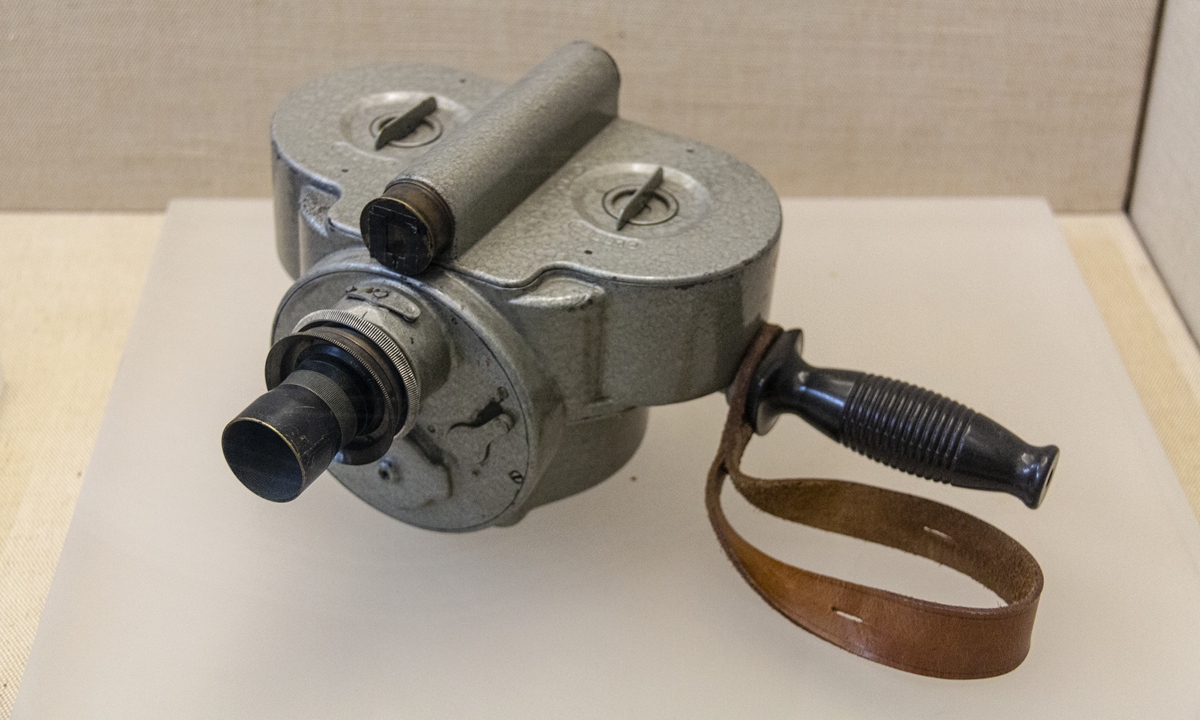
A handheld camera once used by Joris Ivens is displayed at the National Museum of China in 2020. Photo: VCG
From strangers to kinChina's call to Ivens went beyond moral support. Retracing Ivens' footsteps, Zhang's documentary shows Ivens returning to China after witnessing the War of Resistance against Japanese Aggression, where he completed Letters from China (1958) and How Yukong Moved the Mountains (1976).
Ivens' faith in the Chinese "New Man" spirit never failed him. After the establishment of the People's Republic of China in 1949, Ivens saw a nation renewing itself.
He filmed herders setting up cooperatives on grasslands in North China's Inner Mongolia Autonomous Region and farmers harvesting agrarian fields in Wuxi, East China's Jiangsu Province. In his 12-hour epic How Yukong Moved the Mountains, Ivens recorded the lives and voices of ordinary people.
Be it with farmers, workers or artisans, Ivens immersed himself deeply in Chinese society. In his How Yukong Moved the Mountains, an episode titled "The Story of the Ball" sparked debate in the West about whether Ivens was "staging and romanticizing China."
"Even so, he never gave up on China. Through Ivens' films, ordinary Chinese people were able to appear before international audiences in ways rarely seen at that time," Zhang told the Global Times.
"With Ivens Meets China, I want to use the legacy he left behind to help the West understand China as it is today," Zhang noted. He also added that film is not a "recording tool," but rather a "documentary action that answers reality."
In Chinese, Zhang retitled Ivens Meets China as Ivens Rides the Wind, a fitting echo of A Tale of the Wind, the last film Ivens made in China when he was nearly 90.
By that time, he had already weathered life's storm, most painfully, having been seen as a "traitor" by the Netherlands for making Indonesia Calling, a film that stood with Indonesia against Dutch colonialism.
In A Tale of the Wind, Ivens made his way to Huangshan Mountain in East China's Anhui Province, seeking a dialogue between nature and himself through the feeling of wind, and searching within Taoist culture for the thread that links Chinese philosophy to the human soul.
There, he seemed to find a sense of release and, even more, China became his spiritual home. The film premiered in 1988. Ivens died the next year. In the end, Ivens became the "new man" he had long aspired to be.
"My quest to explore his legacy is far from over. I will keep filming Ivens' story," Zhang told the Global Times.
After watching Ivens meets China, Dutch author and cultural anthropologist Mariska Stevens told the Global Times that she was inspired and now wants go to China to make a film, just as Ivens did.
"I want to create a film centered on the caoshu [cursive script] of Tang Dynasty (618-907) calligrapher Huai Su," Stevens said.

A poster for Ivens Meets China Photo: Courtesy of Zhang Tongdao
RELATED ARTICLES