China’s structural transformation during 15th Five-Year Plan period brings opportunities for Central Asia: Kyrgyz scholar
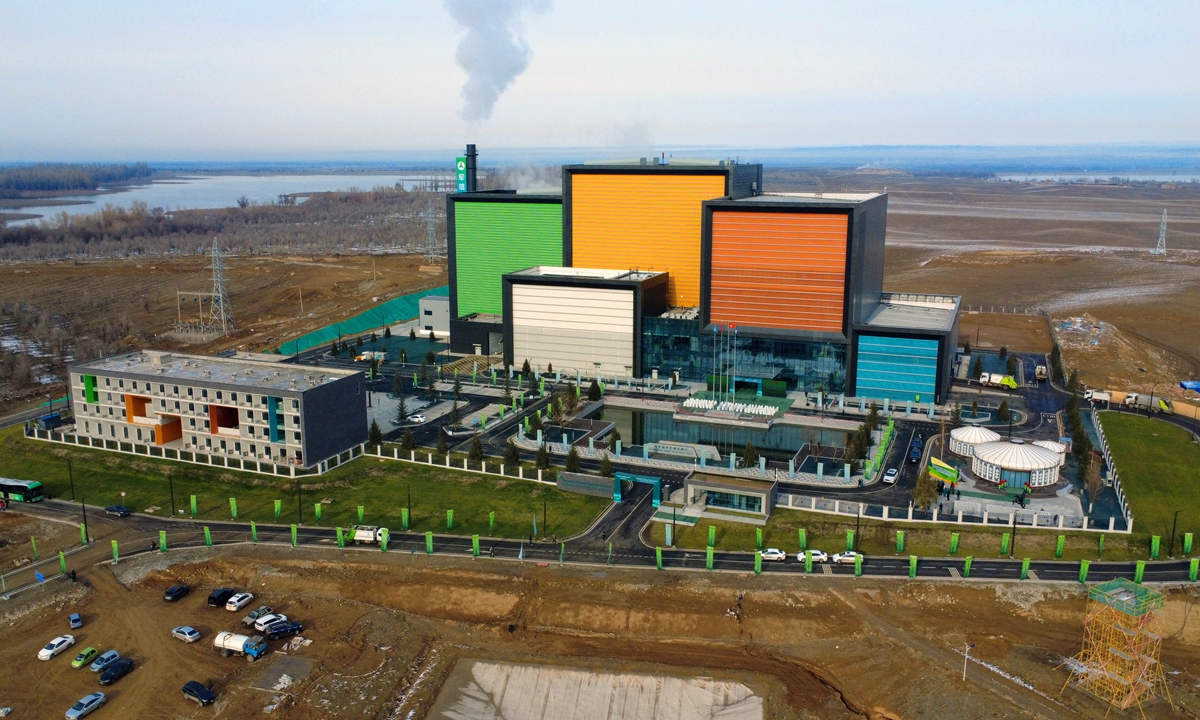
Photo shows a waste-to-energy incineration project in Bishkek, Kyrgyzstan on December 27, 2025. The project is backed by Chinese investment and built with Chinese technology. Photo: VCG
As China embarks on its 15th Five-Year Plan (2026-30), some international media are hyping the so-called "modest" economic target. However, viewing this through the lens of traditional GDP metrics is a miscalculation. This target is not a harbinger of decline; it is a deliberate signal of structural transition. Having established a robust foundation of infrastructure, China is now moving to a new stage of economic development - prioritizing domestic demand and achieving institutional autonomy in technology.
In an era where some Western countries are retreating into protectionism, the world is fracturing. China, however, has emerged as a valuable stabilizer. It has become the main trading partner for more than 150 countries and regions. This is not driven by ideological expansion but by sheer economic gravity. For landlocked nations in Central Asia, China's importance is especially pronounced, as its structural transformation during the 15th Five-Year Plan period brings opportunities.
Historically, Central Asia was a buffer between empires. Today, the region is transforming into a "connecting link." The Shanghai Cooperation Organization (SCO) is a platform where this logic is institutionalized. China does not impose its model on others but offers development tools, including infrastructure financing, technology transfer, and market access.
A prime example is China's second-level infrastructure. China's South-to-North Water Diversion Project, the largest of its kind globally, is not merely a canal but also represents a redefinition of water security for many people. China's breakthroughs in artificial intelligence (AI), exemplified by foundational models such as DeepSeek, Qwen, and ERNIE, have shaken global technology and investment circles in recent years and are seen as catalysts for China's tech-driven economic growth. Certain Western analysts look at percentage growth numbers and talk about a slowdown. We in the SCO region look at physical infrastructure and see the foundation of long-term national resilience.
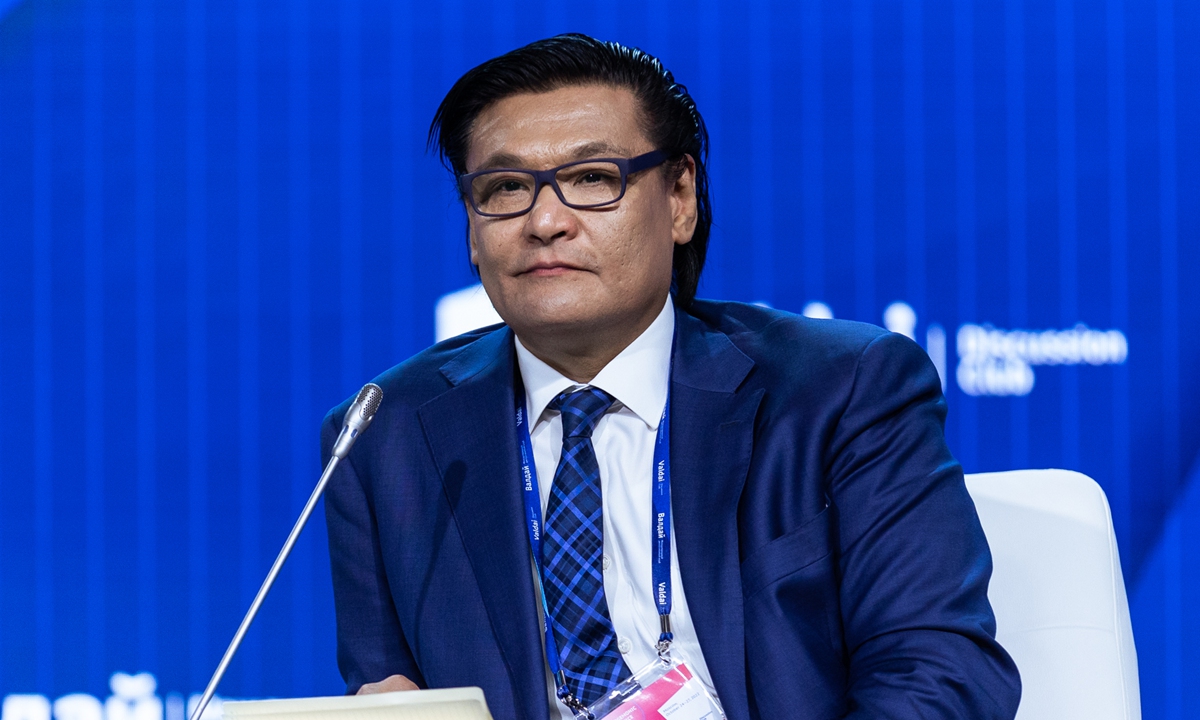
Kubatbek Rakhimov Photo: Courtesy of Kubatbek Rakhimov
For Central Asia, China's approach to AI opens possibilities that the Western approach does not provide. The West builds data centers along coastlines where there is ocean water cooling and submarine cables. China builds them within the continent - near nuclear power stations, hydro nodes, along continental fiber-optic corridors. This means regions like ours can participate directly in the digital economy, not through coastal intermediaries.
Practical AI application in China is being applied through industrial integration: port logistics, energy grid management, water resource forecasting. These applications may be less visible than ChatGPT, but they are often more economically efficient. For our region, this means we can prioritize industrial solutions over consumer applications - irrigation systems with AI management, energy grids with predictive balancing.
More importantly, China not only builds infrastructure in our region - it creates regional coordination platforms through the SCO. This allows our countries to integrate into continental chains as equal participants rather than peripheral players.
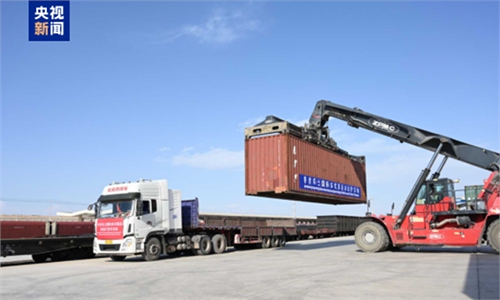
According to data released by the Chinese government, China-Central Asia economic and trade cooperation made considerable progress in 2025, with the total value of trade in goods reaching $106.3 billion, a year-on-year increase of 12 percent. Trade volume between China and Central Asia exceeded $100 billion for the first time in history, maintaining positive growth for five consecutive years.
High-quality cooperation under the Belt and Road Initiative continues to deepen and deliver tangible results. A number of major projects in fields such as connectivity, equipment manufacturing, green minerals, and modern agriculture were accelerated, effectively driving the expansion of exports to Central Asia and helping Central Asian countries achieve industrial upgrading and economic growth.
While we witness this ground-level reality, some in the West remain fixated on flawed theoretical projections and continue to cast doubt on China's economy. Such a Western rhetoric reflects not the reality of China's economy but fears over a shift of the global center of gravity. The "Peak China" narrative mirrors the old "peak oil" theory from the 1970s. Then they predicted inevitable production decline. 50 years have passed - the country's oil production grew 1.5 times.
From our perspective in Central Asia, we see certain Western analysts telling us: "China has reached its peak, don't connect." China's response is: "We build infrastructure with a century-long horizon." We make choices based on reality, not rhetoric. And reality is this: in the last 15 years, China built more infrastructure in our region than anyone else has in the last 30 years.
The partnership between China and Central Asia is bidirectional. China builds physical infrastructure in our region. We test institutional innovations for China. A long-term partnership cannot be built solely on resource exports or investment inflows, but on joint production of solutions.
In a word, within the SCO framework, we observe not a slowdown in China, but a strategic reorientation - from export to West to partnership with neighbors. For us, this is opportunity, not threat.
This article is compiled based on an interview with Kubatbek Rakhimov, director of the Applicata - Center for Strategic Solutions in Kyrgyzstan and former advisor to the Prime Minister of the Kyrgyz Republic. bizopinion@globaltimes.com.cn
RELATED ARTICLES