SOURCE / PRESS RELEASE
Where seniors live in peace and cargo ships sail to the world – Ningbo’s villages chart their own path toward ‘common prosperity’

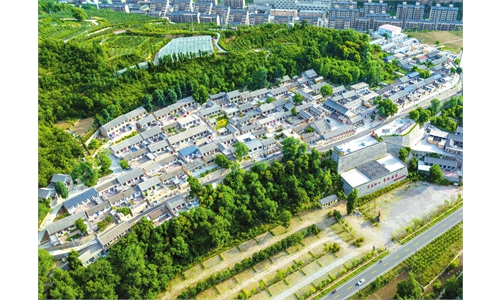
A view of Tengtou village in Fenghua district Photo: Courtesy of Tengtou village
On a summer morning, in a spotless and airy two-story house, the home of an elderly resident in Tengtou village, Ningbo, East China's Zhejiang Province, wooden sofas were neatly arranged in the living room and old family photographs hung on the wall while flowers and greenery filled the small courtyard outside. Few would expect that the villa of roughly 200 square meters had cost just 100,000 yuan ($14,000) when it was first built."Previously we lived in mud houses, but life here is completely different now," Fu Yanggai, 75, head of the elderly association in Tengtou village, told the Global Times. Today, villagers live in uniformly planned homes, while elderly residents receive monthly subsidies along with free daily necessities and staple food items, he said.
More than an hour's drive away, Ningbozhan village in Xiangshan county presents a very different scene. At the entrance to the village stands a newly built lighthouse-shaped monument that reads "Zhejiang's No.1 Maritime Shipping Village." Along the wide asphalt roads, rows of three-story townhouses line the streets in neat order. Inside the village committee office, a world map is densely marked with shipping routes stretching to Europe, the US and Southeast Asia.
What began with a few hand-rowed wooden boats has grown into shipping companies operating massive cargo vessels, with around 80 percent of households in the village now benefiting from the shipping industry and related businesses.
"In the beginning, people here mainly handled domestic coastal shipping. Later, they gradually moved into foreign trade and step by step expanded routes to Southeast Asia, Europe and the US," Wu Yongfei, head of the Xiangshan Water Transport Association and legal representative of the Ningbo Yinxing Shipping Co, told the Global Times.
In the early years, many villagers pooled money together to buy ships. "If one family had cargo sources or customer connections, they would introduce them to the other families," Wu said.
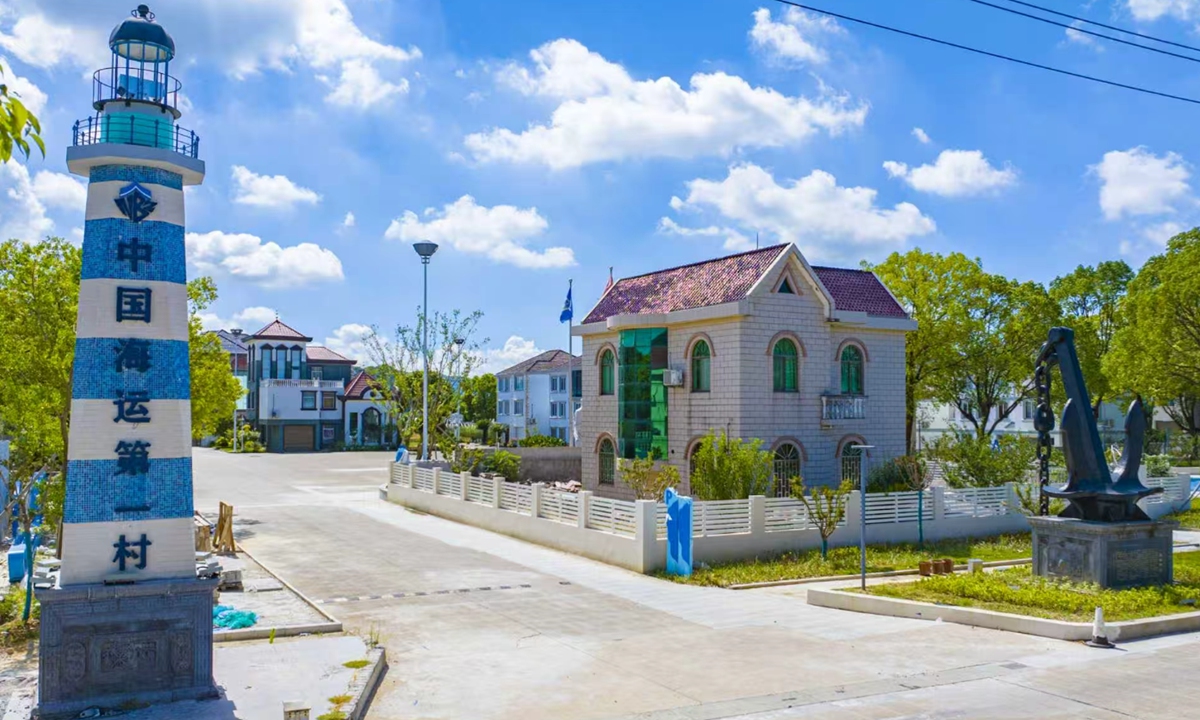
A tranquil view of Ningbozhan village. Photo: Wu Minyong / Xiangshan County Media Center
The idea of growing together through cooperation has been passed down in the village for decades. In the early 1990s, Ningbozhan established Zhejiang's first village-run shipping company, laying the foundation for what is now a cluster of sizable maritime firms - helping the village earn its reputation as "Zhejiang's No.1 maritime shipping village."From individual fishermen venturing out to sea to villagers jointly running cargo transport, and eventually to professionally operated shipping companies, Ningbozhan's transformation mirrors the evolution of China's private maritime industry.
Wu said one key reason Ningbozhan village's shipping industry has grown so rapidly is the lack of cut-throat competition among villagers. "Many of us are relatives or neighbors. People here focus more on growing the market together than undercutting each other," he said, adding that over the years the village has gradually developed its own maritime industry chain.
"In the early days, the ships used to dock right by the village," Wu said. "Now they've become much larger, and most depart from the Ningbo-Zhoushan Port instead." Even so, the village's ties to the shipping industry have never been broken, with some residents still spending much of their lives aboard cargo ships sailing routes across the world.
"Ships may be sailing across the oceans, but the wealth and emotional ties have returned to the village," said Wu Yongye, legal representative of the Ningbo Yongzheng Shipping Co and head of the Ningbozhan Common Prosperity Promotion Association in Xiangshan county.
In recent years, local shipping entrepreneurs have returned to help pave roads, improve infrastructure and provide insurance for elderly residents, while setting up a common prosperity association to support village development. Today, more young people from the village are enrolling in maritime universities, preparing to take over the family shipping business, he said.
In 2025, Xiangshan county saw its GDP surpass 100 billion yuan, making Ningbo the first city in Zhejiang where every county and district has crossed the threshold.
Meanwhile, in Tengtou village, "common prosperity" is reflected more directly in how industrial development feeds back into everyday life. After China's reform and opening-up began, the village's second Party secretary took the lead in setting up collectively run enterprises, gradually fostering a strong entrepreneurial culture. Today, export-oriented businesses such as the Aiyimei cashmere brand, along with agricultural and industrial parks and rural tourism projects, have become key pillars of the village economy.
"People here used to rely on farming. Later, in an effort to lift the village out of poverty, generations of village Party secretaries began leading residents to start businesses and set up companies. Today, many villagers run enterprises of their own," Fu Yinuo, deputy director of the Party committee office of Tengtou village, told the Global Times.
Unlike many rural areas, Tengtou has long insisted on keeping the village collective as a majority shareholder in local enterprises, ensuring collective assets remain deeply involved in long-term operations. "The goal is not simply to build bigger companies, but to make sure the gains from development eventually flow back to the villagers," Fu Yinuo said.
In 2025, Tengtou village's total output value exceeded 13.5 billion yuan, while villagers' per capita disposable income reached around 89,000 yuan. Beyond salaries and business income, every villager receives a monthly welfare subsidy of 1,500 yuan. Residents over the age of 60 receive no less than 4,000 yuan per month, along with free rice and daily necessities. In 2019, the village also established an elderly care foundation that raised more than 13 million yuan to support elderly activities and medical assistance.
"Even after state medical insurance reimbursement, the foundation can still cover part of the remaining costs," Fu Yanggai said. Today, among the village's around 900 residents, only one elderly person lives alone. For many seniors, the biggest part of the day is simply gathering at the elderly activity center to chat, play cards and share meals together.
By the end of 2025, per capita disposable income for rural residents in Ningbo had exceeded 50,000 yuan, with rural income growth outpacing that of urban areas and the urban-rural income gap narrowing to 1.60. Behind the figures are smoother rural roads, doorstep delivery services, and easier access to schools and healthcare.
In one village, elderly residents are growing old in peace, while in another, younger generations are expanding their family shipping businesses into wider markets. "Common prosperity" is not an abstract concept, but something reflected in thriving industries in these Ningbo villages, which remain full of life.
RELATED ARTICLES