ARTS / CULTURE & LEISURE
Writer weaves epic tales by blending research with creativity
History meets imagination
By Published: May 28, 2026 09:32 PM

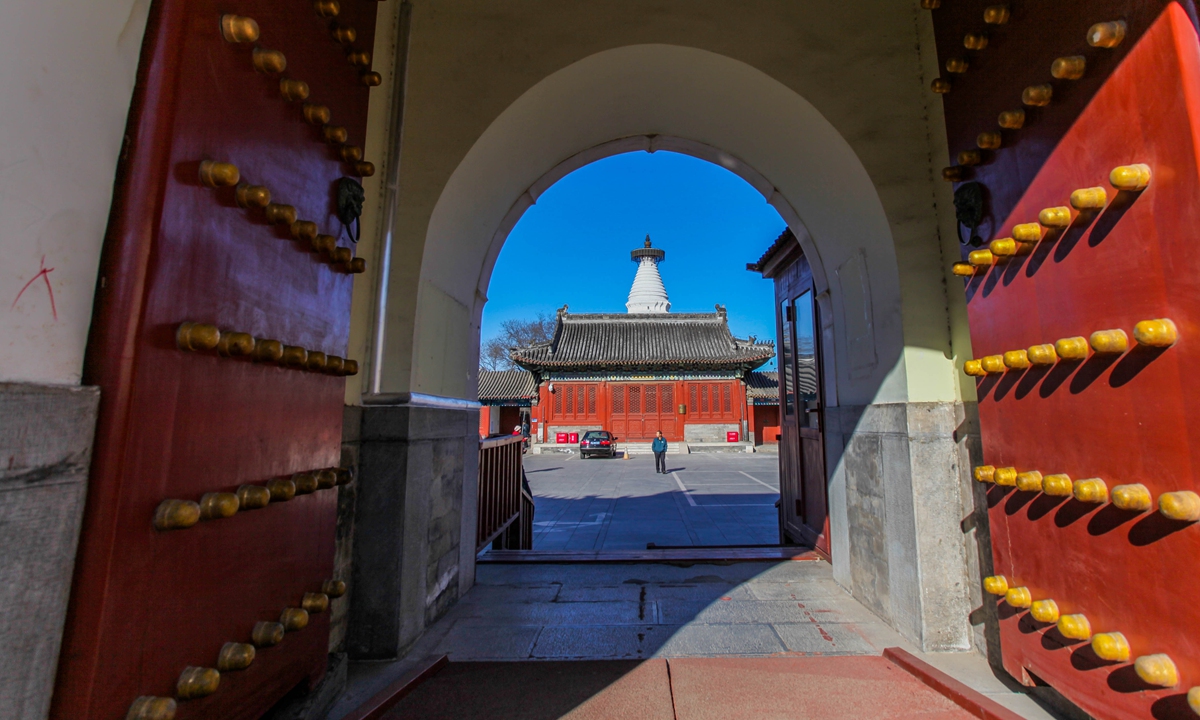
The White Pagoda Temple in Beijing Photo: VCG
When reading a historical novel, readers often wonder: Is this part true, or was it made up? For a historical novel, what matters more - history or fiction? Renowned Chinese historical novelist Xiong Zhaozheng brings an answer to this question with his latest work: the first installment in his Khubilai. Decades of writing have shown him that a great historical novel should be an epic, unfolding literary imagination within a framework of real history.From his Mao Dun Literature Prize-winning Zhang Juzheng to Jin Dynasty, and now Khubilai, Xiong has always focused on figures who advanced the progress and prosperity of the nation. To bring these people from the distant past to today's readers, he pores over historical records and often travels to the places where history actually happened, searching for clues in the very landscapes of the past.
"I want to give readers not just snacks, but a full-course meal of history - something as rich and satisfying as an imperial feast," Xiong told the Global Times. This has been his aim since the start of his writing career.

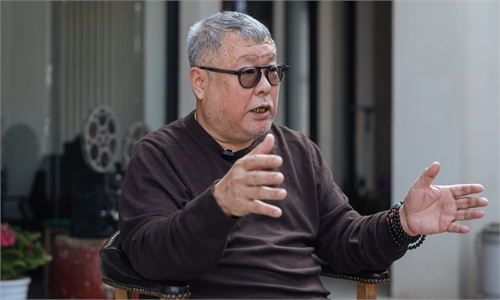
Xiong Zhaozheng speaks at an event. Photo: VCG
From poetry to historyXiong's literary path began with poetry and found its destination in history. Many wonder why a poet would plunge into the complex world of historical writing. For him, it was not a sudden change, but a choice shaped by personal interest, upbringing, and opportunity.
From a young age, Xiong was influenced by his mother and loved listening to folk storytellers spin tales from Chinese history. These folk histories planted seeds in his mind. Later, as a professional writer, he was inspired by older authors, which helped him find his creative direction.
His training as a poet naturally affected his approach to historical writing, giving him an eye for detail, a sense of refinement, and a strong literary aesthetic. "Poetry needs to elevate emotion on the basis of understanding. History, too, requires us to sift through facts and highlight what is true," Xiong said. Both forms need imagination. If a historical novel lacks imagination, it becomes little more than a heap of facts, losing the coherence and delight that readers expect from a novel. His poetic sensibility has enabled him to find creativity even within strict historical frameworks.
Balancing historical reality and literary creativity is always the core issue for historical novelists. Xiong's rule is clear: the main threads of history must not be changed, but details may be imagined as long as they are reasonable.
He summed up his approach in two words: history and poetry. History is the foundation, the basic truth, while poetry is literary imagination. All invention and speculation must happen inside the framework of historical fact, not out of thin air or to cater to popular tastes or distort logic. In the day-to-day writing process, there is no fixed rule for what can be imagined and what must remain true; it all depends on the writer's sense and experience.
When working on Khubilai, Xiong did extensive research on historical sources and decided to break the common stereotype of the emperor as merely a fierce warrior.
Instead, he wanted to show readers another side: Khubilai's love of Han culture and books, and to present Xiong's reflections on how "the Silk Road" developed during the Yuan Dynasty (1279-1368).
For Xiong, only one-third of his work is spent on actually writing; the remaining two-thirds are dedicated to reading, sorting through records, and verifying details. He said that only by having a deep and complete grasp of the source material, knowing the political system, social customs, and character relationships, can his literary imagination have solid ground, and his fiction become persuasive and meaningful.
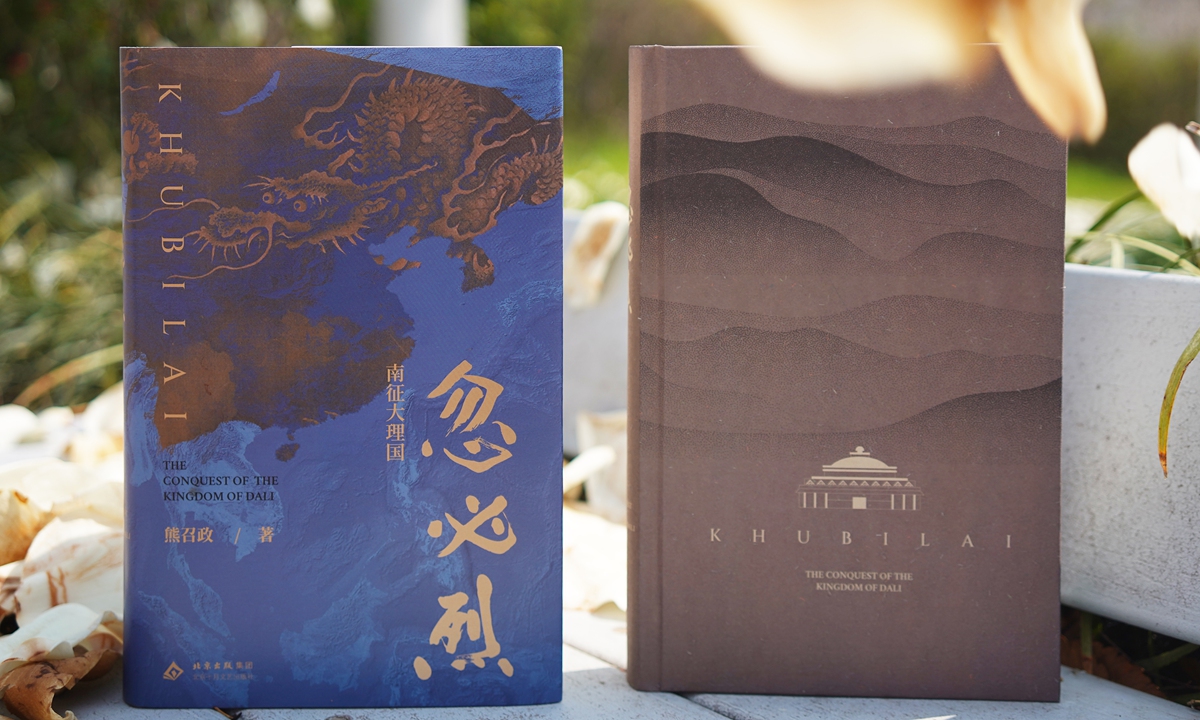
The cover of the first installment of Xiong Zhaozheng's latest work Khubilai Photo: Courtesy of Beijing October Literature and Art Publishing House
Going to historical sitesHowever, reading books and checking references are not Xiong's only tools. He said that writing historical novels requires visiting historical sites in person. When he wrote about the wars of the Ming Dynasty (1368-1644), he traveled to the old battlefields himself; writing about Zhang Juzheng, he visited the places Zhang had been.
For his latest book, Xiong once again set out on journeys to trace Yuan Dynasty history. He told the Global Times that he had retraced Khubilai's military campaign route three times to seek out historical truth. On location, seeing the mountains, climate, roads, and passes restored a sense of reality that words alone cannot provide.
Even more important, Xiong noted that traveling can correct mistakes found in books. Many old records have errors about army routes, river crossings, or mountain passes; Xiong double-checks these with site visits and then corrects them in his novels. For him, respect for the "scene" is a key part of rigorous historical writing, not just trusting documents, but the land itself.
In contrast to the recent wave of historical fiction that chases internet traffic or uses fragmented, sensationalized storytelling, Xiong does not criticize diversity in writing but makes his own position clear: "I offer not snacks, but a proper meal of real history."
He noted that the value of serious historical writing lies not in momentary thrills, but in providing a complete, rich, lasting spiritual experience. Only such writing allows readers to truly understand historical logic, the journey of civilization, and the reasons behind personal choices. This is the kind of work that does not seek shortcuts, but instead pursues depth, substance, and meaning.
RELATED ARTICLES