Foreign journalists impressed by Wuxi's thriving robotics industry, a manifestation of China's manufacturing strength
'Travelogue of China'
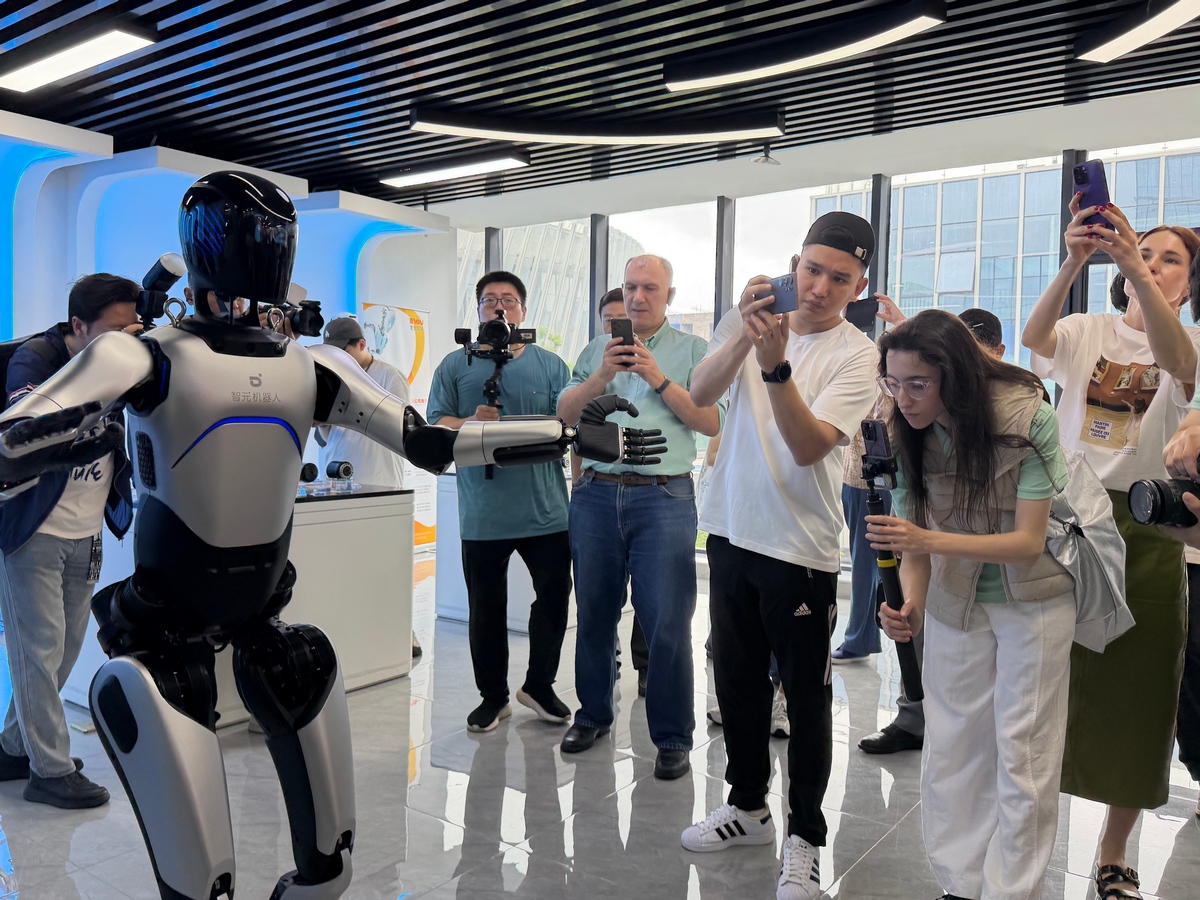
Foreign reporters are greeted by a humanoid robot in Wuxi, East China's Jiangsu Province, on May 26, 2026. Photo: Zhang Weilan/GT
At a robotics exhibition hall held in Wuxi city, East China's Jiangsu Province, the visitors were greeted not by a formal speech, but by a silver humanoid robot performing an improvised mechanical rap. The robot then switched into a fluid tai chi routine, drawing gasps, smiles and a flurry of cameras from the press.
The scene offered a vivid snapshot of how China is turning futuristic robotics into industrial reality.
Wuxi, a city of over 7.5 million nestled in the heart of the Yangtze River Delta, has long been celebrated as the birthplace of China's "Sunan model" of township and village enterprises that facilitated the nation's manufacturing rise. In recent years, Wuxi has continuously opened up new areas for development by focusing on cultivating new quality productive forces. The city is a thriving manufacturing base, empowered by tech innovation.
"I have never been exposed to a real humanoid robot before," said Amangeldi Atayev, a journalist from Turkmenistan's State Committee for Television, Broadcasting and Cinematography, who was making his first foray into the robotics industry in China. "Everything wows me because this is frontier technology for the future," he told the Global Times.
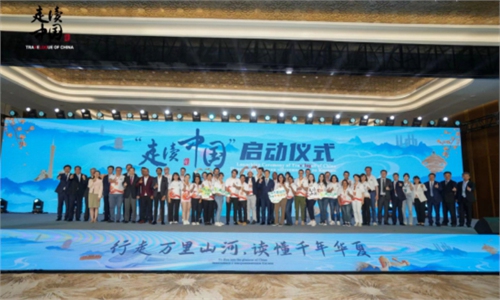
The visit was part of an international media exchange program known as '2026 Travelogue of China International Media Communication Activity,' co-hosted by the China Public Diplomacy Association and Global Times Online, with support from local government and press associations.
Nineteen journalists from 18 countries including Kazakhstan, Egypt, Sudan, Turkmenistan, Tajikistan as well as African and Middle Eastern countries toured Wuxi-based EYOU Robotics, a leading developer of integrated joint modules and major components for humanoid robots.
Inside the EYOU showroom, the atmosphere crackled with electronic beats as the robot bobbed its head and moved its shoulders in rhythm. Then the music shifted, and the machine dropped into a tai chi stance, its waist and hips twisting with a surprisingly fluid balance of strength and grace. The movements drew gasps and laughter from the visiting reporters; some instinctively stepped back before leaning in closer, smartphones held high to capture the moment.
The interaction left a deep impression on Mohamed Alsanhory of Cairo 24 News in Egypt. "The robot joint is the key to its flexible movement," he said. "The fact that it can dance and perform tai chi is a proof of China's leading strength in this field."
He added that Chinese robotics firms are using technological innovation to drive industrial transformation, boosting manufacturing quality while injecting vitality into global markets with competitive, high-performance products.
"These robots amaze us more with each passing day. They are becoming more multifunctional and more interesting," said Dilovar Surtoni, cultural and entertainment director at Safina TV of Tajikistan.
He was impressed by the fluid actions as the result of long-term refinement by a vibrant Chinese robotics firm. "The smooth motion of the robots is not just a program demonstration, but the outcome of long-term development and continuous research by the engineering team."
Sun Zeju, founder of EYOU Robotics, told the Global Times that the company has partnered with firms including leading Chinese robotics manufacturer AgiBot, DroidUp and YMBOT, and its products are exported to overseas markets including Europe, Japan and South Korea.
Sun said the company expects to deliver nearly 500,000 robotic joints this year, enough to support the assembly of more than 20,000 robots, which are used in entertainment, logistics, retail services and other sectors.
China's Ministry of Industry and Information Technology reported that revenue from the robotics industry reached nearly 240 billion yuan ($35 billion) in 2024, while revenue in the first half of 2025 grew 27.8 percent year on year, with industrial robot production reaching 370,000 units, Xinhua News Agency reported.
"As the world explores the future of humanoid robots, China is advancing in its own way by starting with key components and turning frontier technologies into scalable, practical industry," Sun said. "China's robotics sector is in a stage of accelerated mass production and application testing." He added that Wuxi's strong manufacturing base in precision machinery and semiconductors, gives local robotics firms a premium supply-chain advantage.
The 2026 Travelogue of China International Media Communication Activity kicks off on May 25, 2026. Photo: Zhang Weilan/GT
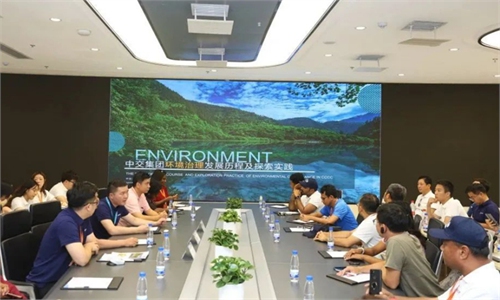
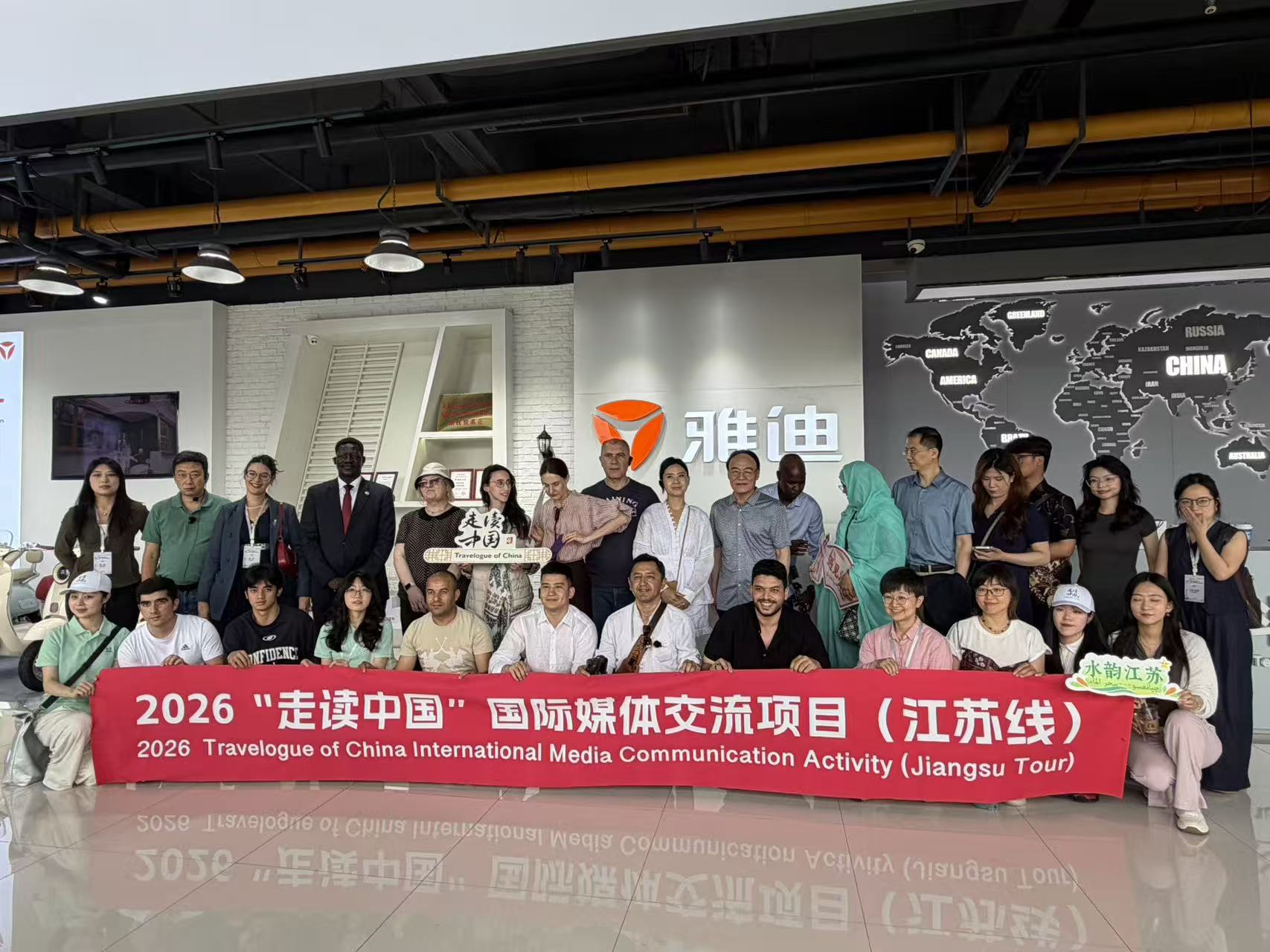
The group of foreign journalists also visited MasterLink Intelligent, a technology company focusing on machining intelligent manufacturing, a smart agriculture industrial park and a local electric two-wheeler manufacturer Yadea, where they observed how Wuxi is applying modern tech across multiple industries. Many of the foreign visitors praised the city's rapid economic development.
Algerian journalist Mohammed Beltou told the Global Times that a startup specializing in the Industrial Internet of Things gave him a strong impression. It made a significant leap, enabling it to establish a strong presence among globally recognized leaders in intelligent innovations.
"This progress appears to be no coincidence, but the result of a comprehensive ecosystem that reflects China's efforts in promoting innovation and development across various sectors, covering AI, robotics, and intelligent manufacturing," he said. In this context, China has become a major destination for global companies that rely on its manufacturing base to produce high-quality goods at lower costs, benefiting from advanced technology and a skilled workforce.
"In Algeria, there is a strong presence of Chinese-manufactured products, along with an increasing number of Chinese companies operating through branches and joint projects, often in collaboration with local partners. From this perspective, promising opportunities can be envisioned for future cooperation between our countries in the fields of intelligent technology and advanced manufacturing," he said.
"One of the most striking impressions I took away from this visit is the remarkable level of progress China has achieved in high-tech innovation, including in robotics, while preserving and upholding its traditions and cultural values, which remain an essential part of its identity. This balance presents an impressive model that harmonizes modernity with cultural authenticity," he said.
Mohammed Ismail, a journalist from Sudan, told the Global Times that it was his first visit to China and that he felt honored to be there.
"China is one of the greatest countries in the world, and its development in many scientific and technological fields is far ahead of others," he said. "Many African countries need China's technology and training, and we hope to benefit from China's support for better development."
RELATED ARTICLES