ARTS / CULTURE & LEISURE
From ‘Xiqu’ to shared creation: How Chinese drama is finding its voice on world stage
By Published: May 31, 2026 10:02 PM
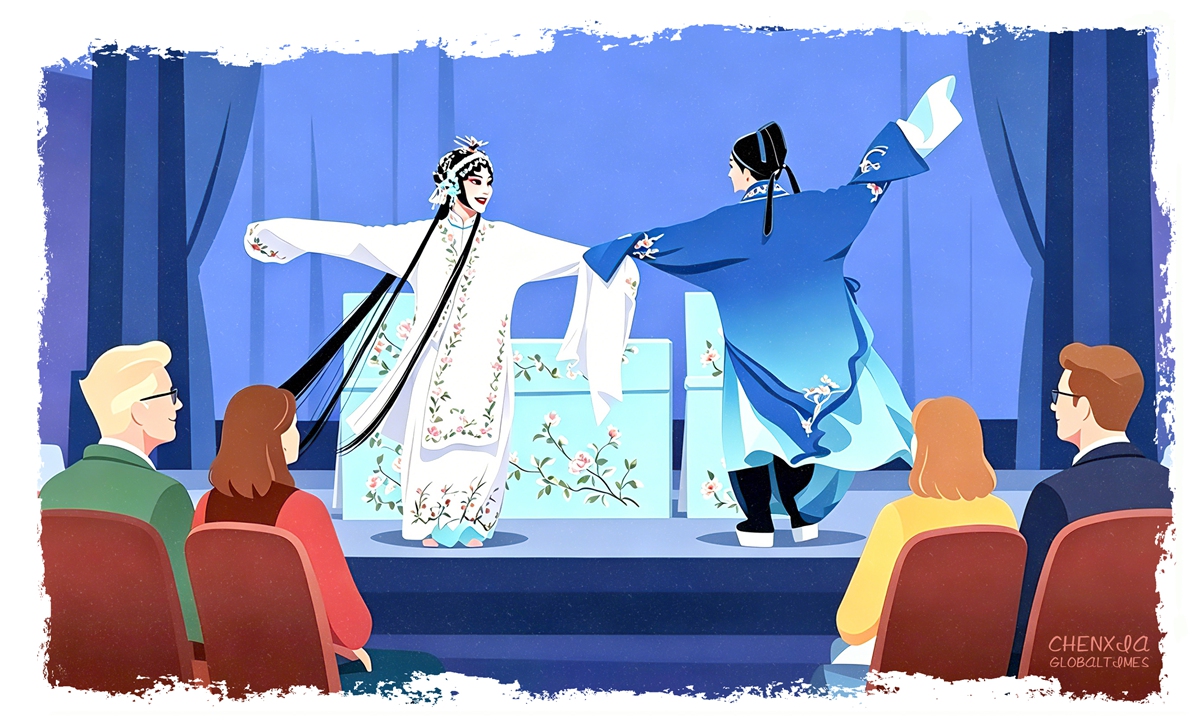
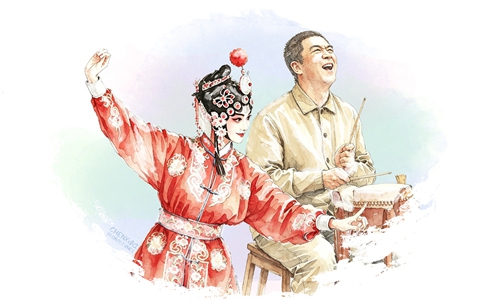
Illustration: Chen Xia/GT
In Shanghai right now, something special is happening. Hosted by the China Theatre Association, the First Showcase of Outstanding Repertoires by China Theatre Plum Blossom Award winning artists has brought together 16 award winners and 10 classic productions. But this is more than just a festival of beautiful performances. It tells a bigger story: The story of how Chinese drama is stepping beyond old misunderstandings and taking a new place for itself in the world.For many years, people outside China simply called all traditional Chinese theater "Chinese Opera." It seemed like an easy label. Yet it created problems. Shanghai Dramatic Arts Centre's artistic director Yu Rongjun once pointed out that when foreigners hear "Opera," they immediately think of Western opera - sopranos, conductors, big orchestras.
They start judging Chinese theater by rules that don't fit. They miss the heart of it: the singing, speaking, acting, and fighting all working together as one. A simple horsewhip on stage is supposed to represent thousands of soldiers. A few steps in a circle can show a journey across mountains and rivers. These special ways of telling stories get lost when forced into someone else's box.
Things began to change in 2011. At the 33rd World Theatre Congress, the International Theatre Institute and the China Theatre Association made an important decision. They agreed on a new English term: "Xiqu" for traditional Chinese drama, and "Jingju" for Peking Opera.
As the performing arts organization founded by UNESCO, the International Theatre Institute (ITI) thought it was necessary for the international community to gain a deeper understanding of Xiqu. In an interview with the Xinhua News Agency, ITI Secretary-General Chen Zhongwen said, "That name rectification was not only about accurate terminology, but also a move to safeguard cultural diversity and promote equal artistic exchange."
It was like what Japan did with "Noh" and "Kabuki." This was not just about words. It was about respect. It said clearly: Chinese drama is not a copy or a side version of Western opera. It is its own complete art form, with its own rules, beauty, and deep roots in Chinese thinking.
Naming it was only the first step. The real bridge to audiences around the world is human feeling. In Germany, people cried watching the Yueju Opera Butterfly Lovers (Liang Zhu). "One woman in the audience said the pain of losing someone you love feels the same no matter where you come from," recalled Mao Weitao, a trailblazing figure in Yueju Opera, in an interview with the Global Times. That is the power of drama. It reaches straight to the heart, even when languages are different.
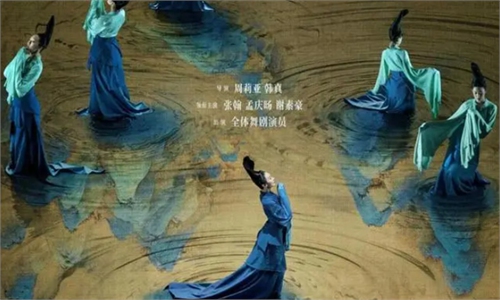
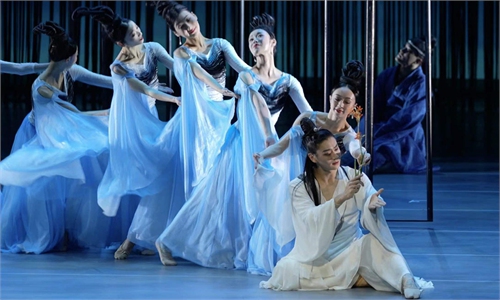
Chinese stories often end differently from Western ones, and that difference is actually a strength. In Shakespeare's Romeo and Juliet, the young lovers die. In Butterfly Lovers, the lovers turn into butterflies - a more hopeful, romantic ending that feels very Chinese. Other plays like Yuju Opera's Cheng Ying Saves the Orphan show strong values of justice and sacrifice. The dance drama Crested Ibis speaks about protecting nature. These works touch people not by copying Western styles, but by sharing China's own ways of seeing life, love, pain, and hope.
The biggest change today is how Chinese drama works with the world. It is no longer just "sending shows overseas." It has become a two-way street of learning and creating together.
This kind of exchange has a long history. In the 18th century, the Chinese play The Orphan of Zhao inspired the French writer Voltaire. In the 1930s, Peking Opera master Mei Lanfang's tours to the Soviet Union and the US deeply influenced directors like Bertolt Brecht. Now the cooperation is even closer.
At the Shanghai Theatre Academy, Liz Diamond, chair of directing at the David Geffen School of Drama at Yale, watched Chinese students mix spoken drama with Xiqu techniques in 2009. She was excited because it gave her new ideas for teaching Shakespeare back in the US.
In another project, artists from Samoa worked with performers from Sichuan's Liangshan region to create Star Return, exploring shared ideas in different mythologies. Chinese directors have helped Hungarian actors perform King St. Ladislaus using Xiqu singing styles. There are also joint productions such as a Chinese-French Les Misérables and a Chinese-Greek version of The Orphan of Zhao.
These projects are not about one side watching the other. They are about real teamwork - people inspiring each other and making something new. Chinese drama is no longer just something beautiful to look at. It has become a living partner in how theater grows everywhere.
Of course, some people may see this as China simply pushing its culture. But the truth is simpler. Artists and audiences abroad are genuinely interested. They find fresh tools in Xiqu's symbolic acting and powerful stage language. Many are tired of the same old realistic styles and want something deeper and more imaginative.
Watching the First Showcase of Outstanding Repertoires by China Theatre Plum Blossom Award winning artists, you can feel that confidence. Chinese drama has moved from asking for the right to its own name, to touching hearts across borders, to sitting at the table as an equal creator. It does not need to copy the West, nor does it need to stay closed off. It stands on its own traditions and reaches out with open arms.
This journey matters for everyone. In a world that sometimes feels divided, theater reminds us of our shared humanity. A sleeve movement in Kunqu, the sound of drums in a battle scene, or the graceful dance of butterflies - these things carry thousands of years of Chinese wisdom, yet they speak to people everywhere.
Chinese drama is not just becoming international. It is helping to make the world's stage richer for all of us. The plum blossom is blooming and its beauty is for everyone to enjoy.
The author is a reporter with the Global Times. life@globaltimes.com.cn
RELATED ARTICLES