ARTS / CULTURE & LEISURE
Ancient anesthetic found on 14th-century surgical tools
Findings might rewrite global anesthesia history
By Published: Jun 02, 2026 10:45 PM

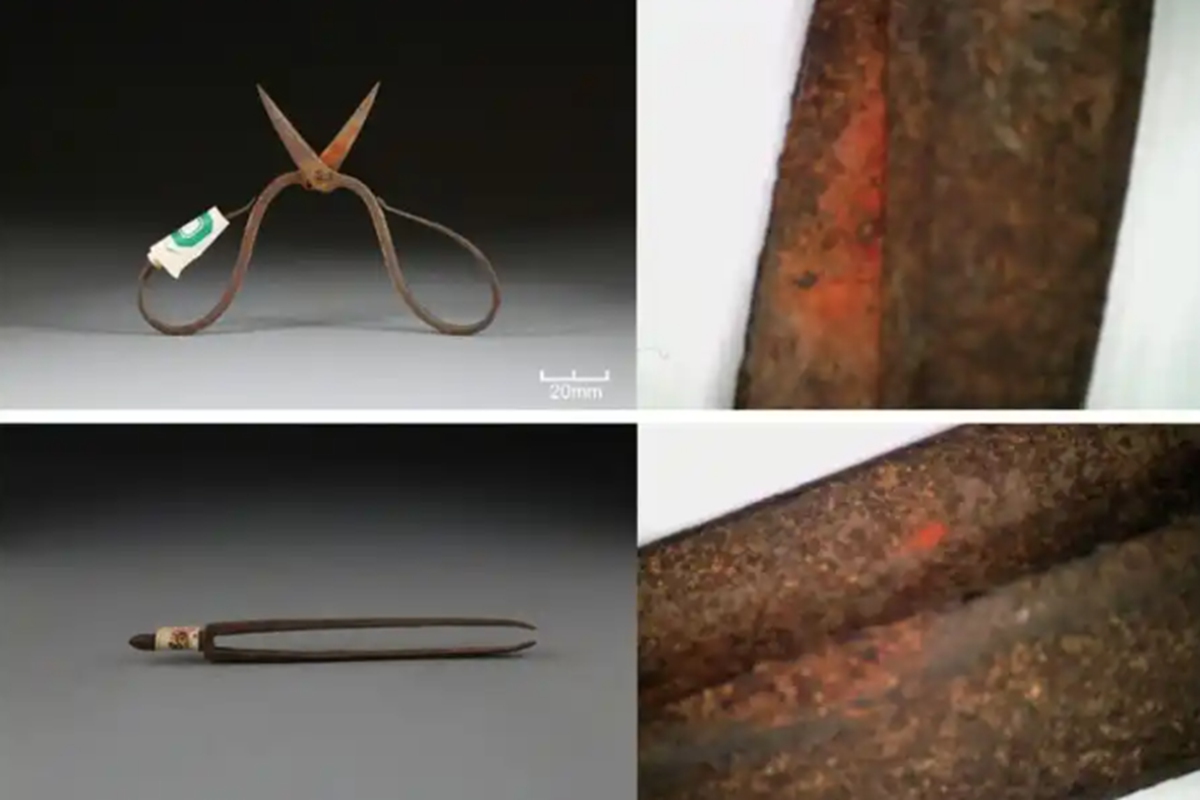
Surgical instruments excavated from a Ming Dynasty (1368-1644) tomb
Chemical analysis of surgical instruments excavated from a Ming Dynasty (1368-1644) tomb in East China has yielded the first direct physical evidence that ancient Chinese doctors were using plant-based anesthetics for surgery as early as the 14th century, a discovery researchers said might reshape the accepted timeline of anesthesia history.Published on May 26 in the journal Antiquity, the research conducted by a team from Northwest University anchors long-documented Chinese historical accounts of surgical anesthesia in tangible chemical proof, according to Professor Zhao Congcang, who led the research group, in an exclusive interview with the Global Times on Tuesday.
The analyzed artifacts originated from the 1974 excavation of a Ming Dynasty tomb in Jiangyin, East China's Jiangsu Province, that belonged to physician Xia Quan (1348-1411).
The tomb yielded China's earliest and most complete set of surgical instruments, including specialized iron scalpels, round surgical needles, fine scissors, forceps, pig bristle medicinal brushes, and traditional medicinal containers, forming a comprehensive toolkit for ancient surgical treatment.
According to Zhao, the team adopted cutting-edge Stimulated Raman Scattering (SRS) microscopy to detect microscopic residue on the well-preserved instruments.
Researchers extracted merely 2 milligrams of red residue from ancient scissors and forceps. Spectral matching confirmed the substance contained aconitine, a highly toxic but powerful nerve-paralyzing alkaloid derived from monkshood plants, with residue patterns indicating localized medicinal liquid splatter during operations.
Zhao detailed the rigorous technical breakthroughs behind the testing success. He noted that published standard Raman spectra reports for processed monkshood were virtually non-existent.
Additionally, traditional gas chromatography-mass spectrometry requires large sample volumes, while ordinary Raman spectroscopy is overwhelmed by aconitine's strong fluorescent signals - barriers compounded by strict cultural relic protection rules.
"Our team pioneered the SRS method, developed processed monkshood reference standards independently, and overcame fluorescent interference step by step before obtaining clear chemical signals," Zhao told the Global Times.
The discovery challenges the long-standing global consensus that modern anesthesia began with William Morton's public ether anesthesia surgery in Massachusetts in 1846. It verifies that Chinese medical practitioners mastered systematic herbal anesthesia techniques for surgery as early as the 14th century.
Zhao emphasized the unique advancement of ancient Chinese medical technology compared with contemporary global practices. While ancient Greek, Roman, medieval European and Indian medical traditions primarily regarded monkshood as a lethal poison with cautious, limited therapeutic use, Chinese physicians developed mature detoxification and processing techniques dating back to the Shennong Ben Cao Jing (lit. Celestial Farmer's Classic of Materia Medica), a masterpiece of medical literature from the Han Dynasty (206BC-AD220).
In the Ming Dynasty, practitioners were taking urine processing, black bean soaking, vinegar boiling and skin removal methods to reduce monkshood's toxicity, creating safe compound anesthetics known as caowu san for pain-free operations.
Historical records trace the earliest use of aconitine-based anesthetics to Hua Tuo, a renowned traditional Chinese medicine (TCM) figure from the Eastern Han Dynasty (25-220). He developed mafei san, the earliest documented herbal anesthetic, which was administered with alcohol to enable major surgical procedures including abdominal and orthopedic operations.
In 208, Hua Tuo was executed on the orders of Cao Cao, one of the greatest generals at the end of the Han Dynasty, for refusing to serve as Cao's exclusive personal physician. Another version of the story has circulated in later generations, claiming that Cao Cao killed Hua after the TCM practitioner proposed performing brain surgery on him.
Tragically, the formula and raw ingredients of mafei san have been lost to time. Academic circles have long been unable to confirm whether its core component was aconitine or other substances such as opium and cannabis.
The latest discovery of anesthetic residues on Ming Dynasty surgical instruments marks the earliest extant physical evidence of anesthetized surgery in ancient China, and definitively verifies that aconitine was applied in ancient Chinese surgical treatment.
Prior to this finding, historical accounts of ancient Chinese surgical anesthesia were purely textual, lacking solid physical proof. Zhao noted that the new evidence corrects longstanding Western academic stereotypes.
"Scholars previously believed TCM focused only on superficial wound treatment, relying on oral decoctions and acupuncture for pain relief, with historical surgical anesthesia deemed legendary and unsubstantiated," he said.
"Our findings prove that early Ming surgeons performed sophisticated refined surgeries with pharmacological support, using topical aconitine anesthesia - a mature pain management system far beyond single oral medication therapy."
The study, Zhao noted, garnered widespread international attention within a week of publication, with professional archaeology and medical platforms in the UK, the US, the Netherlands and Italy highlighting it as the first direct chemical evidence of herbal anesthetic application in ancient Chinese surgery.
Zhao confirmed the team will expand its research scope to trace earlier origins of Chinese anesthesia. Future work will test pre-Ming medical artifacts from Han Dynasty and prehistoric ruins, and adopt formula restoration and chemical analysis to verify ingredients from ancient anesthetic prescriptions, extending the evidence chain of early Chinese surgical anesthesia.
"Residue analysis of cultural relics unlocks hidden scientific and historical information, supporting heritage protection and enriching global medical history research," he said.
RELATED ARTICLES