South Korean TV documentary spotlights Chinese AI, drawing widespread attention in China, overseas

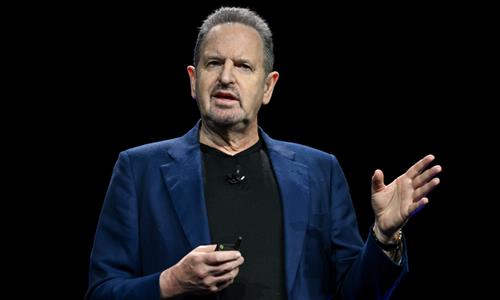
Photo: Screenshot from KBS's Documentary Insight: Talent War 2
South Korea's KBS recently aired a documentary that spotlighted China's rise in artificial intelligence (AI) and the robust ecosystem behind it, drawing widespread attention on both Chinese and overseas social media platforms, with some Chinese netizens calling it the "best promotional video" of China in 2026, while some overseas netizens expressing "shock" at the speed of China's tech development.
A Chinese expert noted that while the documentary focuses on comparison or competition between China and South Korea, cooperation should remain the theme for the two countries, which share broad economic complementarity.
In recent days, short videos about KBS's Documentary Insight: Talent War 2 have been posted by many on Chinese social media platforms. On Xiaohongshu, a nearly four-minute video about the documentary has been widely viewed. It introduced the main content of the KBS documentary - from the use of AI in an elementary school in Hangzhou, East China's Zhejiang Province, to the work of a research team at Tsinghua University in Beijing and a massive solar power project in Dunhuang, Northwest China's Gansu Province.
"The best promotional video of China in 2026 surprisingly comes from South Korea again," read the title of the video on Xiaohongshu, in a nod to the previous edition of the KBS documentary, which also highlighted China's achievement in nurturing tech talent.
The first season of Documentary Insight: Talent War, released in July 2025, had already sparked debate in South Korea, contrasting China's engineering talent boom with South Korea's medical school obsession and prompting reflection on talent structure.
Notably, the new edition has also sparked widespread interests from netizens on overseas social media platforms.
The documentary has garnered millions of views since its May 15 release on YouTube. The two-episode new season — each over 40 minutes long — is titled "China Speed" and "Korea's Dilemma," contrasting China's AI boom with South Korea's struggle to find its own path in AI advancement.
This comparison also drew the most attention online. In the YouTube comments section, one user commented in South Korean that "an elementary school student learning about AI neural networks? That's just insane — they're way too advanced." Another wrote in South Korean: "our country needs a national policy that treats engineering students better than medical students."
The documentary also prompted some to share their experiences in China, with one netizen writing: "I recently visited Beijing, Shanghai, and Shenzhen, and it felt like being hit on the head with a hammer. I used to think I could look down on China, but experiencing the AI technology firsthand, the technological prowess of Geely's electric vehicles, extended-range electric vehicles, and plug-in hybrid electric vehicles, as well as the development of the robotics industry, has left me utterly amazed. The speed of China's development is shocking."
The KBS documentary also clearly aims to draw the comparison between AI development in China and South Korea. It claimed that China, a country that was still considered a latecomer a decade ago, has now emerged as a global market leader with advanced technologies, setting worldwide standards. "How should we view the 'China Speed' that the entire world is watching? And how should we respond?" the documentary asks.
The documentary depicts competition, but competition itself cannot be the final state of an industry, Tian Feng, former dean of SenseTime's Intelligence Industry Research Institute told the Global Times on Thursday.
There is a genuine structural complementary channel between the Chinese and South Korean AI industries — South Korea's hardware density and China's application scale naturally form an upstream-downstream interlocking relationship within the AI industrial chain, according to Tian.
The expert said that, from a cooperation structure perspective, China's rapidly growing AI applications could generate huge demand for certain South Korean tech products.
RELATED ARTICLES