‘AI should not be owned by major countries, still less dominated by contest and rivalry’: FM responds to Western hype over China-US AI rivalry
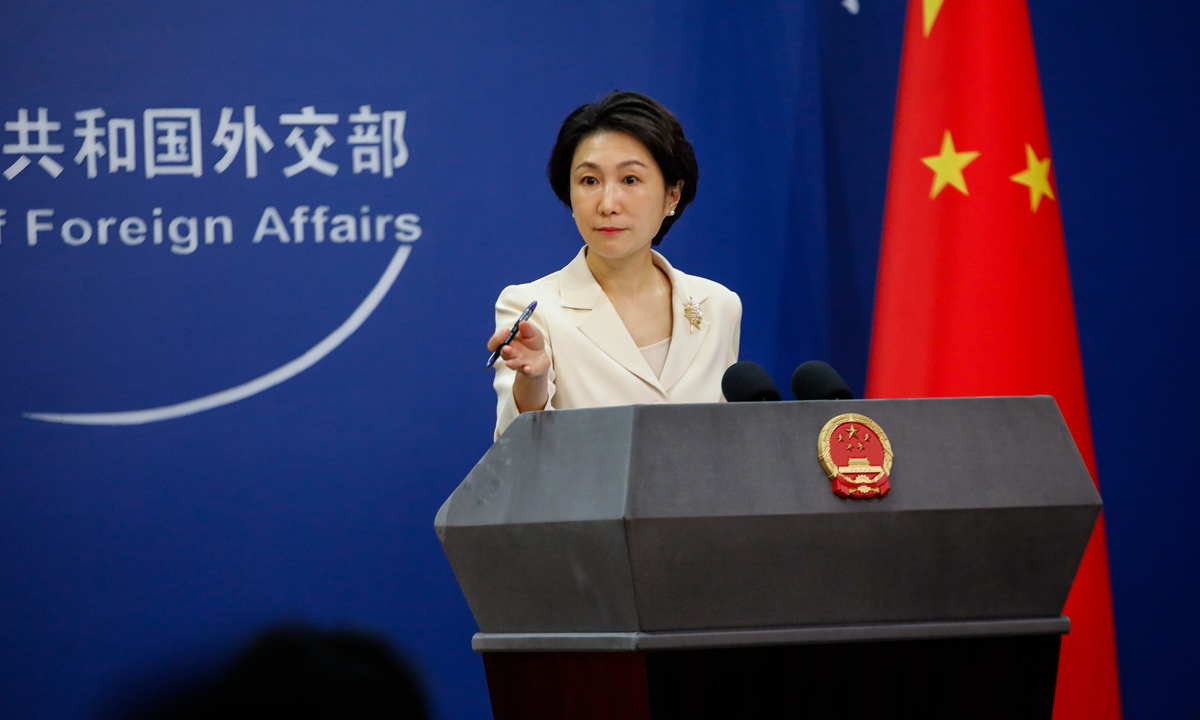
Chinese foreign ministry spokesperson Mao Ning
Artificial intelligence (AI) should not be owned by major countries, still less dominated by contest and rivalry. China believes in a people-centered approach to AI and advocates openness and inclusiveness to ensure AI is a force for good and for all, Chinese Foreign Ministry spokesperson Mao Ning said on Friday in response to Western media hype over China-US AI rivalry.
AI is profoundly changing the way people work and live. It is a new frontier for all humanity. AI should not be owned by major countries, still less dominated by contest and rivalry. China believes in a people-centered approach to AI and advocates openness and inclusiveness to ensure AI is a force for good and for all, Mao said.
China has put forward the Global AI Governance Initiative, held the World AI Conference for eight years in a row, and announced the initiative of a World Artificial Intelligence Cooperation Organization, she noted.
"The core aim of those efforts is to build consensus through dialogue, deepen cooperation, and build an open, equal-footed, just, and non-discriminatory environment for AI development," Mao said.
Mao said that China will host the 2026 World AI Conference & High-Level Meeting on Global AI Governance in Shanghai in July. "China hopes that this conference will provide an opportunity to deepen exchanges and dialogue and enhance global AI governance for a better future for humanity," she added.
A Chinese expert said that as a core driving force of a new round of technological revolution and industrial transformation, AI should not serve only the interests of certain countries, nor should it become a tool for competition and confrontation.
The global AI race is increasingly being framed in Western media as a China-US rivalry, reflecting the technology's growing strategic importance in chips, cloud infrastructure, and industrial productivity, Liu Gang, chief economist at the Chinese Institute of New Generation Artificial Intelligence Development Strategies, told the Global Times on Friday.
However, Liu pointed out that despite the geopolitical framing, Chinese and US technology companies continue to cooperate in a range of fields, including model development and deployment, robotics and automation, open-source ecosystems, research partnerships, supply-chain integration, and market-specific applications.
He added that at the corporate and research levels, AI talent, data, tools, and markets are distributed globally, and companies often respond to incentives that encourage collaboration, making international cooperation both necessary and beneficial.
Global Times
RELATED ARTICLES