Shanghai-listed firms to ramp up dividend payouts; A-share companies to distribute more than 91 billion yuan in a week
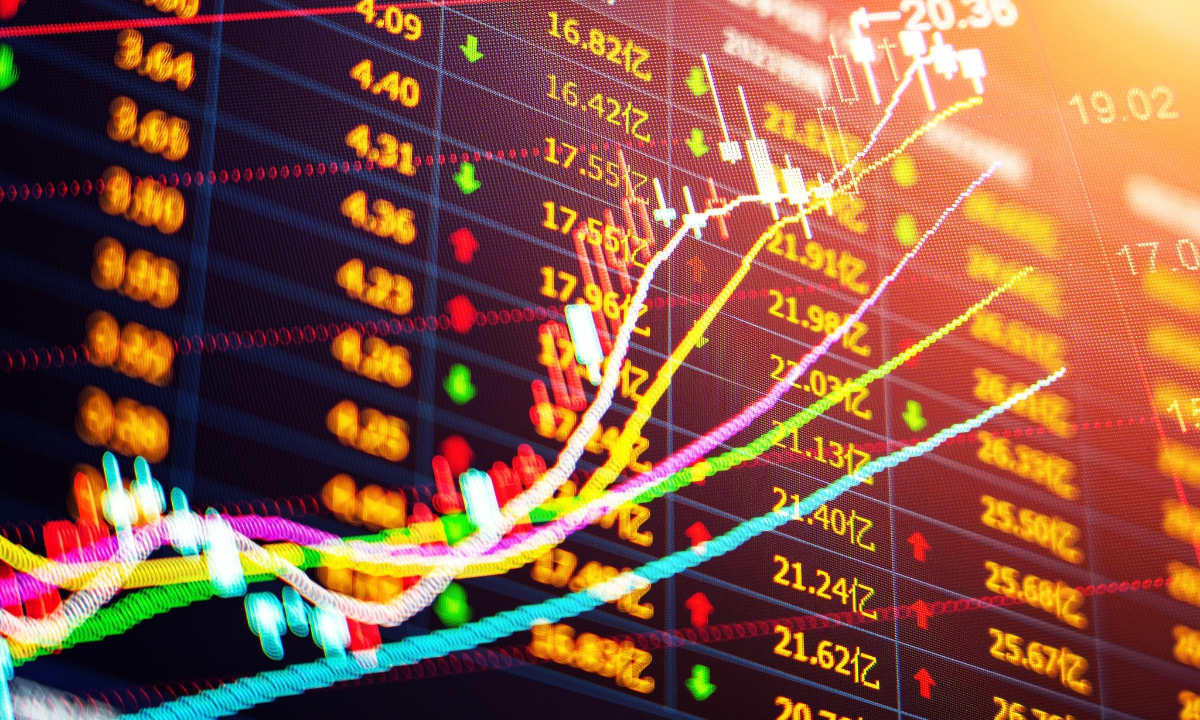
stock market Photo:VCG
As many as 200 listed companies on the Shanghai Stock Exchange will pay their 2025 dividends to stock holders in the coming week, with a total amount of 91.9 billion yuan ($13.58 billion), the Securities Times reported on Sunday.
An industry expert said that the dividends paid by Chinese A-share companies this year improved significantly compared with the past. This is closely related to the regulatory authorities' continuous efforts to promote dividend policies and encourage listed companies to ramp up returns to investors. State-owned enterprises, in particular, have played a leading role in the effort.
Another analyst said that the overall efforts of listed companies to reward investors have been getting stronger. Looking at this year's quarterly financial reports, the dividend level is largely sustainable, which also plays a significant role in boosting investors' confidence in the A-share market.
The report said that, as of Friday, 438 Shanghai-listed companies had paid out their 2025 cash dividends, with the actual distributed amount totaling more than 281 billion yuan.
The overall pace of dividend payout remains steady and orderly, implying that more than 800 billion yuan in "annual red envelopes" are on the way to the pockets of investors.
Among the companies that have already paid their 2025 dividends, a number of leading enterprises have distributed substantial amounts.
Industrial and Commercial Bank of China declared a dividend of 0.1689 yuan per share (pre-tax) for the 2025 fiscal year, with a total dividend payout of 60.197 billion yuan, of which approximately 45.538 billion yuan was distributed to A-share investors, ranking among the highest on the Shanghai bourse.
From the corporate perspective, strengthening dividend payout encourages companies to place greater emphasis on investor returns, optimizes the efficiency of capital utilization, and allocates more resources to research and development as well as high-quality development, thereby enhancing overall management standards, Bian Yongzu, a financial expert and executive deputy editor-in-chief of Modernization of Management magazine, told the Global Times on Sunday.
From the investor's perspective, higher dividend levels significantly enhance the attractiveness of the capital market in an environment of declining interest rates. This helps guide capital allocation from traditional sectors such as real estate toward the equities market, improving the overall efficiency of capital allocation, Bian noted.
Sustained steady dividends keep dividend yields appealing. In 2025, companies listed on the Shanghai bourse announced total annual dividends of 1.82 trillion yuan, marking a year-on-year increase of 2.8 percent, with an overall dividend yield of 3.0 percent.
Market analysts said that as the A-share dividend mechanism continues to improve, China's capital market is expected to enter a virtuous cycle, which will not only boost the confidence of domestic investors but also enhance its appeal to overseas investors.
"We are seeing increased participation from international capital, including Middle Eastern funds and northbound capital from Hong Kong. This reflects the growing openness of China's capital market to the outside world and will also play a positive role in the internationalization of the yuan and the enhancement of its position in the international financial system, Bian said.
Overseas capital has flowed into Chinese equities through various channels, and investors hold more than 4 trillion yuan worth of the A shares, becoming important participants in China's capital market, an official from the China Securities Regulatory Commission said on May 28.
Currently, the number of listed companies across Shanghai, Shenzhen, and Beijing exchanges has exceeded 5,500, with the total A-share market capitalization reaching about 120 trillion yuan, including some 200 leading companies with market values above 100 billion yuan each, the Securities Times reported earlier.
RELATED ARTICLES