ARTS / CULTURE & LEISURE
New survey reveals over 1,400 archaeological sites, pieces together Hongshan civilization
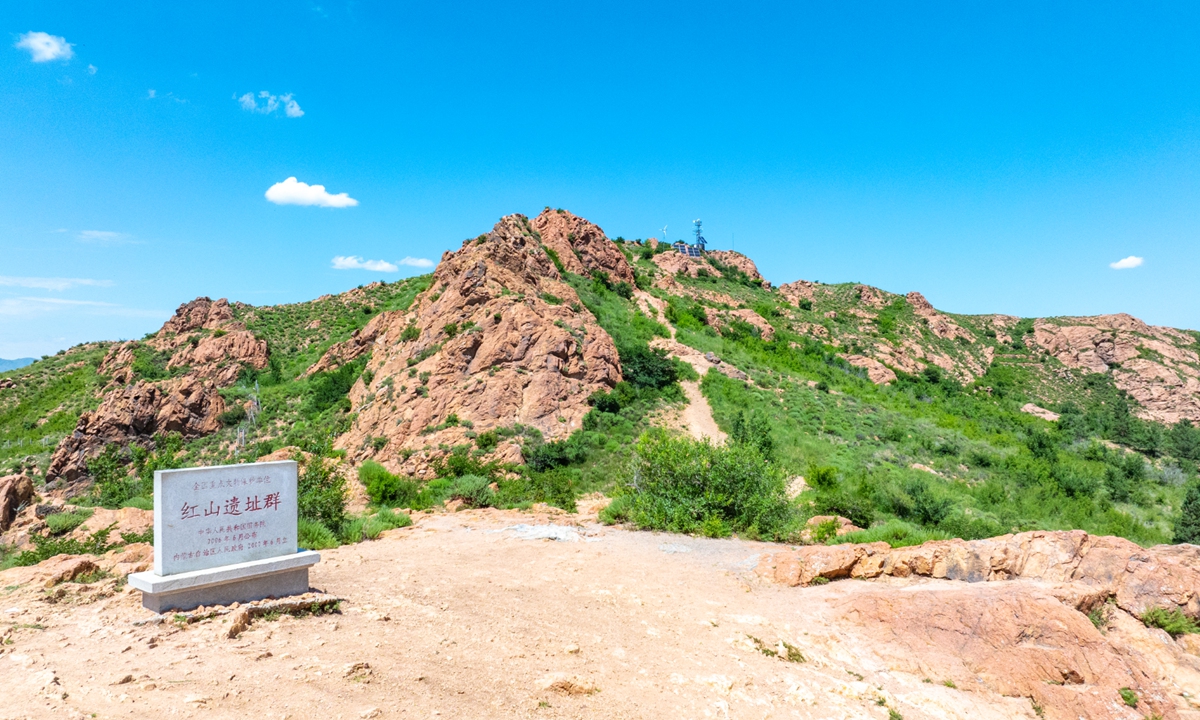
Hongshan culture Photo: VCG
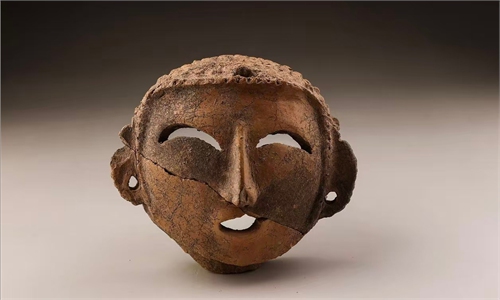
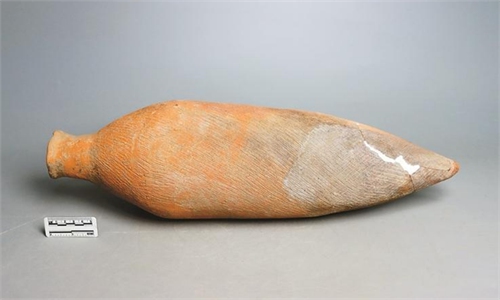
Covering an investigation area of 5,500 square kilometers, a recent archaeological survey focusing on China's Hongshan culture in the West Liaohe River Basin has unveiled its latest findings. The project stands as "the first survey nationwide ever undertaken specifically on the regional development of Hongshan culture," Sun Jinsong, a key figure of the project and also director of the Inner Mongolia Institute of Cultural Heritage and Archaeology, told the Global Times.Dating back to around 6,500 years ago, the Hongshan culture was the most significant late Neolithic archaeological culture originating in northern China. Its discovery pushed the history of Chinese civilization back by more than 1,000 years.
The survey focused on the West Liaohe River Basin area because the Hongshan culture originated there. The West Liaohe River Basin spans four regions: China's Inner Mongolia Autonomous Region, and the provinces of Jilin, Liaoning and Hebei.
The survey revealed that, so far, a total of 1,487 Hongshan culture sites dating back to the pre-Qin period (before 221BC) have been discovered in the West Liaohe River Basin. The pre-Qin timeframe was chosen because it "covers the whole process of the Hongshan culture from its emergence to its continuation," Sun noted.
The discovered Hongshan cultural sites are distributed across various tributaries of the West Liaohe River. For example, 31 Hongshan cultural remains were found along the Laoha River, the southern source of the West Liaohe River. Most of these remains are composite settlement-type sites, among which there are also three small-scale Jishizhong (lit: stone slab tomb). They symbolize high-status aristocratic cemeteries.
In the upper reaches of the Xar Moron River, the northern source of the West Liaohe River, experts also found multiple Hongshan culture remains in the Bairin Right Banner and Hexigten Banner.
Both banners are located in Chifeng city, commonly known as the "earliest cradle of the Hongshan culture," archaeologist Zhang Ying told the Global Times. Iconic sites of Hongshan culture there include the Naotegai and the Penwayao ruins.
The Naotegai site is so far the largest central settlement of the Hongshan culture ever discovered, covering nearly 3 million square meters. Its scale, along with the unearthed ritual spaces and high-status ceremonial objects, further "confirms that by the late Hongshan culture period, a mature and diversified social structure and the prototype of an early country had already taken shape," said Shang Yuanchi, curator of the Bairin Right Banner Museum.
Beyond the Naotegai ruins, Sun said that when the investigation moved to the middle and lower reaches of the Jiaolai River, the 32 Hongshan cultural remains discovered there were all centered around the important Yuanbaoshan site.
At this site, a jade dragon measuring 15.8 centimeters in length was once unearthed. The jade dragon, this particular one the largest ever discovered, was a ritual object used by the Hongshan people for sacrificial ceremonies. "The excavation at the site provides valuable clues about the social structure and ritual systems of the late Hongshan culture," Dang Yu, the lead to the site's excavation project, told the Global Times.
Be it the Yuanbaoshan site or the Naotegai site, the most important purpose of the current survey is to link these fragmented sites together and piece together a "more complete Hongshan civilization," Sun said. "Only a complete picture of the Hongshan culture can showcase the value of the prehistoric civilization in the West Liaohe River Basin in the formation of Chinese civilization."
RELATED ARTICLES