China’s Dragon Boat Festival fuels cultural consumption boom
Traditions revitalized amid diversified, experience-driven spending
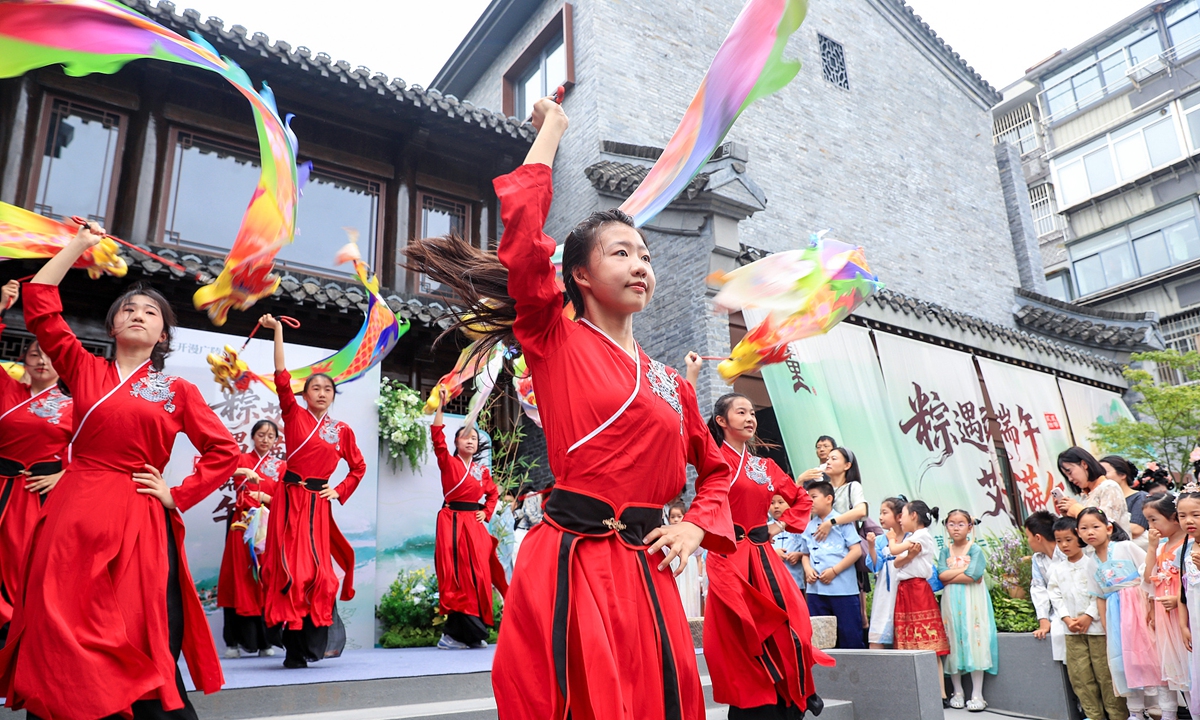
Visitors watch Dragon Boat Festival folk cultural performances in Yangzhou, East China's Jiangsu Province, on June 14, 2026. Photo: VCG
As the Dragon Boat Festival draws near, a wave of folk custom consumption is sweeping across China, transforming ancient traditions into vibrant economic activities.
From pharmacies filled with the aroma of sachets in Shanghai to the bustling aisles of Yiwu's wholesale market in East China's Zhejiang Province, and from dragon-boat-themed travel packages selling out online to immersive cultural camps drawing young families - these varied scenes paint a picture of how traditional festivals are becoming powerful engines for consumer spending, blending tradition, craftsmanship, and experience-driven travel.
Vibrant sales of traditional folk goods
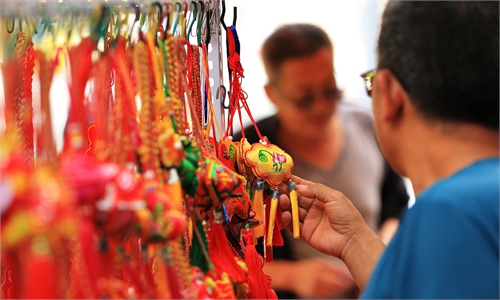
In Shanghai's iconic Nanjing Road, a gentle drizzle does little to dampen the festive fervor. At a time-honored pharmacy, bright Dragon Boat Festival sachets take center stage. Embroidered with zodiac patterns and shaped like plump zongzi, these fragrant pouches are displayed beneath bilingual signs, attracting a steady stream of customers.
In just 10 minutes, four to five customers made purchases. One shopper told the Global Times on Sunday that she drove all the way from Nantong, East China's Jiangsu Province to pick out more than a dozen sachets — each featuring a different Chinese zodiac animal — as gifts for her family.
Nearby, a young woman named Wang chose an exquisite zongzi-shaped sachet. "I plan to match it with my hanfu and an oil-paper umbrella for photoshoots during the holidays," Wang told the Global Times.
At another time-honored food store on Nanjing Road, long queues formed outside. Seasoned local shoppers carrying shopping bags picked up zongzi in bulk, with many buying dozens at a time. The shop has rolled out new flavors this year, including black glutinous rice zongzi stuffed with red bean paste. Traditional Shanghai-style fermented bean curd and pork zongzi are also among the bestsellers, a store staff member told the Global Times on Sunday.
Hundreds of kilometers away at Yiwu International Trade City in East China's Zhejiang Province, the scene shifts to bustling commerce. Rows of stalls are filled with colorful five-colored ropes, traditional sachets and various folk ornaments.
The most eye-catching items are egg pouches. Hand-crocheted into cartoon animals and lovely figures, these vibrant pouches are specially made for children. Wearing colorful egg pouches is a long-standing Dragon Boat Festival tradition, which people believe can bring good luck and ward off evil for kids.
"These egg pouches are all hand-crocheted. A complex design can take two to three hours to finish," the shop owner told the Global Times on Sunday. "Business has been brisk, and we are still receiving restocking orders."
When it comes to holiday activities, zongzi-making and dragon boat races remain major draws for tourism consumption during the Dragon Boat Festival.
According to data provided by travel platform Fliggy, travel packages featuring folk experiences such as making zongzi and watching dragon boat races have seen their popularity surge by over 40 percent week on week.
Data from another travel platform Mafengwo indicates that searches for folk custom-themed travel rose by 55 percent week on week. As of June 10, searches for keywords such as "Dragon Boat Festival", "dragon boat race" and "zongzi" on Qunar jumped 180 percent month-on-month.
Cultural experiences drive surge in travel
What was once a spectator sport — watching dragon boat races from the riverbank — has evolved into immersive cultural participation.
Tongcheng Travel reported a 90 percent week-over-week spike in cross-provincial flight-and-hotel package bookings, with accommodation near race venues seeing bookings more than double.
According to Tongcheng Travel, hybrid events combining "dragon boat races + bazaars" and "dragon boat races + intangible cultural heritage activities" have drawn large crowds to culturally rich dragon boat cities including Guangzhou and Foshan in South China's Guangdong Province, as well as Yueyang in Central China's Hunan Province and Yichang in central China's Hubei Province.
This Dragon Boat Festival holiday, Nanhai district in Foshan will host nearly 40 sports competitions and more than 50 cultural and tourism events to spur consumption. Backed by combined funding of over 200 million yuan ($29.57 million) from local authorities, enterprises, and financial institutions, the district has rolled out four study tour routes featuring dragon boat culture. Local authorities estimate the series of activities will attract over 6 million tourists and drive market turnover of 2 billion yuan.
The across-the-board boom in festival goods and cultural travel reflects a remarkable upgrade in China's traditional cultural consumption.
This year's Dragon Boat Festival consumption has become increasingly diversified and experience-driven. While traditional folk products remain popular, consumers increasingly favor cultural experience tours. Integrated cultural and tourism activities have become new growth drivers, experts said.
Festival consumption has become increasingly diverse in recent years, with cultural consumption gaining momentum and significant potential remaining for service-oriented consumption, Bian Yongzu, a financial expert and executive deputy editor-in-chief of Modernization of Management magazine, told the Global Times on Sunday.
"As China's economy develops, people's mindsets have changed remarkably, accompanied by rising cultural confidence. The public is eager to engage with traditional folk culture, which opens up enormous opportunities for traditional cultural consumption. Short holidays have long served as vital periods to boost consumption, and the profound cultural heritage of the Dragon Boat Festival makes it particularly appealing," Bian said.
With consumption upgrading, experiential consumption has become a popular new trend. People no longer focus solely on buying ordinary goods. Instead, they value the emotional experiences of shopping. This trend is also driving the development of local culture and tourism, Wang Peng, an associate research fellow at the Beijing Academy of Social Sciences, told the Global Times on Sunday.
RELATED ARTICLES