AI in spotlight among Beijing’s new college majors
Talent aligns closely with new economy, emerging business models
Conceptual diagram of AI Photo: VCG
Artificial intelligence (AI) has emerged as one of the most sought-after new fields of study at many colleges in Beijing this year, while most new academic programs centered on AI and robotics-related disciplines are seeing a sharp rise in popularity, the Beijing Evening News reported on Sunday.
As China steps up efforts to cultivate high-level AI talent, universities and vocational institutions are moving quickly to expand AI-focused programs and strengthen related disciplines.
A total of 43 college and vocational schools in Beijing have launched 100 new programs this year. Among them, 22 undergraduate vocational programs are geared toward emerging and future-oriented industries. One institution has introduced majors including Intelligent Integrated Energy Engineering and AI Engineering Technology, according to the Beijing Evening News.
The Beijing Institute of Petrochemical Technology has added programs such as Intelligent Manufacturing Engineering Technology, while Beijing City University launched a new Robotics Technology major, per the report.
The trend extends beyond undergraduate education. Among the 78 newly added junior college and secondary vocational programs, terms such as "smart" and "robotics" feature prominently, reflecting growing demand for technology-oriented skills.
A Chinese expert noted that AI is reshaping economic and social development at an unprecedented pace while fundamentally changing how education is delivered and organized. Expanding AI-related programs is seen as a direct response to demand from emerging industries and new business models.
With the nation's national college entrance exam, also known as the gaokao, having just concluded, universities across China are stepping up efforts to align academic training with the rapid development of AI technologies.
On June 11, Tianjin University unveiled a reform and action plan aimed at integrating digital and intelligent technologies throughout the teaching process, alongside new guidelines governing the use of AI tools by faculty members and students, according to the university's official WeChat account.
Tongji University announced adjustments to its admissions plan this year, prioritizing disciplines considered critical to overcoming technological bottlenecks, including basic sciences, strategically important fields and emerging interdisciplinary areas.
The university added two interdisciplinary undergraduate majors — Future Robotics and Internet Engineering — to its 70 undergraduate programs. The initiative is intended to deepen cross-disciplinary integration and strengthen talent development in areas such as AI, intelligent manufacturing, healthcare, smart spaces and intelligent construction, according to the university.
Meanwhile, four undergraduate majors newly proposed by the Harbin Institute of Technology — Embodied Intelligence, Brain-Computer Science and Technology, Urban Renewal, and Language Intelligence — have been approved and placed on the Ministry of Education's official catalog, making them among the first programs of their kind nationwide, an official of the university was quoted as saying by the Science and Technology Daily on Thursday.
The rapid emergence of new industries such as intelligent manufacturing, smart healthcare and intelligent construction has exposed a structural mismatch between talent supply and market demand, with companies increasingly seeking professionals who can combine AI expertise with industry-specific knowledge, Chen Jing, a vice president of the Technology and Strategy Research Institute, told the Global Times on Sunday.
He said that the growing push to introduce AI- and robotics-related programs in vocational and higher education is aimed at better aligning education with industrial and innovation needs. Talent development should keep pace with technological upgrading, while labor supply needs to be more precisely matched with future industrial demand, he noted.
"AI is not a standalone technology but an enabling foundation that is increasingly being integrated across industries. Embedding AI-oriented thinking into education at an earlier stage can help students develop an industry-relevant mindset before entering the workforce," he added.
On April 2, China announced a plan to launch an "AI Plus Education" initiative, aiming to integrate AI into classrooms from an early age as the country accelerates efforts to develop the technology and adapt its economy to an increasingly digital future.
By 2030, China aims to establish a comprehensive AI education framework covering all stages of schooling and extending to the broader public, according to a plan released by the Ministry of Education on Friday.
The plan calls for significant improvements in both the scale and quality of AI talent development, while establishing long-term mechanisms to enhance AI literacy across society.
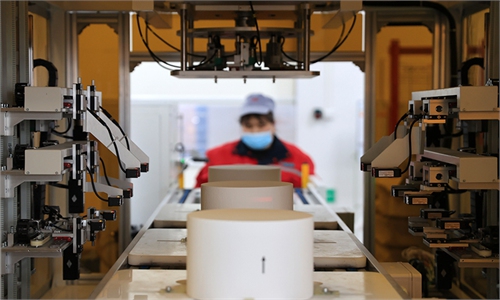
The expansion of AI-related education comes as intelligent manufacturing gains momentum across China. More than 30,000 basic-level smart factories, more than 1,200 advanced-level smart factories and more than 230 excellent-level smart factories have been established nationwide, covering more than 80 percent of manufacturing sectors, according to a report published Saturday by the People's Daily.
The report said that AI is not only helping traditional industries improve efficiency and reduce costs, but is also providing a foundation for innovation in emerging sectors, making it an increasingly important driver of industrial upgrading and economic transformation.
RELATED ARTICLES