Chinese scientists achieve breakthrough in quantum-chip material that enables mass production of ultra-pure silicon-28
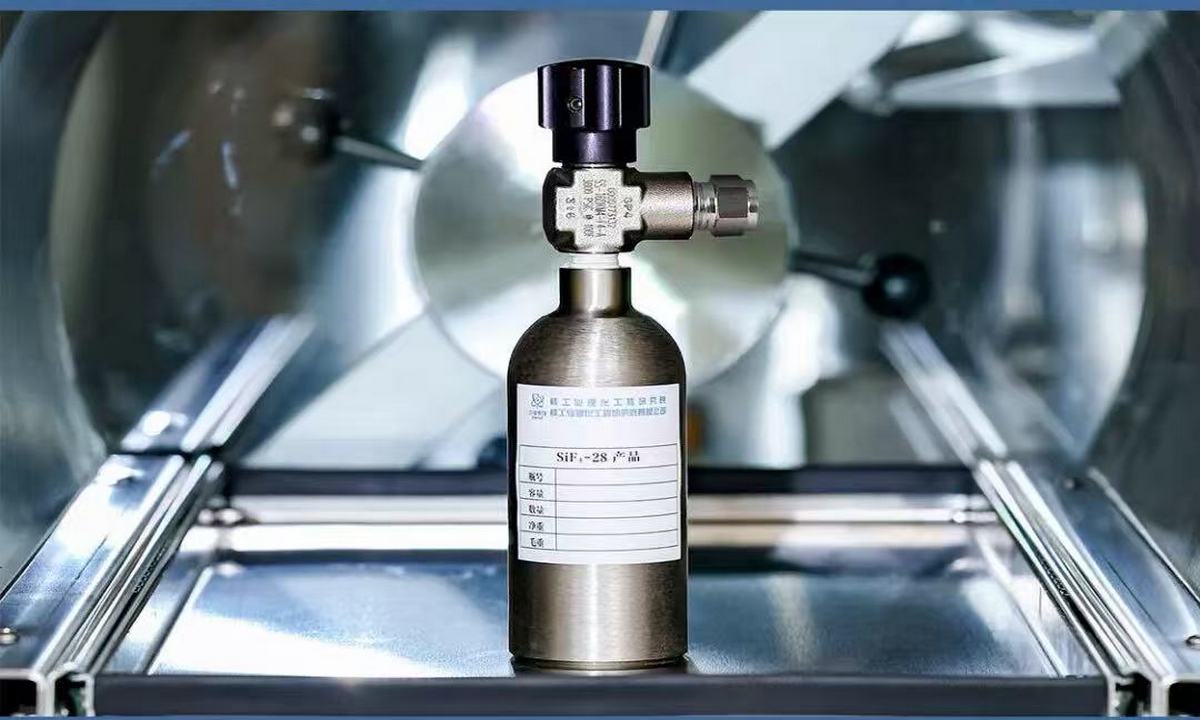
Photo: Courtesy of China Nuclear Energy Industry Co
Chinese scientists have made a major breakthrough in the field of stable isotope enrichment, successfully realizing mass production of silicon-28 isotopes with an abundance exceeding 99.99 percent for the first time, the Science and Technology Daily reported on Monday, citing the China National Nuclear Corporation (CNNC).
The achievement marks an important step forward in building an independent, controllable and efficient stable isotope industrial system in China, with the product's key indicators reaching internationally advanced levels, the report said.
The breakthrough was developed by the Research Institute of Physical and Chemical Engineering of Nuclear Industry (IPCE), under the CNNC subsidiary China Nuclear Energy Industry Co, the report added.
Silicon-28 is considered a critical material for silicon-based quantum chips, which are widely seen as one of the most promising pathways toward scalable quantum computing.
As a stable isotope of silicon, silicon-28 is often described as "the purest silicon in the world" and is essential for the development of silicon-based quantum devices.
With the independent mass production of the silicon-28 isotope, China has closed a critical gap in key materials for silicon-based quantum computing. This will provide solid support for the independent development of core silicon-based quantum computing materials in China, as well as for high-quality progress in cutting-edge tech fields such as advanced semiconductor manufacturing, high-end navigation, and metrology standards, according to the Science and Technology Daily report.
Yu Dapeng, an academician of the Chinese Academy of Sciences, said that the recent achievement has resolved an urgent supply bottleneck for silicon-based quantum computing and has paved the way for large-scale qubit manipulation in China, the Science and Technology Daily reported.
According to Jiang Hongmin, head of the IPCE, the purification process does not involve turning silicon-29 into silicon-28 through chemical reactions. Instead, it is more like "sorting beans," separating the three silicon isotopes from one another so that silicon-28 is enriched on one side while silicon-29 and silicon-30 are concentrated on the other, the CCTV News reported.
Jiang said the successful domestic production of ultra-high-purity silicon-28 will also support other frontier fields, including advanced semiconductor manufacturing, high-end navigation and metrology standards.
According to media reports, the IPCE research team has produced of 26 stable isotopes across 12 elements, including molybdenum, tellurium and nickel, steadily advancing the engineering and industrialization of stable isotope separation technologies.
Global Times
RELATED ARTICLES