ARTS / CULTURE & LEISURE
Pose of seated terracotta figure similar to Egyptian pharaohs
Research reveals sign of authority: archaeologist
By Published: Jun 15, 2026 09:27 PM
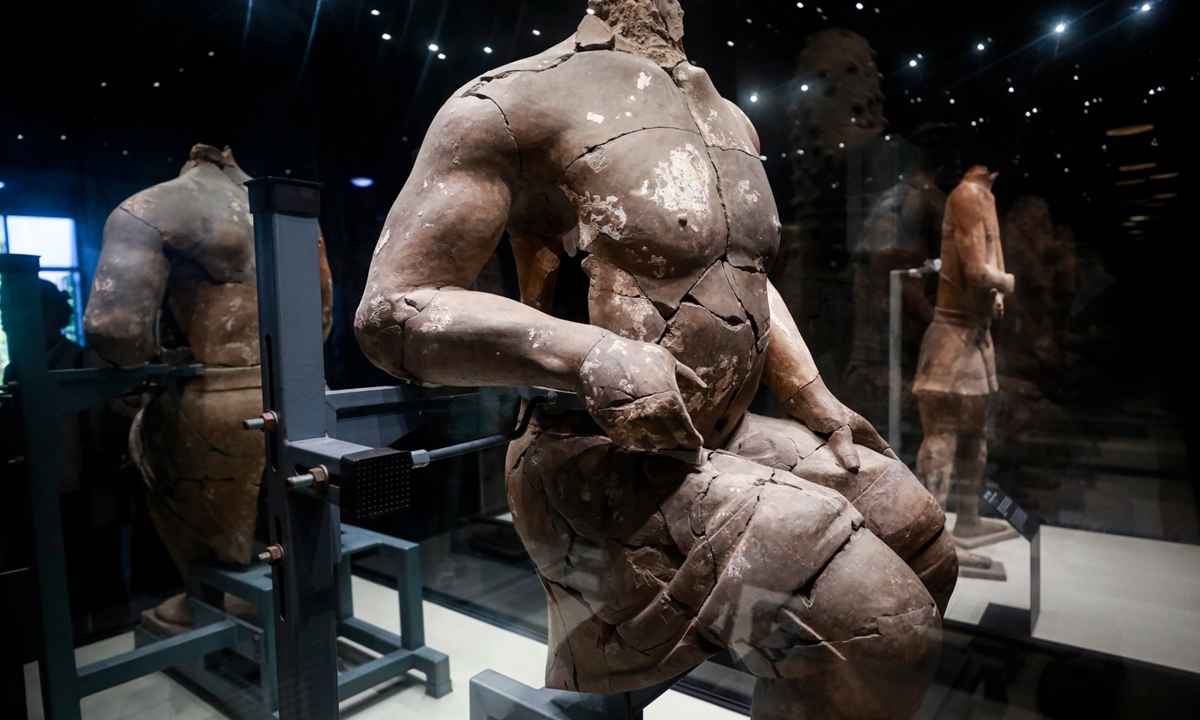
The seated terracotta figure at the Emperor Qinshihuang's Mausoleum Site Museum Photo: VCG
A terracotta figure with unusual posture has "sat" on display at the Emperor Qinshihuang's Mausoleum Site Museum for many years, but only recently have its secrets begun to be revealed. Zhang Weixing, a leading archaeologist with the Collaborative Research Center for Archaeology of the Silk Roads who has been a core researcher on the Emperor Qinshihuang's Mausoleum excavations, told the Global Times on Monday that this terracotta figure's high-seated pose is a strong sign of authority, similar to statues of Egyptian pharaohs.Although the cultures of the Qin Dynasty (221BC-206BC) and ancient Egypt existed in very different eras and have no direct connection, their art shared a common human instinct to show power and importance with similar visual symbols, the archaeologist noted.
This terracotta figure was discovered in the K9901 burial pit, located southeast of the mausoleum grounds. Over 30 clay figures were found in this pit, including the seated one. Based on the restored figures' poses and styles, archaeologists found that these statues were different from the iconic Terracotta Warriors. Instead of soldiers, experts say that these figures may represent different kinds of performing arts, symbolic of court entertainment during the Qin Dynasty, according to the People's Daily.
Zhang explained that, looking at the group as a whole, the high-seated terracotta figure appears to be the central character in the pit. The figure commands the highest position, watching over the other figures and showing much greater status and authority than the others. The entire set recreates real scenes from the Qin imperial court, reflecting activities related to the royal family and upper-class life, and definitely not ordinary life among the common people.
These figurines are considered to represent baixi, or "one hundred arts," a general term for ancient music, dance, and acrobatic stunts. As early as the Spring and Autumn and Warring States periods (770BC-221BC), these kinds of performances were already developing, and by the Qin Dynasty, they had become a major form of palace entertainment. When creating these figures, Qin artisans used all kinds of techniques - molding, adding layers, kneading, attaching, carving, and painting - to make them seem lifelike. These methods allowed them to capture not just accurate form and colors, but also the spirit and character of each figure. Multiple sculpting and painting methods were combined, creating richly layered, distinctive works of art, according to the People's Daily.
Zhang led the excavation of the K9901 pit and later published research on the team's findings. He said that, even though these sculptures have been restored and displayed for years, neither researchers nor the wider public have truly understood what they represent as every single terracotta figure has its own story and is worth further study.
Besides the special seated figure, Zhang introduced that every sculpture unearthed from the K9901 pit differs in body shape, poses, clothing and position. Each individual work is finely crafted and, in terms of artistry, easily matches classical Western sculpture. However, Zhang noted that scholars should not focus only on individual pieces. It is only when the whole ensemble is viewed together that their unique meanings and the full scene of imperial life are truly revealed.
Zhang also noted that the No.28 figure has now been reconstructed, revealing a figure kneeling on both knees, legs tucked under its hips, and arms extended backward. This figure was long thought to show a tumbling motion, but new research reveals the pose is actually a backbend, an acrobatic move. Previous research also described most of these figurines as bare-chested, but recent findings show that many are dressed, and there are even figures wearing armor or full official robes.
Take the No.4 figure as an example. It has been considered one of the finest Qin terracotta figures yet unearthed in terms of preserving ancient artistic information. The upper body is clothed and decorated with rows of round studs like those seen on palace gates during the Ming and Qing dynasties (1368-1911), highlighted with eight-pointed "sun" designs. The lower body is wrapped in a painted long skirt with detailed and beautiful patterns, according to the China News Service.
RELATED ARTICLES