Chinese authorities solve multiple drug cases based on US-provided intelligence: top anti-narcotics authority
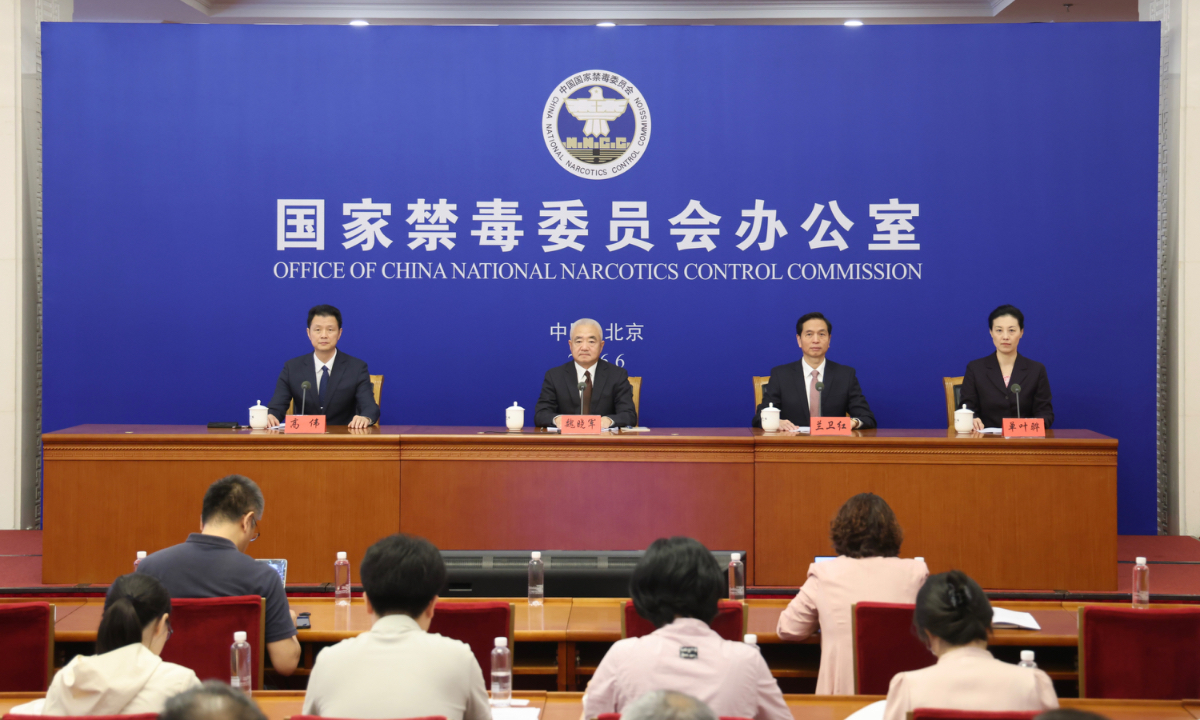
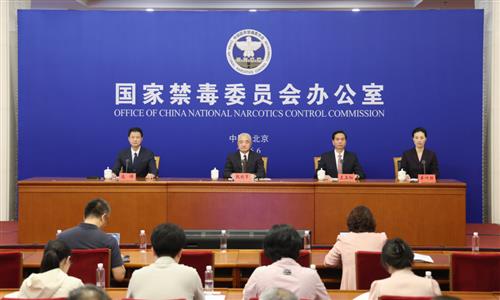
A press conference held by China's National Narcotics Control Commission on June 17, 2026. Photo: Guo Yuandan
Anti-drug authorities in China and the US are maintaining a sound cooperative relationship. Based on information and intelligence provided by the US side, Chinese authorities have investigated and solved a number of cases, which have played a positive role in improving China's domestic drug control efforts, the Global Times learned from a press conference held by China's National Narcotics Control Commission (NNCC) on Wednesday.
The NNCC held a press conference on Wednesday to brief the media on the country's anti-drug achievements since the beginning of 2025, outline key priorities for the next phase of work, and release the latest report on China's drug situation.
Responding to a question regarding China-US anti-drug cooperation, Wei Xiaojun, executive deputy director of the office and head of the Ministry of Public Security's narcotics control bureau, said that since the meeting between the Chinese and US presidents in Busan, anti-drug authorities from the two countries have worked closely together and achieved tangible results.
"We have continued cooperation with the US in areas including substance scheduling, chemical control, intelligence and information exchange, joint case investigations, the removal of illegal online content, the arrest and repatriation of fugitives, anti-money laundering efforts related to drug crimes, and exchanges on drug-testing technologies," Wei said.
Wei outlined China-US anti-drug cooperation in three key areas.
First, the two sides have carried out extensive institutional exchanges and practical cooperation. "We have maintained communication with US policy agencies such as the White House Office of National Drug Control Policy, regularly exchanged updates on our respective work, and discussed priorities for future cooperation. We have also jointly investigated multiple cases with US law enforcement agencies, including the Drug Enforcement Administration (DEA), the Federal Bureau of Investigation (FBI), and Immigration and Customs Enforcement (ICE), and cooperated in the repatriation of drug-related fugitives," he said.
Second, the two countries have actively worked together to address the flow of non-scheduled chemicals into drug production channels in North America.
In November 2025, China's Ministry of Commerce and four other government agencies jointly issued an announcement adding 13 fentanyl precursor chemicals, as well as the US, Mexico and Canada, to the Catalogue of Specific Countries (Regions). In May this year, the Chinese side added three piperidine-based fentanyl precursor chemicals to the Catalogue of Precursor Chemicals Subject to Export Control to Specified Countries.
The NNCC also issued warning notices in November 2025 and May 2026, reminding relevant companies and individuals to strictly comply with applicable laws and regulations when conducting related business activities and to prevent precursor chemicals and equipment from being diverted into illicit drug manufacturing channels.
According to Wei, by the end of 2025 China had placed 47 precursor chemicals under control, including seven fentanyl precursor chemicals, further strengthening the country's regulatory framework for drug-making substances.
Third, in response to cases involving a small number of individuals in China trafficking controlled or non-controlled precursor chemicals and new psychoactive substances abroad, Wei said authorities have launched multiple nationwide special operations to crack down on such activities and strengthen case investigations.
At the press conference, Shan Yehua, deputy director of the NNCC and deputy director-general of the Narcotics Control Bureau, announced the issuance of the notice on adding 16 substances, including difluoroetomidate, to the Catalogue of Non-medicinal Narcotic Drugs and Psychotropic Substances.
"The 16 substances added this time, including tiletamine and difluoroetomidate, were identified through monitoring in 2025 as substances with relatively serious abuse problems and a high risk of diversion," Shan said.
Following the latest addition, China now controls 412 non-medicinal narcotic drugs and psychotropic substances, as well as three entire categories of substances: fentanyl-related substances, synthetic cannabinoids and nitazenes.
Wei noted that since the beginning of this year, the US side has positively evaluated China-US anti-drug cooperation on multiple occasions and expressed appreciation for China's efforts. Some US experts and scholars have also published articles in leading journals such as the journal Science, recognizing China's achievements in drug control.
"Through our cooperation, we have also investigated and solved a number of cases based on information and intelligence provided by the US side, which has played a positive role in improving the governance of drug-related issues within China," Wei said.
He added that addressing the drug problem concerns the health and well-being of all humanity, and anti-drug cooperation reflects the common will of the international community. "Such cooperation benefits all parties and harms none. Countries should engage in equal and pragmatic cooperation based on mutual respect, mutual trust, and a rational and professional approach."
"At present, China's and the US' anti-drug authorities maintain a sound cooperative relationship. This situation has not come easily and requires continued efforts from both sides to preserve and strengthen it. As long as China and the US work together, we will be able to effectively address prominent drug-related challenges and bring tangible benefits to the people of both countries and the world at large," Wei said.
RELATED ARTICLES