ARTS / CULTURE & LEISURE
From sundials to noodles, 2 millennia-old Henan ritual marks Summer Solstice
Season written in the sun
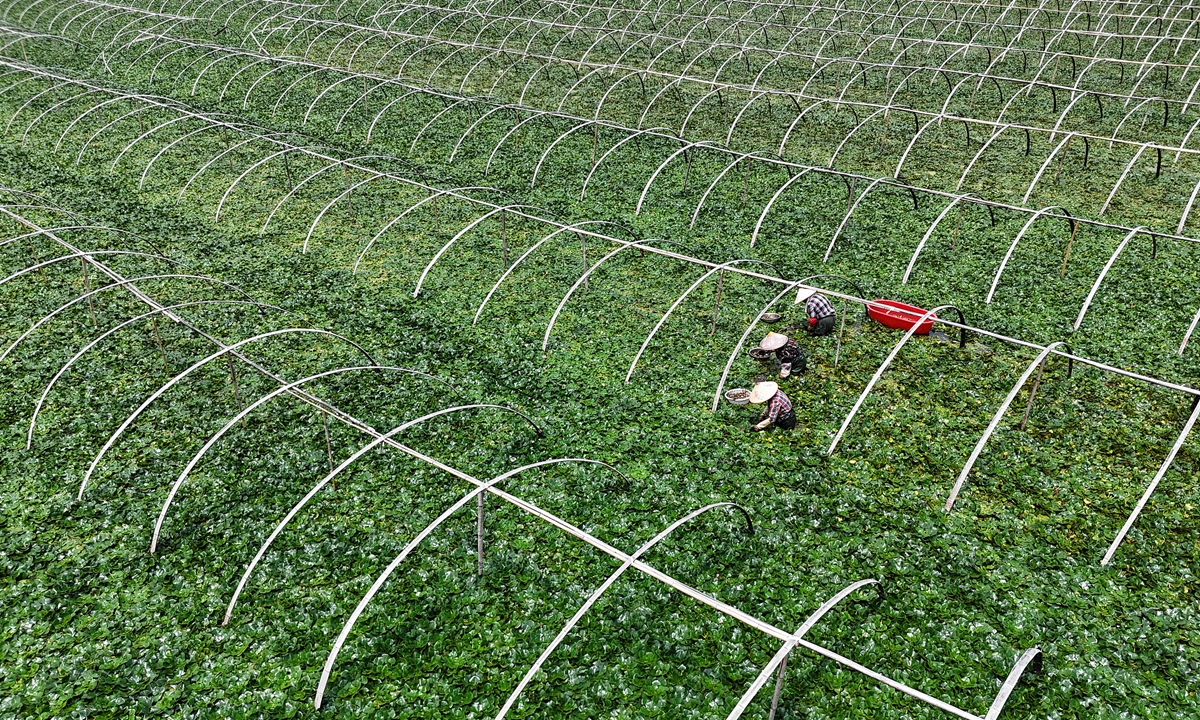
Farmers work in Leqing, East China's Zhejiang Province, on June 21, 2026, the day marks Xiazhi, or Summer Solstice. Photo: VCG
Despite light rain, a ceremony was held at the Gaocheng Observatory in Dengfeng, Central China's Henan Province, where participants gathered for a ritual honoring the Duke of Zhou in early Western Zhou Dynasty (1046BC-771BC), long associated with early efforts to measure the sun's shadow and define seasonal markers.
Nearby, a gnomon demonstration allowed visitors to observe the astronomical principles behind Xiazhi, or Summer Solstice, the 10th of China's 24 solar terms, which fell on Sunday and marks the longest day and shortest night in the Northern Hemisphere.
In Dengfeng, where ancient Chinese scholars once tracked the movement of the sun to understand the rhythms of nature, the longest day of the year is still marked much as it was thousands of years ago.
"Gaocheng Observatory is an important birthplace of the 24 solar terms and a valuable site for promoting traditional astronomical knowledge," Li Yanyan, an inheritor of the 24 solar terms tradition, told the Global Times. "Every year on the summer solstice, we hold a series of cultural activities here to help more people understand this heritage."
This year's celebration carries particular significance, marking the 10th anniversary of the inscription of the 24 solar terms on UNESCO's Representative List of the Intangible Cultural Heritage of Humanity.
Rooted in ancient observation of celestial cycles, Xiazhi blends astronomy and daily life, encouraging early rising, midday rest, proper hydration and a lighter seasonal routine.
The program in Dengfeng this year featured a ritual honoring the Duke of Zhou - also known as Ji Dan - a sun-shadow measurement demonstration, intangible cultural heritage exhibitions, and a communal serving of summer solstice noodles, all part of the seasonal observance.
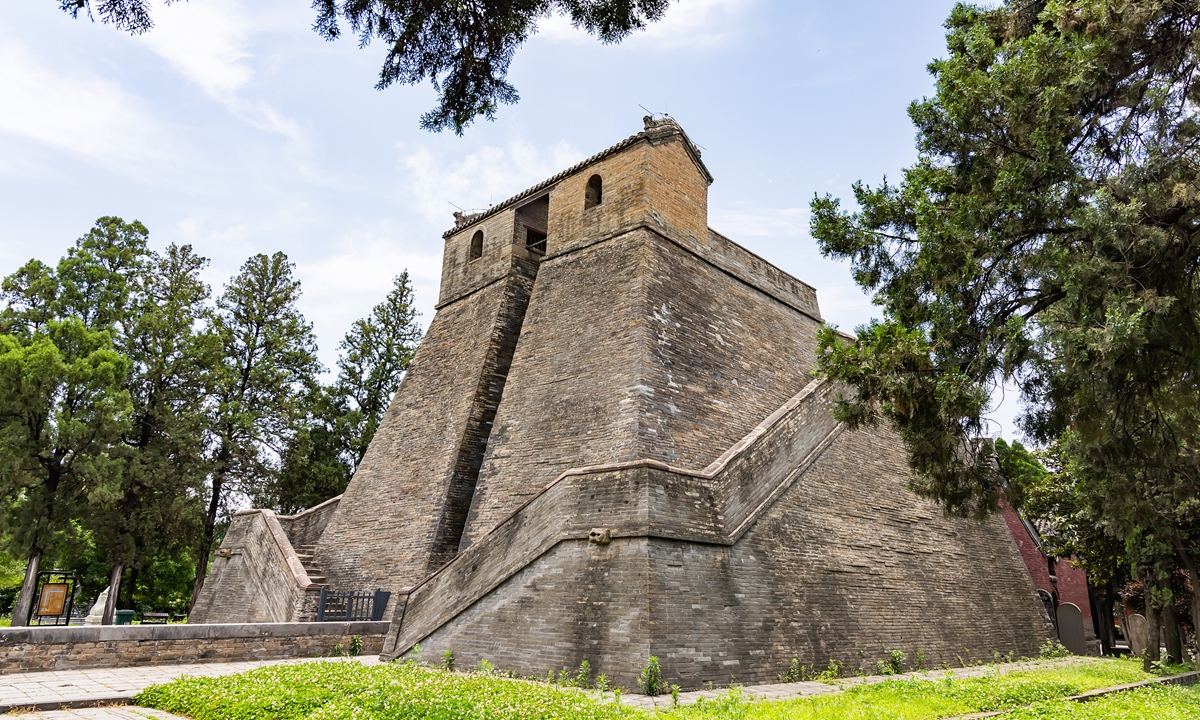
The astronomical observatory by Yuan Dynasty astronomer Guo Shoujing in Dengfeng, Central China's Henan Province Photo: VCG
Astronomical heritageLong before the invention of modern clocks and calendars, Chinese astronomers relied on the movement of the sun to measure time. Historical records show that more than 3,000 years ago, the Duke of Zhou is said to have conducted on-site observations here to establish the traditional Chinese seasonal markers of the winter solstice, summer solstice, spring equinox and autumn equinox.
In 1281, Yuan Dynasty (1279-1368) astronomer Guo Shoujing used sun-shadow measurements at the same site to compile the most advanced calendrical systems in the world at the time, making the observatory an important historical site linked to the origins of China's 24 solar terms.
The traces of that scientific tradition can still be found at the site today.
Within the observatory complex stand two important astronomical monuments. One is a shadow-measuring platform, where the Duke of Zhou is said to have observed the sun's shadow and verified the seasonal cycle. The other is the oldest existing astronomical observatory in China, designed by Guo.
Nowadays, local authorities organized a series of cultural activities centered on the observatory and the summer solstice tradition.
Beyond the astronomical demonstrations, the celebration also showcased the rich folk culture that has grown around the seasonal calendar over the centuries. A performance program themed around the 24 solar terms featured poetry recitations, martial arts displays and dance performances inspired by traditional concepts of time and nature.
Meanwhile, an exhibition area brought together a variety of local intangible cultural heritage items, including Songshan woodblock New Year prints, Dengfeng paper-cutting, incense-making techniques and traditional ceramic firing. That connection between astronomy and everyday life was perhaps most visible at one of the most popular spots at the event - the summer noodle tasting.
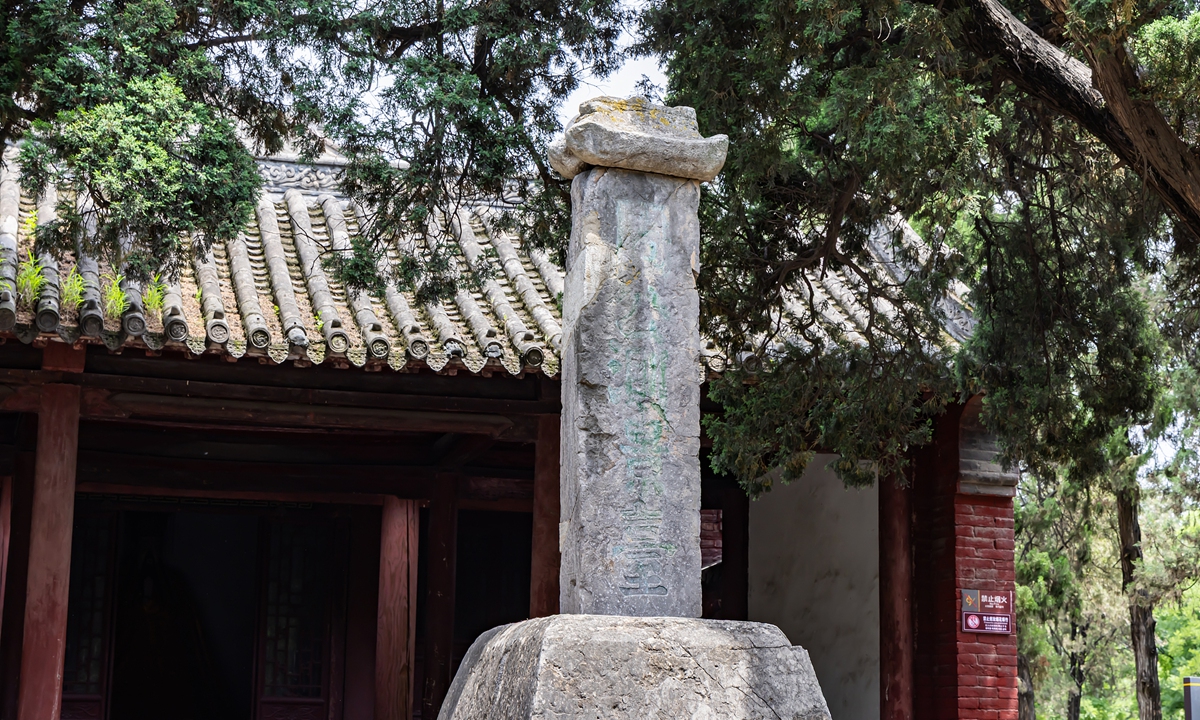
The shadow-measuring platform in Dengfeng, Central China's Henan Province Photo: VCG
Harvest timeUnder a local tradition summarized by the saying "dumplings for the winter solstice, noodles for the summer solstice," staff members prepared bowls of noodles made from freshly milled flour using newly harvested wheat in Dengfeng.
In northern China, the arrival of summer historically coincided with the wheat harvest.
For generations of farming families, the first batch of newly harvested grain symbolized both survival and abundance in ancient times, according to the Farmers' Daily.
Wheat, one of northern China's most important staple crops, is planted, cultivated and irrigated through months of hard work before being harvested in early summer. People would grind the fresh wheat into flour and prepare foods such as pancakes and noodles, first offering them to their ancestors and deities as a gesture of gratitude before sharing them with relatives.
The custom also carries a symbolic connection to the changing seasons. Following the summer solstice, daylight hours in the Northern Hemisphere begin to shorten.
Long strands of noodles came to represent the long daylight hours that characterize the season, while eating them marked a farewell to the year's longest day.
A traditional saying notes that after eating summer solstice noodles, "the day shortens by a thread." The phrase refers to the subtle daily reduction in daylight after the solstice, expressed through the familiar image of a needle worker using slightly less thread.
For Wang Laihua, a professor at the Tianjin Social Sciences Academy, such customs reveal how ancient Chinese communities transformed observations of the natural world into meaningful cultural practices.
More than two millennia after the solar terms first emerged, that worldview continues to resonate.
"Summer Solstice marks the beginning of midsummer and an important moment in China's agricultural calendar," Wang told the Global Times.
In traditional thought, Xiazhi represents the peak of yang energy, when yin energy begins to emerge, reflecting a worldview that sees nature as constantly changing and transforming.
Through long-term observation and lived practice, ancient people distilled Xiazhi into a broader understanding of time and nature, which in turn shaped diverse local traditions across China, noted Wang.
RELATED ARTICLES