ARTS / CULTURE & LEISURE
Chinese web writers stand up against AI plagiarism to protect originality
By Published: Jun 23, 2026 09:31 PM
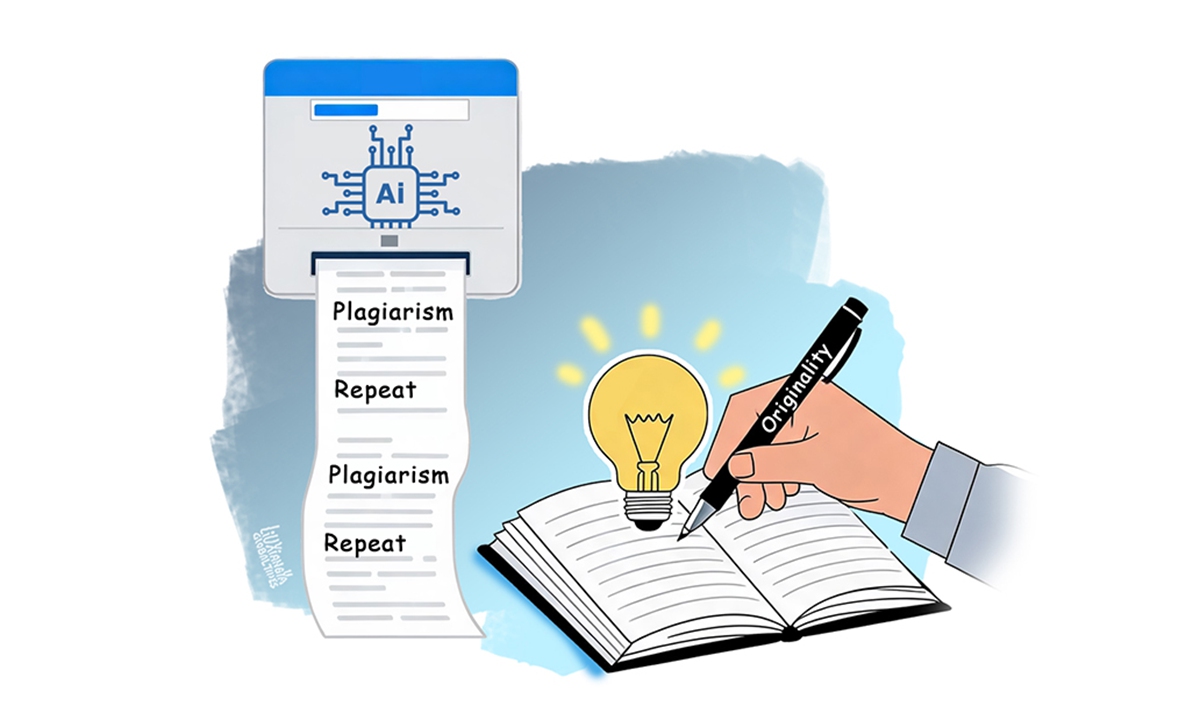
Illustration: Liu Xiangya/GT
Recently, a group of Chinese online fiction writers, including popular names like Huishuohua de Zhouzi and Aiqianshui de Wuzei, signed a public letter calling for actions against plagiarism, especially AI-powered "article spinning."The letter quickly drew wide attention, with more than 1,200 writers joining the campaign. Their urgent message is clear: A wave of copy-paste, manual rewriting, and now large-scale AI-generated fake works is influencing the future of the online literature industry. In this age of rapid AI development, how can the world of online fiction protect true creativity and fairness for writers?
The open letter points out that numerous cases of plagiarism in web fiction have appeared in recent years. Methods have evolved from simple copy-paste to manual re-writing, and now to large-scale AI-generated content spinning.
The letter listed four main actions: Stick to original work and never plagiarize, make sure to clearly mark any inspirations or borrowed content, call on platforms to tighten monitoring and review, and encourage readers to help keep the industry honest.
The problem of plagiarism in online literature is more serious now in the AI era. Ding Daoshi, a senior analyst in the field, told the Global Times that while plagiarism used to rely on people reading and reorganizing content, AI models can now break down story plots and rewrite language within seconds. Plagiarism has changed from a manual activity to almost an assembly-line process, making it much harder to spot and stop.
Chinese writer Hu Yiping, author of popular novels like Jiufang Alley who publishes under the name Gulanyue, has faced similar problems.
She told the Global Times that with advanced AI tools, people can feed her books into the algorithm and in seconds, the AI rearranges word order and changes sentences, allowing the work to slip by regular plagiarism checks. The result: The plots and core characters are copied, but it is very hard to notice the theft without a detailed side-by-side comparison.
Hu said she once spent more than half a year developing a unique world and setting up clues in her story, only to see AI-generated stories appear later using all her ideas. Even worse was how hard it was to defend her rights. If AI creates a dozen fake books from one original, gathering evidence and responding to every single case can be exhausting.
At the same time, Hu and many others have noticed some genuine progress in fighting this problem. Many major web fiction platforms have announced self-discipline guidelines and formed alliances. Now, once clear proof of AI-generated plagiarism is found, platforms can ban accounts, limit publishing, or even blacklist users, cutting them off from industry opportunities.
For example, in February 2026, the web fiction platform Fanqie Novel released a notice reporting that some accounts were updating hundreds of stories in a single day using AI to mass-generate content. Most of these stories lacked originality and basic logic, so the platform eventually took action against 855 accounts. In May, the platform announced it had also removed tens of thousands of low-quality or rule-violating books and refused to sign over 110,000 more, according to thepaper.cn.
Hu also noticed that some platforms have launched special AI-detection systems, which do more than check for repeated words. These tools can also compare the logic of the story, core character relationships, and key plotlines, catching even subtle AI rewrites. Dedicated reporting channels for authors have made it easier for them to file complaints and protect their rights.
On top of platform and technology efforts, government regulators stepped in. In September 2025, new rules required that all AI-generated text, images, and videos must be labeled with either visible or hidden labels, according to the Xinhua News Agency.
Hu said that this is a good first step to managing tool abuse at the source.
Looking ahead, the letter called for further improvement. Authors should always clearly mark any borrowed ideas or unique materials, clearly stating the name and original author when using them. Platforms should continue to build stronger, more professional, and transparent systems for handling complaints and plagiarism checks.
When a work faces plagiarism accusations, expert and reader reviews should help determine the voracity of these accusations, while confirmed plagiarism should face penalties, including removal and account bans.
The letter also urges readers to support real, original works and be patient with their favorite writers.
Hu feels that the lines around "AI-generated fakes" are often still unclear, and specific standards are needed to better define what counts as infringement. Penalties also need to be stronger: It is not enough to just take down an article; those who profit from plagiarism should fully compensate the original author, and bulk AI plagiarism should face even heavier punishment to end the practice. At the same time, readers should learn to spot the difference between real and fake works, and actively reject plagiarism.
Ding agrees. He noted that only when original writers are reasonably compensated for their efforts will creativity remain strong, even with the challenges posed by AI. The creative drive of writers depends on whether real rewards and fair competition exist.
Today, many internet users have left messages under authors' posts showing strong support for original literature. The fight for fairness and creativity in Chinese online fiction continues.
The author is a reporter with the Global Times. life@globaltimes.com.cn
RELATED ARTICLES