ARTS / CULTURE & LEISURE
'The Heart' helps foster doctor-patient empathy
Mark Chao reflects on reprising cardiologist role
By Published: Jun 23, 2026 11:29 PM
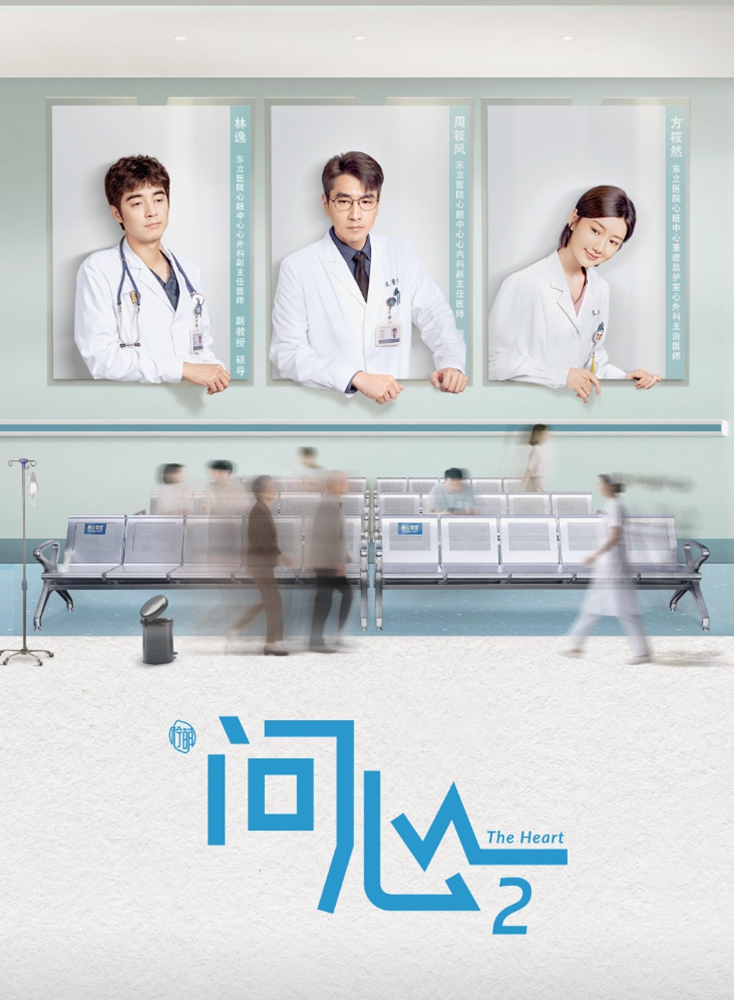
The Heart 2 Photo: Courtesy of Douban
In an interview with the Global Times, actor Mark Chao from the Taiwan region reflected on reprising his role as cardiologist Zhou Xiaofeng in the highly anticipated second season of the acclaimed medical drama The Heart.
Nearly three years after the first season's debut, "the pressure was palpable. To be honest, before joining the crew, I felt quite apprehensive," Chao admitted. Fresh off another production, he dove straight into The Heart 2. The big question lingered: Could he recapture the essence of Zhou Xiaofeng?
The answer came the moment he slipped on the white coat. "That familiar sensation returned immediately," he told the Global Times. Stepping onto set for his first scenes with co-stars Mao Xiaotong (as Fang Xiaoran) and Jin Shijia (as Lin Yi), everything clicked back into place.
"The chemistry was still there. We all knew each other's pacing and where the dialogue was heading. It felt incredibly comfortable." After premiering in October 2023, The Heart quickly established itself as a standout in China's crowded medical drama genre. With a rating of 8.5/10 on Chinese rating site Douban and nominations for major awards, it earned praise for its professional rigor and emotional depth.
The Heart 2, which began airing on China's Central TV on June 18, picks up over two years after the first season's finale. Zhou Xiaofeng returns from an aid mission in Guizhou Province and is promoted to the youngest executive director of cardiology in the history of Dongli Hospital. What appears to be a triumphant career milestone is, in Chao's view, a carefully laid career predicament.
"We promoted him primarily to manufacture fresh difficulties and dilemmas," Chao explained candidly. "By the end of the first season, we had largely resolved his core issues. For the second, we needed to push him forward, elevate him to a new level where his previous idealism collides with harsh realities."
The shift in status alters relationships. Former colleagues become subordinates, breeding distance and isolation. "He becomes lonelier," Chao noted. Choices made in his new role risk straining family ties and friendships, generating richer dramatic conflict. His character arc is distilled into a sharp essence: "Even more stubborn, even more persistent." Already deeply principled, he now believes that climbing higher will enable him to help more patients on a grander scale, yet he remains blind to the personal costs.
Rather than opening with a spectacular surgical showcase, The Heart 2 launches with a profound ethical quandary. A fetal intervention procedure for twins goes awry. Zhou's mother, Fang Zhuqing (played by Joan Chen), uses unapproved equipment in a desperate bid to save one of the fetuses. The operation fails, resulting in a medical accident. As the newly appointed director, Zhou Xiaofeng must personally announce the disciplinary measures against his own mother, including a six-month suspension.
"It's incredibly painful. A true no-win situation," Chao said. "Whichever path he chooses feels wrong. We crafted multiple such dilemmas to keep the audience emotionally invested." Zhou ultimately upholds the decision for the greater institutional good, prioritizing his broader mission to save more lives, even if it appears ruthless.
When asked if he worries audiences might criticize Zhou for "turning against his own mother," Chao remained philosophical: "Controversy is good. As long as people are willing to discuss it, that's valuable. Some will understand; others won't. That's normal."
A quiet sincerity marked Chao's recollections of the production's medical research. The crew consulted more than 200 medical advisors to ensure accuracy in cases, terminology, equipment, and procedures. Lead actors observed surgeries with the patients' consent.
Chao observed that doctors rarely display emotion publicly; they remain relentlessly professional. Yet the physical toll is undeniable. "A 24-hour shift doesn't mean you don't sleep; it means you can't. Emergencies pull you back instantly. Your time is never your own; that's actually quite terrifying."
Witnessing a relatively routine coronary intervention lasting over an hour left him exhausted from standing. "I was already worn out watching one simple case," he recalled. "And that's their everyday reality."
Chao said, beyond entertainment, quality medical dramas have a responsibility to educate the public, urging people not to ignore symptoms like chest tightness and to seek timely care, and humanize doctors. "We want to show the side people don't usually see: Doctors feel sadness, exhaustion, and personal pressures too. By depicting this, we hope to foster greater understanding and empathy between doctors and patients."
The Heart 2 has not only thrived domestically but is also positioned for international success. Chao attributes its cross-cultural appeal to universal themes.
"Medical dramas revolve around human relationships and the value of life - elements that resonate everywhere," Chao said.
He contrasted approaches: While some US TV series like The Pitt employ distinct stylistic methods, The Heart 2 favors a grounded, steady narrative that emphasizes emotional bonds between patients and doctors in each case. Regardless of pacing or perspective, compelling stories ultimately convey warmth, healing, and humanity that transcend national borders.
RELATED ARTICLES