Senior Chinese official refutes foreign reports claiming boarding schools in Xizang as ‘forced assimilation’
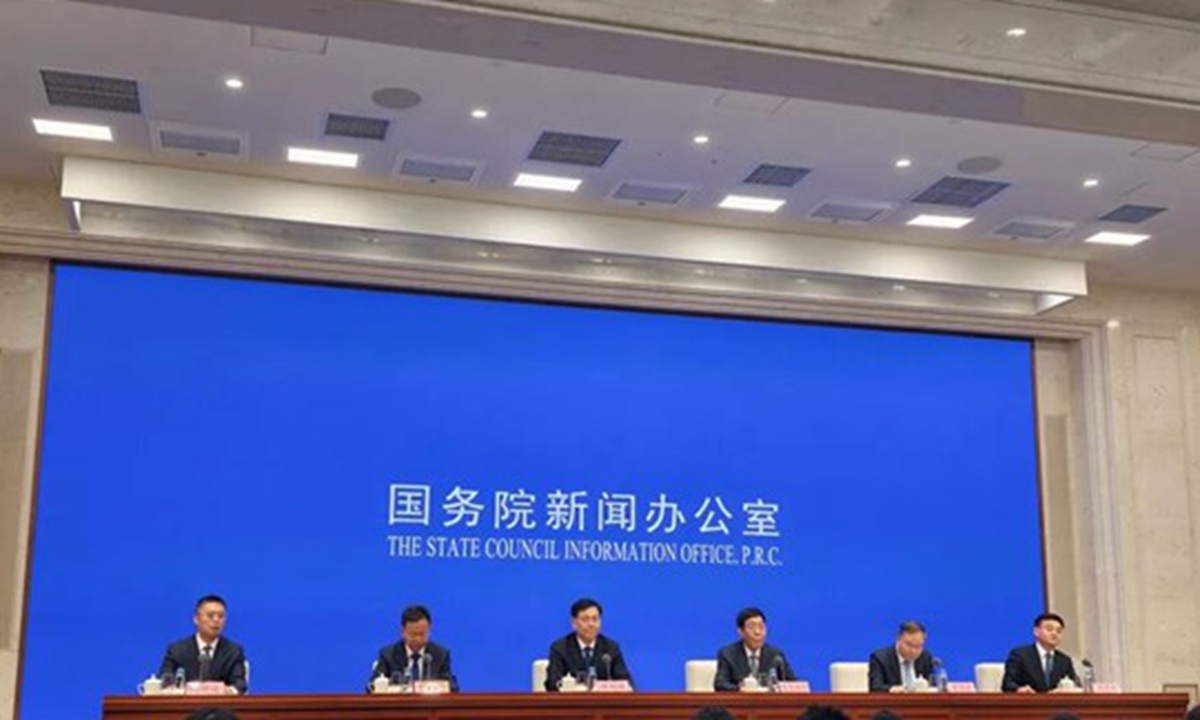
The State Council Information Office (SCIO) held a press conference on June 24, 2026 regarding the Ethnic Unity and Progress Promotion Law and China's work on ethnic affairs. Photo: CNS Photo
A senior Chinese official on Wednesday refuted foreign media reports claiming that boarding schools in Southwest China's Xizang Autonomous Region represent "forced assimilation," "compulsory boarding," and "human rights violations." Those reports are completely inconsistent with the facts, the official said.
The boarding school system reflects China's commitment to ethnic equality and educational equity, Duan Yijun, vice minister of the United Front Work Department of the Communist Party of China Central Committee, told at a press conference on Wednesday. The State Council Information Office (SCIO) held a press conference on Wednesday regarding the Ethnic Unity and Progress Promotion Law and China's work on ethnic affairs.
China's Compulsory Education Law stipulates that county-level people's governments may establish boarding schools where necessary. The law also emphasizes that the purpose of boarding schools is to ensure that school-age children and adolescents living in dispersed areas can receive compulsory education. This policy was introduced by the Chinese government based on the country's specific national conditions to ensure equal access to education for all ethnic groups, not any particular ethnic group, Duan noted.
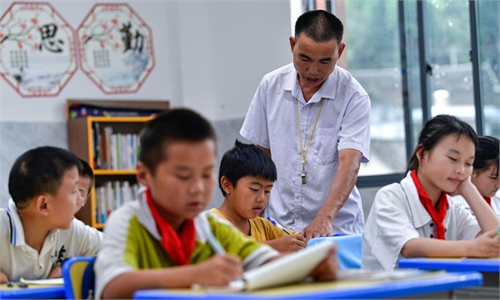
Second, China's boarding school system simply means that schools provide accommodation, meals, and other support services for students. They are not closed institutions, let alone militarized facilities, Duan said.
Whether a student boards at school is entirely a voluntary choice made by the student and their parents based on family circumstances and educational needs. In fact, the number of boarding students changes dynamically: some students switch from boarding to commuting, while others move from commuting to boarding, depending entirely on their own preferences and those of their families. Boarding students can return home on weekends, holidays, and during winter and summer vacations. Parents are free to visit their children at any time and may take them home whenever necessary, he introduced.
Third, judging from the results of the policy's implementation, Xizang farmers and herders have shown a strong willingness to enroll their children in boarding schools, Duan said.
As is widely known, Xizang covers a vast territory with a highly dispersed population. The cost of sending children to school is high, and the burden on parents who must transport them to and from school is considerable. To ensure that children of all ethnic groups on the plateau enjoy equal access to high-quality education, and in response to public demand, the government has implemented boarding education in certain rural and pastoral areas. This provides students with safer and more convenient conditions while meeting the needs of both parents and children, the official noted.
Duan also emphasized two other facts during the press conference. In old Xizang, there was not a single modern school in the true sense of the term. The enrollment rate of school-age children was less than 2 percent, and more than 95 percent of the population was illiterate. The children of serfs were deprived of the right to education. In particular, children in pastoral areas could only follow livestock as they moved from place to place. Equal access to education was simply beyond the reach of ordinary people. It is only under the leadership of the Communist Party of China that the light of educational equity has reached every tent and every household on the plateau. According to official statistics released by the Xizang Autonomous Region in 2024, the enrollment rate for school-age children reached 99.98 percent, while the retention rate for compulsory education stood at 96.94 percent.
Second, in world history, it was precisely some countries that now politicize human rights issues that once forcibly sent Indigenous children to colonial-style boarding schools, suppressing their culture and identity. China's boarding school system is fundamentally different from those practices, Duan pointed out.
It is also worth noting that, in order to better safeguard the equal right to education for people of all ethnic groups, the Ethnic Unity and Progress Promotion Law contains comprehensive legal provisions concerning language and script education, the compilation and use of teaching materials, shared learning and growth among students of different ethnic backgrounds, cross-regional exchanges among young people, and the allocation of public service resources. These provisions fully embody China's experience of pursuing common unity and common prosperity, and can provide valuable reference for ethnic affairs governance in other countries, Duan said.
RELATED ARTICLES