Illustration: Xia Qing/GT
In Yiwu, which is long regarded as a bellwether of China's foreign trade, an e-commerce expo is being held from Tuesday to Thursday. According to Yiwu Fabu, exhibitors span a wide range of markets, including the US, Russia, South Korea and Southeast Asia. The breadth of participation underscores the continued appeal of China's cross-border e-commerce sector, where evolving consumer preferences are gradually steering online platforms into a more visible channel for import growth.In 2025, Yiwu's imports surpassed 100 billion yuan ($14.7 billion) for the first time, reaching 105.8 billion yuan, up 32.3 percent year-on-year. Cross-border e-commerce has played a supporting role in this increase, helping to facilitate import growth alongside gradual changes in how goods are sourced and consumed.
According to Hangzhou Customs, Yiwu has become China's largest city for cross-border e-commerce imports by volume. On December 3, 2025, Yiwu cleared a shipment of bonded cross-border e-commerce goods that lifted the city's full-year e-commerce import order count past 100 million for the first time. In Yiwu, cross-border e-commerce has increasingly functioned as one of the channels through which imported goods - particularly consumer products - enter the Chinese market, with room for further expansion.
Why has a relatively small city seen such rapid growth in cross-border e-commerce imports? Logistics may be part of the answer. Supported by a dense and efficient logistics network, and comparatively low shipping costs, some firms have turned Yiwu into a logistics hub, using it as a base from which goods are distributed to other parts of the country.
From this perspective, Yiwu's cross-border e-commerce imports can be seen as a microcosm of broader import demand through online channels in China. The experience in Yiwu is not isolated. Across a wider range of regions, e-commerce is also becoming one of the channels through which imported goods - particularly some consumer products - enter the Chinese market and reach consumers.
The recent "618" shopping festival provided fresh evidence of this trend. According to local media reports, cross-border e-commerce companies in Ningbo, East China's Zhejiang Province received 12.8 million consumer orders between May 16 and June 20, with the value of imported goods exceeding 4.6 billion yuan. During the period, products from 106 countries and regions were sold through Ningbo.
Viewed from a broader perspective, China's cross-border e-commerce imports reached 570.2 billion yuan in 2025, up 2.7 percent year-on-year, according to China Customs data. The import scale hit a record high, with all imported products being consumer goods. Major categories included beauty products, cosmetics, perfumes and personal care items, food and fresh products.
Behind the growth in cross-border e-commerce imports lies both the steady performance of traditional consumption and fresh momentum from emerging spending trends among younger consumers and other demographic groups.
In China, online shopping has become a daily routine for many younger consumers. Livestream e-commerce, in particular, a format that combines entertainment, shopping and social interaction, has gained strong traction among this group. In larger cities, reliance on online retail is already relatively high. In smaller cities and lower-tier markets, improvements in infrastructure and logistics have continued to extend the reach of e-commerce into everyday consumption.
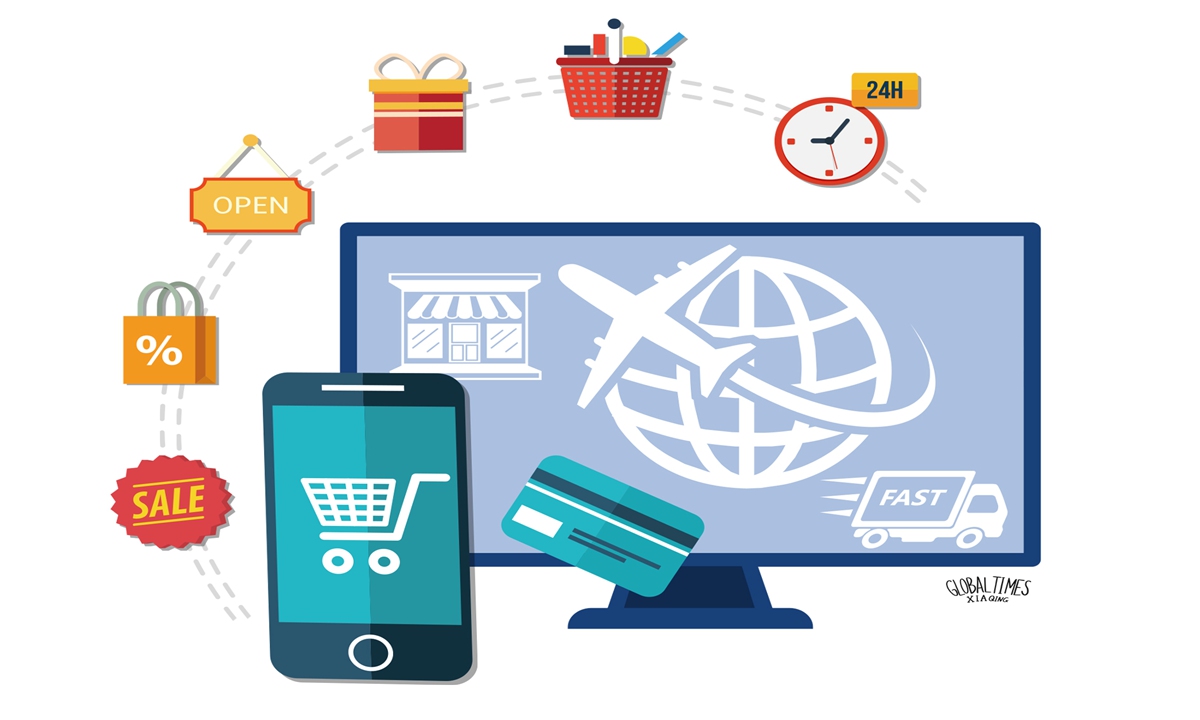
Online shopping among Chinese consumers is worth noting. On the retail side, new formats continue to emerge, alongside gradual improvements in logistics and customs processes. Taken together, these developments are helping to position online channels as a potentially important route for importing consumer goods.
Many product categories have performed well in online sales. According to a report by Jiemian News, this year's "618" shopping festival saw strong growth in demand for imported health and personal care products, reflecting consumers' increasing focus on refined self-care. Sales of nutritional supplements such as anti-aging products, vitamin D and glucosamine-chondroitin supplements all more than doubled. Sales of the body care products doubled, while sales of scalp essential oils tripled.
These developments raise a question worth considering for imported goods, particularly consumer products: how best to reach China's online consumers, and how far companies are willing to adapt their distribution strategies to include newer formats such as livestream e-commerce. Over time, greater familiarity with China's online retail ecosystem may become one of the factors influencing how effectively foreign brands perform in the market.
The author is a reporter with the Global Times. bizopinion@globaltimes.com.cn
RELATED ARTICLES