ARTS / CULTURE & LEISURE
Culture-nature blends offer a new way to engage museum visitors in China
By Published: Jun 29, 2026 11:03 PM

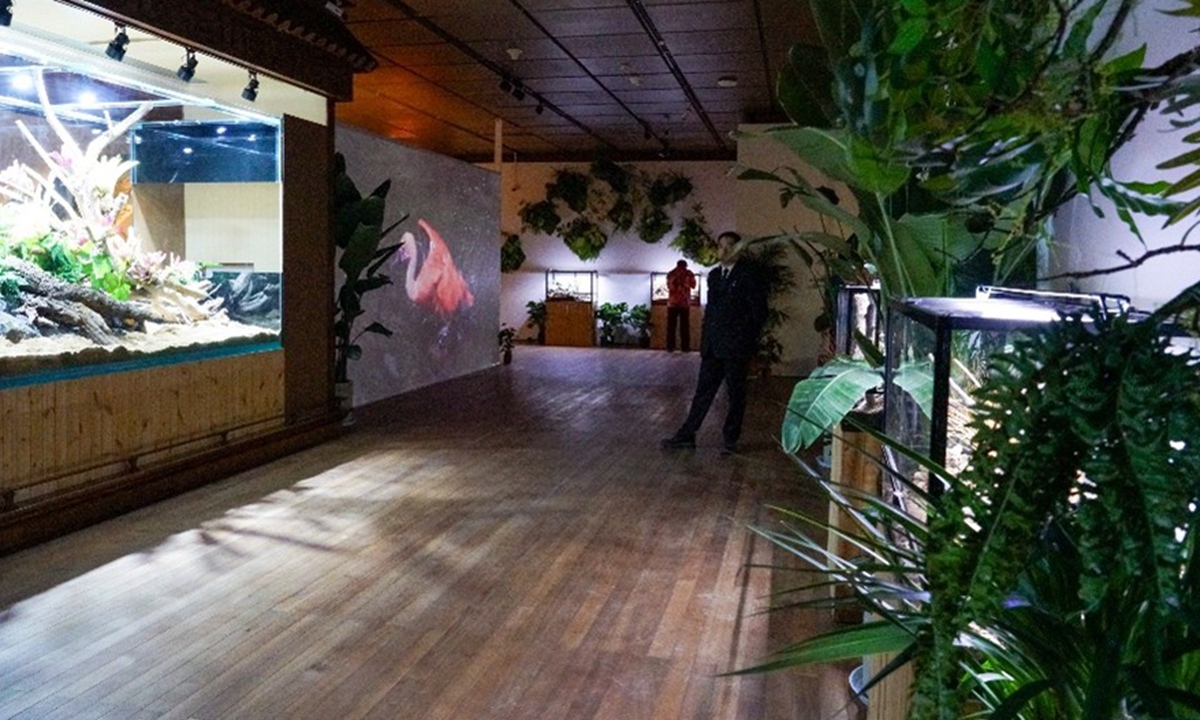
The interior view of the exhibition hall Photo: Courtesy of the Shanghai Museum
When visitors step into an upcoming exhibition focused on civilization of the Americas at the Shanghai Museum, they will be swept into a world where capybaras and other living animals - brought in partnership with the Shanghai Zoo - move among lush displays inspired by the Amazon wetlands and Andean peaks.This bold experiment moves from simply "viewing cultural relics" to "experiencing civilization" in a way that connects history and nature.
As public enthusiasm for museums and cultural heritage continues to grow, museum visitors increasingly expect more engaging and interactive experiences.
The Shanghai Museum's collaboration with the Shanghai Zoo represents an effort to meet these new expectations through cross-disciplinary innovation.
By curating around five interconnected focuses - relics, people, animals, plants, and food - the museum's new exhibition attempts to let the public walk through rainforest, and sense the environment that shaped long-vanished civilizations, per exhibition notes the museum shared with the Global Times.
For instance, one exhibition area features a forest scene in which turkeys and other birds roam among pottery and murals, restoring the living environment of native birds of the Americas. These exhibition areas are staffed with certified professional keepers and veterinarians on duty around the clock, ensuring regular health check-ups, disease prevention, and routine deworming for every animal, according to the museum staff.
The goal of planning this exhibition is to blend history with nature, moving beyond the traditional one-way model of "viewing relics" and transforming the entire museum into an immersive environment, drawn from the civilizations of the Americas, that can be felt, touched, heard, and interacted with.
Du Xiaofan, a professor at the Department of Cultural Relics and Museology at Fudan University, told the Global Times that different types of museums meet the public's diverse cultural and spiritual needs. The connection between museums and the public or city life cannot be generalized, but the common goal should be to activate the "participation" of cultural heritage and exhibitions in a contemporary context.
"When museums become important spaces for public expression, discussion, and reflection, the value of cultural heritage is no longer a one-way output, but a process of ongoing social practice. Only then can museums truly influence people's ideas and everyday lives," Du said.
Other cultural institutions have also tried similar ideas. In June, the Hebei Museum launched an exhibition themed on the stories of life found in both animals and cultural relics.
More than 270 precious relics and animal specimens were selected to create an immersive experience.
In the exhibition halls, vivid animal specimens display the natural forms and habits of various creatures, while ancient relics showcase the wisdom of ancient Chinese people in observing and respecting nature. The highlight of the exhibition is the dual narrative that combines specimens and artifacts, confirming and enriching each other.
Looking ahead, this kind of multi-layered curation - where history, ecology, science, and art all join forces - might become more common in museums. However, the real impact and long-term appeal will depend on whether museums can balance novelty with substance. The greatest value comes not just from popularizing knowledge, but from inspiring deep appreciation for how ancient cultures, natural worlds, and modern life connect.
The author is a reporter with the Global Times. life@globaltimes.com.cn
RELATED ARTICLES