Illustration: Liu Rui/GT
In a rare moment, hosts of multiple programs on Fox News took turns in the last week of June apologizing to the public over television personality Kevin O'Leary's utterly ridiculous and unsubstantiated claims against China. Such a spectacle suggests that, amid the increasingly complex evolution of China-US relations, cracks are becoming harder to conceal in the carefully constructed Western "information cocoon" surrounding China.
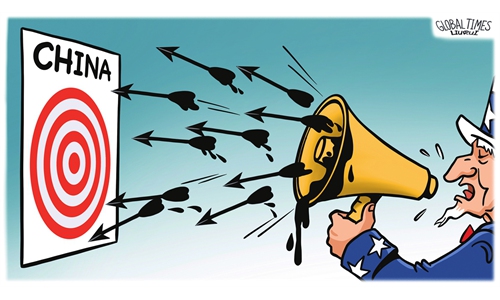
The origins of the controversy are not complicated. O'Leary, a well-known businessman, is promoting a major data center project in Utah that has drawn strong opposition from environmental groups and local residents over its enormous energy consumption and environmental impact. Appearing on a Fox News program on May 24, O'Leary chose not to address those concerns directly. Instead, he resorted to a familiar tactic: blaming China. He labeled the project's opponents as "Chinese government proxies," singled out specific organizations and individuals, and posed a series of inflammatory questions: "Who would want us to stop building our electrical grid? Who would want to stop us from having compute capacity to develop AI? Which adversary would want that? There's only one: It's China."
Although these accusations are unsubstantiated, they were amplified on Fox News. However, they quickly sparked controversy. Facing mounting public pressure and potential legal liability, O'Leary later retracted his remarks on social media, acknowledging that he had "no evidence" that the organizations or individuals he called out in the program were funded by China. Fox News subsequently issued its own statement, admitting that it is "likewise aware of no evidence that they are funded by, or acting in the direction of, or in coordination with Chinese interests in opposing Mr. O'Leary's project." Fox News Media also apologizes for the error, it said.
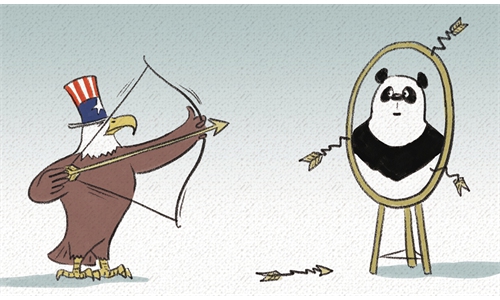
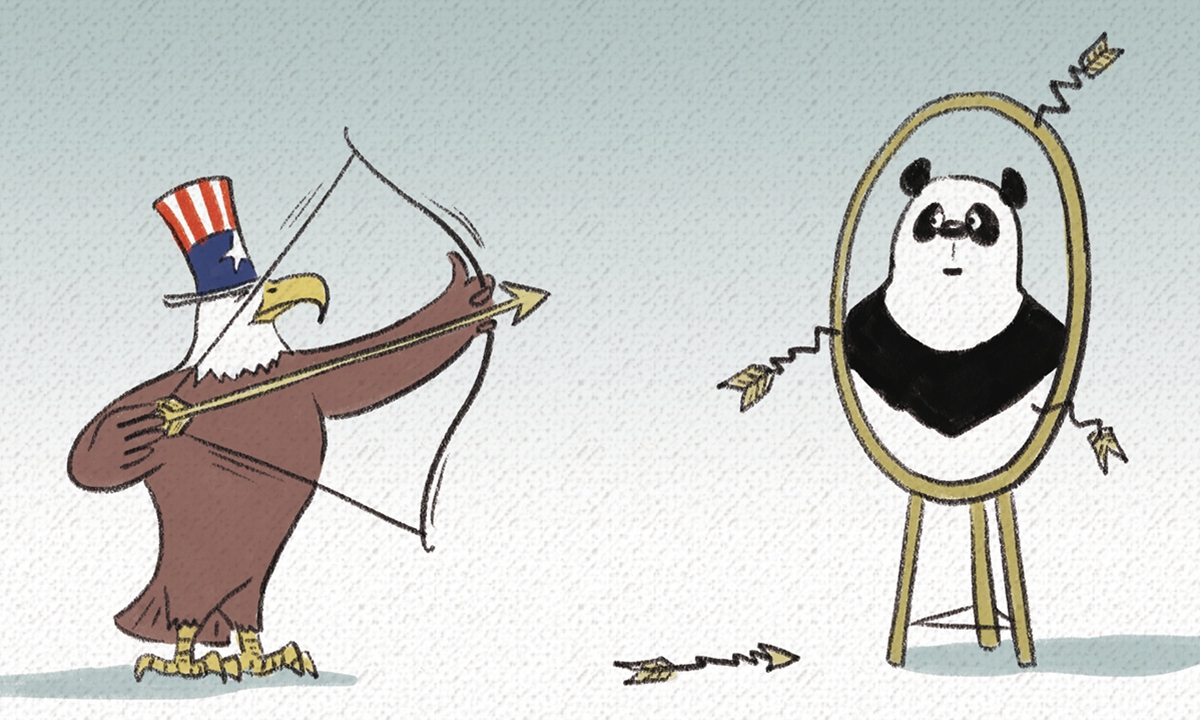
Who got slapped in the face by Fox News' apology? This slap lands on the face of the blustering O'Leary, on the structural bias of Fox News' China coverage, and on the sordid logic of all those who reflexively oppose everything about China and seek to harvest political capital by exploiting the "China threat." As a leading conservative media platform in the US, Fox News has long played a "vanguard" role on China-related issues, including promoting various fabricated or flimsy "China threat" narratives. This rare act of self-correction reveals an uncomfortable truth: when the "China threat" narrative becomes indiscriminate mudslinging, the media's own credibility has all gone.
This was not an isolated slip of the tongue but an epitome of the proliferation of "China threat" rhetoric across the US and Western public opinion sphere. As Flavio Hickel, a scholar at the Washington College, has observed, "China is a common and comfortable boogeyman in American politics, for right or for wrong." Whatever problems arise - manufacturing decline, technological competition, campus dissent, community disputes, corporate projects running into obstacles - someone is quick to point the finger directly at China as if pressing the button labeled "China" could simply make every problem disappear. From congressional hearings to think tank reports and talk shows, claims such as "China steals America's future" or "China is infiltrating US infrastructure" have become common. O'Leary's claims fit squarely within this atmosphere: a local commercial project controversy was elevated into an issue of national security and geopolitical confrontation. Such a "presumption of guilt" is rooted in entrenched ideological prejudice.
Fox News' apology for the baseless accusations involving China was in essence an act of damage control. It shows that the "China threat" narrative is no longer a foolproof political script, but a bubble of lies that can be punctured at any moment. Although some in the US remain trapped in rigid perceptions of China, more Americans now have access to channels that cut through the "information cocoon." Authoritative international institutions have repeatedly recognized China's contribution to global economic growth. American business leaders increasingly acknowledge the high cost of "decoupling" and supply chain disruption. From viral trends such as "becoming Chinese" and "Chinamaxxing" to the Xiaohongshu "cross-checking" phenomenon between Chinese and American internet users, growing numbers of American netizens are discovering an authentic China through social media and other nontraditional channels. According to Pew Research Center surveys, the share of Americans holding favorable views of China has nearly doubled over the past three years. These developments suggest that more Americans are observing China with their own eyes, breaking through outdated stereotypes.
Fox News has apologized, but the inertia to blame China has been far from stopping. However, falsehoods and emotionally driven confrontation will not halt progress of a major country. Success in competition has never come from demonizing an opponent. The legitimate aspirations of more than 1.4 billion Chinese people for development and a better life deserve full respect. If the US hopes to excel in the AI race and in broader international competition, what it needs is the courage to challenge itself and face others as they are - not to repeatedly exploit the "China threat" as a bogus political prop.
RELATED ARTICLES