ARTS / CULTURE & LEISURE
Tracing giant pandas from breeding bases to city zoos in China
Panda trails
By Published: Jul 01, 2026 08:34 PM

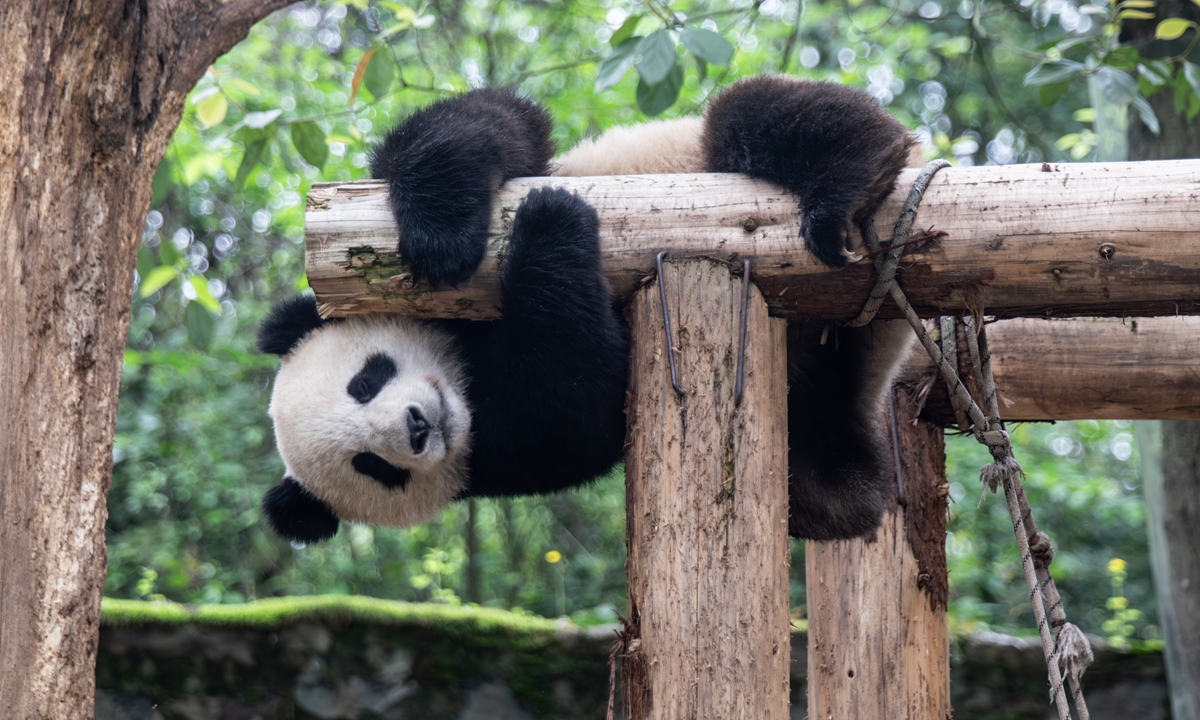
Giant panda Ao Ke Photo: Shan Jie/GT
Giant pandas are among the most iconic animals in the world. In zoos across different countries, they are always the headline attraction. But in the Chinese mainland - their natural homeland - visitors can see them in greater numbers, each with its own unique personality that has helped turn many of them into local and even national celebrities.As China's "national treasure" and a flagship species in global wildlife conservation, the giant panda has seen steady population recovery. According to Xinhua News Agency, the captive panda population had reached 808 individuals by the end of 2025, ensuring the sustainable development of the species.
Summer is also known as panda "birthday season" since most pandas are born during these warmer months and it has become one of the peak periods for panda tourism in China.
So how and where can visitors see these beloved animals, including internet-famous "star pandas"? And where do pandas that were born overseas live today? This guide offers a practical overview.
Visiting pandas' hometown
Southwest China's Sichuan Province is the natural home of giant pandas, and most captive pandas in China live here. For travelers hoping to see as many pandas as possible in one trip, its capital city Chengdu is the ideal starting point.
The Chengdu Research Base of Giant Panda Breeding is located in the northern part of the city.
Covering a large area, the site is possible to see dozens of pandas in a single day - from newborn cubs to active juveniles and even overseas-born returnees. Among these, the panda Yuan Meng, born in France, currently lives here.
One of the most famous residents is Hua Hua (He Hua), who lives in Villa No. 6. During peak seasons, visitors may wait hours just to catch a glimpse of her.
Another internet sensation is Qi Yi, who went viral in 2017 after a video showing her clinging affectionately to a keeper's leg went viral. According to China News Service, the clip accumulated over 838 million views across social media platforms.
Another major destination is the Wolong Shenshuping base of the China Conservation and Research Center for the Giant Panda (CCRCGP), located in Wenchuan county, Aba Tibetan and Qiang autonomous prefecture, Sichuan. It takes about two hours to reach from Chengdu by car, taxi, or shuttle bus.
Surrounded by mountains and forest landscapes, the base offers a more natural setting. Around 30-40 pandas can be seen in a single day, including mothers with cubs.
Its residents include Xiao Qiji, born in the US; Fu Bao, born in South Korea; and Bili, a panda that returned from Japan.
The Bifengxia Base in Ya'an, Southwest China's Sichuan Province, is also known for its more natural environment, where pandas often roll in the reddish and yellowish soil and mud, covering themselves in earthy colors as if wearing a "Bifengxia uniform." Ya'an is accessible by high-speed rail from Chengdu.
Xiang Xiang, who was born in Japan, now lives here, attracting a large number of Japanese visitors to the base.
A newer base under the CCRCGP in the city of Mianyang, which opened last year, now houses dozens of pandas, including Fu Wa, Feng Yi and her daughter Yiyi, both returned from Malaysia.
In nearby Dujiangyan, Sichuan Province, two more bases also attract many visitors due to their pleasant surroundings and accessible location.
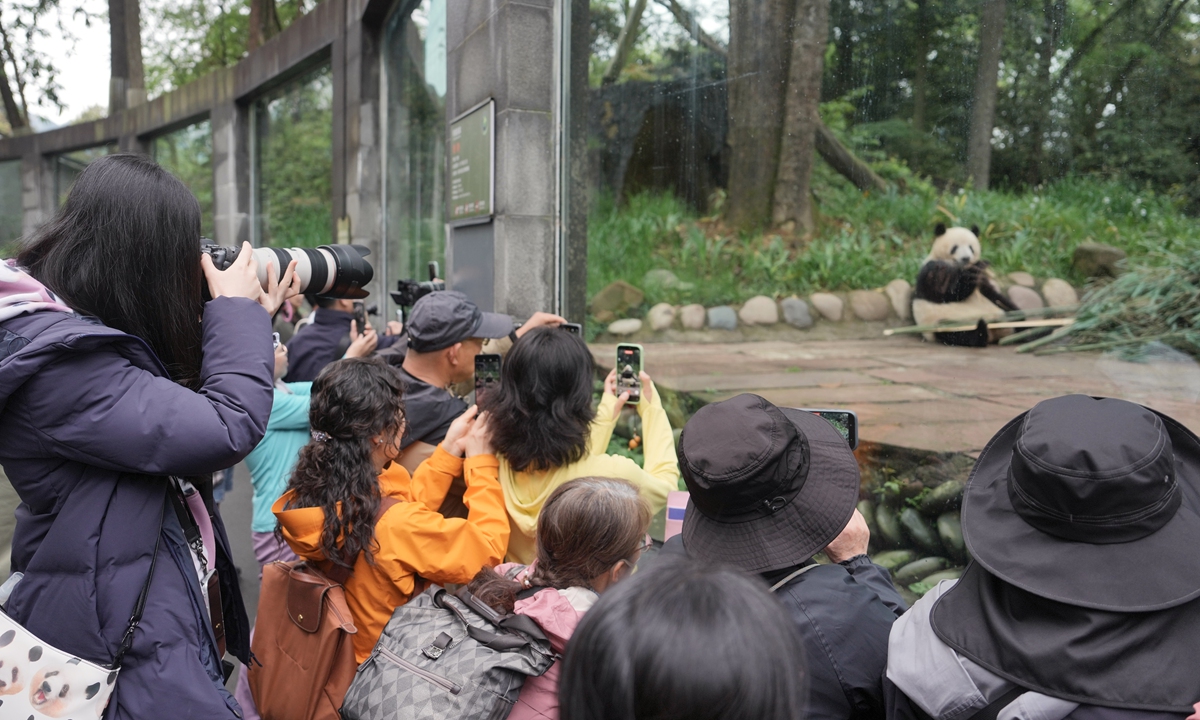
Giant panda Xiang Xiang meets fans in Ya'an, Sichuan Province. Photo: VCG
Panda celebritiesBeyond Sichuan, many cities across China also host panda residents in their zoos and wildlife parks.
More than ten pandas live at the Beijing Zoo. The most famous is Meng Lan, widely regarded as the zoo's ambassador.
His climbing antics and occasional "escape attempts" have made him one of the most recognizable pandas online.
In Guangzhou, South China's Guangdong Province, the Chimelong Safari Park has also built a strong panda family reputation. A young cub named Mei Zhu is considered one of its rising stars.
The Chongqing Zoo in Southwest China's Chongqing Municipality, is also well known for its panda population and enjoys a strong fan base both locally and internationally.
Qi Zai, the world's only known brown giant panda, lives in the Qinling Sibao Science Park in Zhouzhi county, Northwest China's Shaanxi Province, about two hours' drive from Xi'an. With his chocolate-colored fur and famously lazy, expressive demeanor, he has become a unique attraction.
The Qinling region of Shaanxi is also a natural habitat for wild pandas, making the area especially important for conservation.
Another panda star, Ling Yan, known for his comedic behavior, lives with his companion Mai Mai in a park deep in the mountains near Luoyang, Central China's Henan Province.
Wherever you travel in China, it is worth checking whether local zoos have pandas on display.
If you want to see pandas at their most active, visit them early in the morning or later in the afternoon. When temperatures rise, pandas tend to sleep indoors in air-conditioned areas. In contrast, they are usually more active in cooler weather, especially in winter when they enjoy snow and rain.
At fixed times each day, keepers provide fresh bamboo, bamboo shoots, carrots and specially made panda bread. If you time your visit well, you can watch their "eating broadcasts." For very young cubs, keepers sometimes feed them milk in small basins, though the cubs often refuse to wipe their mouths afterward.
Special events are often held to celebrate the pandas' birthdays or traditional festivals. Keepers may prepare celebratory "cakes" made of ice, bamboo and fruit. Most panda birthdays fall in summer, including those of Meng Lan and Hua Hua, both celebrated on July 4.
Finally, even when encountering the most adorable panda cubs, visitors are encouraged to remain quiet and respectful. Feeding is strictly prohibited, and disturbance should be avoided to ensure their well-being.
RELATED ARTICLES