China willing to expand cooperation list with Canada and reduce problems list: MOFCOM
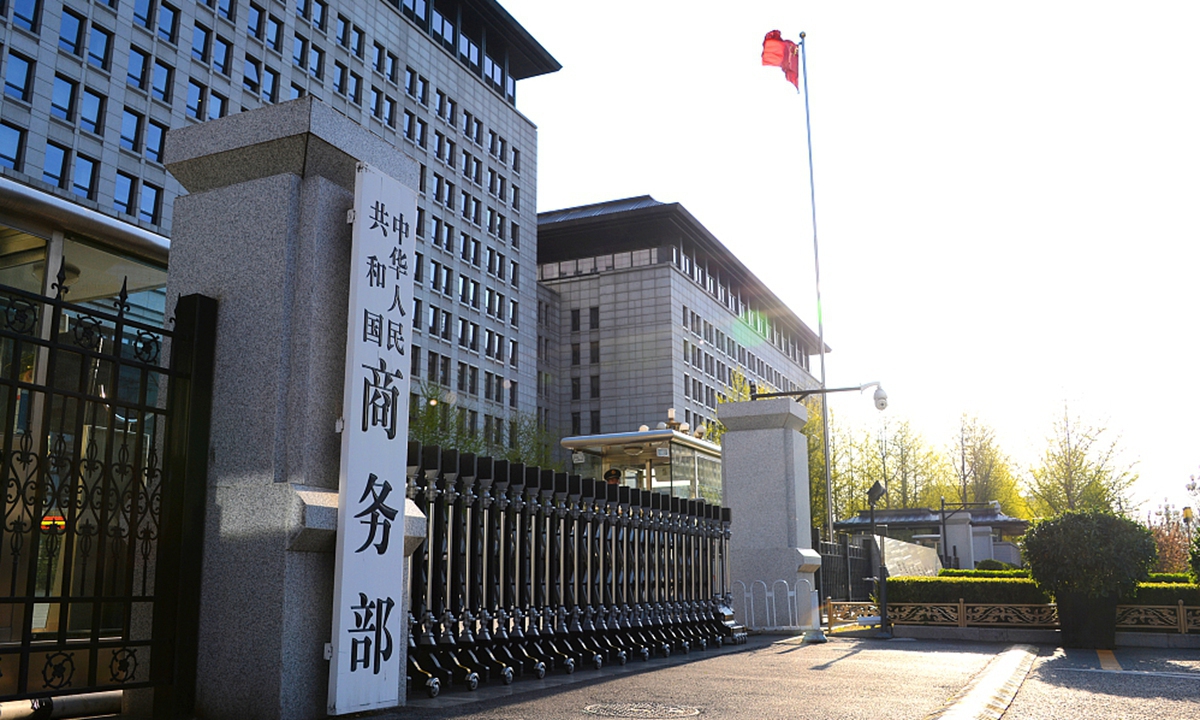
The Ministry of Commerce of China File photo: VCG
When asked to provide an update on the current state of China-Canada economic and trade relations, as Canadian Minister of International Trade Maninder Sidhu recently stated that the meeting with Chinese ministers this autumn will discuss further tariff reductions involving Canadian canola, peas, seafood, and other products, He Yadong, a spokesperson for China's Ministry of Commerce (MOFCOM), said on Thursday that China is willing to continue expanding the list of cooperation items with Canada, reducing the problems list, and promoting the healthy, stable, and sustainable development of China-Canada economic and trade relations.
"In January this year, guided by the important consensus reached by the leaders of the two countries, China and Canada signed a roadmap for economic and trade cooperation, establishing a preliminary joint arrangement for addressing bilateral economic and trade issues. Since then, the economic and trade teams of both sides have maintained close communication on follow-up implementation. China has always advocated resolving concerns through equal dialogue and consultation," said He Yadong.
From January 14 to 17, 2026, Canadian Prime Minister Mark Carney paid an official visit to China. During the visit, the two sides reached preliminary joint arrangements on addressing bilateral economic and trade issues and achieved consensus on respective concerns regarding economic and trade issues, including electric vehicles (EVs) and canola seed, said MOFCOM in February.
According to the joint arrangements, Canada will grant China an annual quota of 49,000 EVs, with those within the quota enjoying the most-favored-nation tariff rate of 6.1 percent and no additional 100 percent tax. The quota will increase by a certain proportion each year.
Regarding canola seeds, "China has always advocated resolving trade disputes through dialogue and consultation," He Yongqian, a spokesperson for the MOFCOM, said on January 22 during a press conference, adding that "We will fully consider Canada's reasonable demands within the framework of established rules and make a final ruling based on facts and evidence."
On January 28, China issued the final ruling of the anti-dumping investigation into canola imports originating in Canada, determining an anti-dumping duty rate of 5.9 percent for Canadian companies, with the definitive anti-dumping measures implemented from March 1 for a period of five years, the MOFCOM said in a statement.
Global Times
RELATED ARTICLES