ARTS / CULTURE & LEISURE
Exhibition revisits enduring grassroots China-US bonds
By Published: Jul 02, 2026 10:57 PM
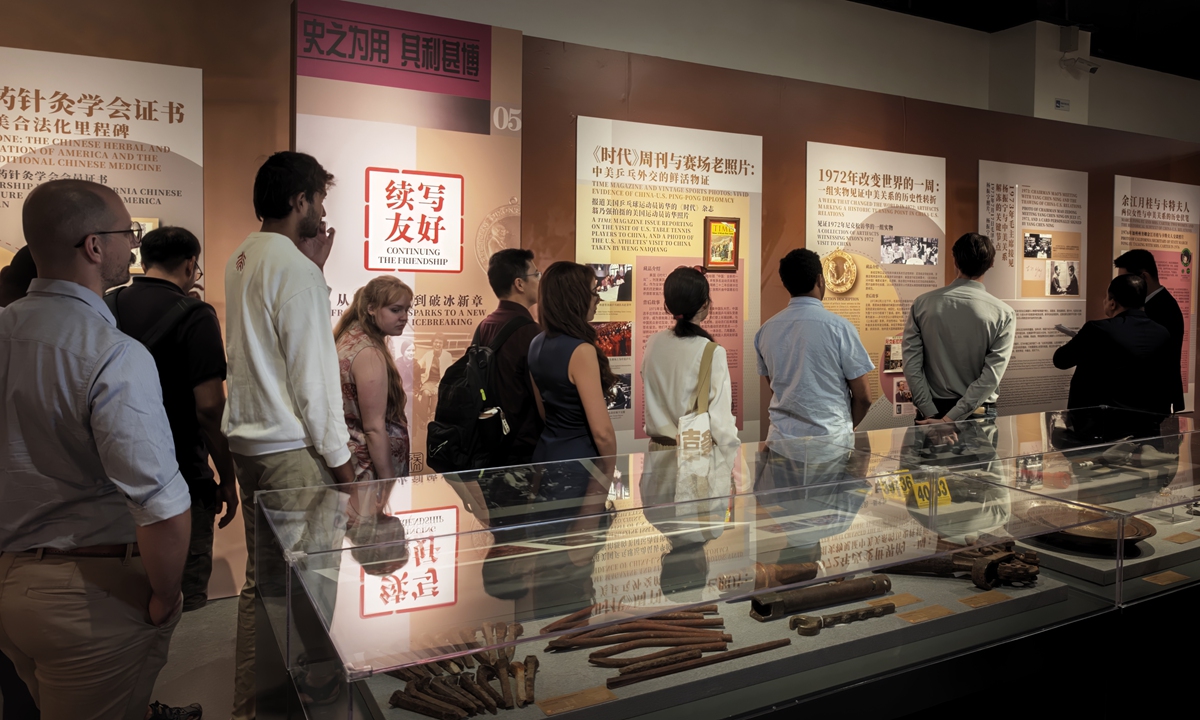
US youth visit the Tales of People-to-People Bonds Between China and the US exhibition at the Overseas Chinese History Museum of China in Beijing on June 30, 2026. Photos: Chen Xi/GT
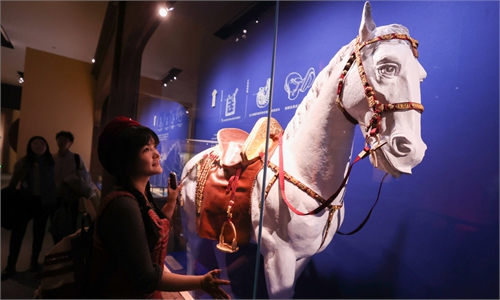
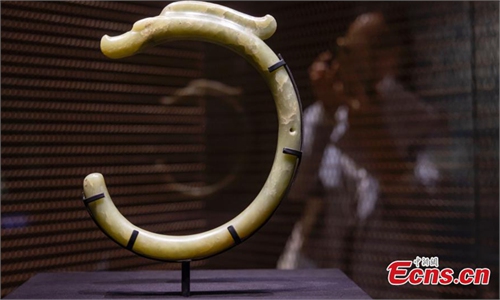
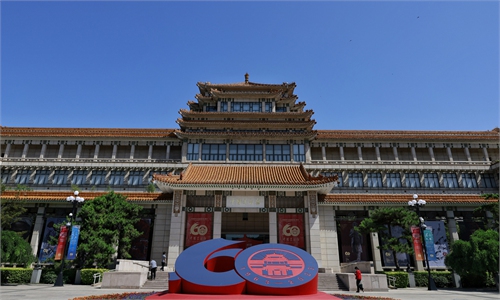
Walking through a newly opened exhibition at the Overseas Chinese History Museum of China, visitors can see rows of well-preserved cultural relics that tell stories of the century-long people-to-people exchanges between China and the US.Launched by the All-China Federation of Returned Overseas Chinese and hosted by the museum, the exhibition Tales of People-to-People Bonds Between China and the US reviews the historical context of grassroots interactions between the two nations since the founding of the US.
Divided into five chapters, the exhibition showcases 100 selected museum artifacts, covering diverse categories such as gold-mining pans, Chinese utensils, badges from the War of Resistance against Japanese Aggression (1931-45), and the personal belongings of famous sojourners.
These items record the arduous struggles and indelible contributions of overseas Chinese in the US, while highlighting the long-standing grassroots friendship bridging the two shores.
Graham Allison, a professor and founding dean of the Harvard Kennedy School, visited the exhibition and praised it as an inspiring display of bilateral civilian cooperation.
He noted that China-US relations are the world's most important bilateral ties, and the exhibition's core value lies in encouraging continued mutual learning and two-way exchanges.
In his inscribed message, Allison wrote at the museum that bilateral collaboration empowers both nations and fuels global peace and prosperity.
Following a tour of the exhibition, a sharing session and youth dialogue were held at the museum on Tuesday, gathering 25 US students studying at top universities in China.
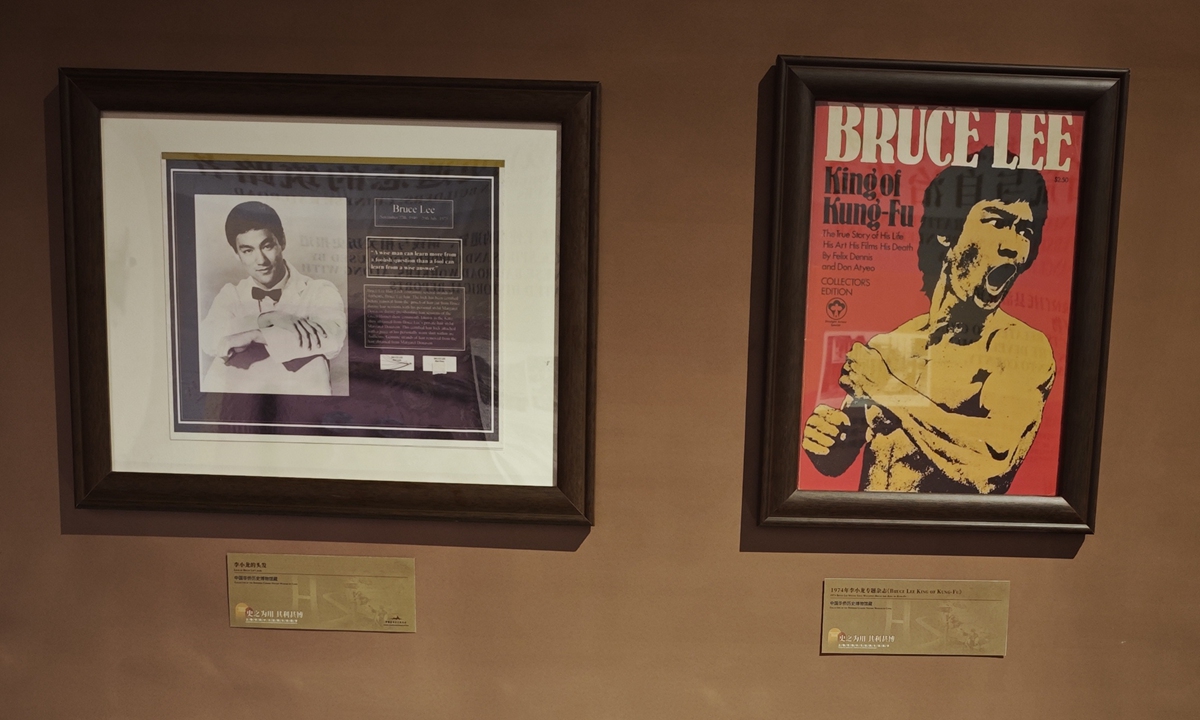
A photo and a movie poster featuring Bruce Lee Photo: Chen Xi/GT
Beating stereotypesFor Nauvoo Purl, a newly arrived US student in China, the exhibition's portrayal of Yung Wing, China's first overseas-educated student at Yale University, was the most touching takeaway.
Crossing the Pacific with no prior experience or community support to pursue studies in the US, Yung's journey from 170 years ago embodies the true essence of people-to-people diplomacy, she said.
Purl told the Global Times that Yung Wing did not break stereotypes through lectures, but through genuine presence and daily interactions.
"That was his genius. Not just that he crossed an ocean, but that he understood: You don't change minds with arguments alone. You change minds with encounters," she said.
Before Purl's arrival in China, she has formed fragmented views of the country via social media clips and cultural labels, which were simplified and divorced from reality.
Only after living and studying in China did she witness the authentic, diverse society behind the stereotypes, including devoted professors, diligent peers and warm-hearted ordinary residents.
Purl stressed that cross-cultural understanding can never be achieved through information alone.
In an era of saturated online information, people are easily trapped in one-sided narratives, while real mutual recognition comes from face-to-face encounters and shared life experiences.
Inspired by Yung Wing, Purl said she also wants to become a bridge between the two cultures, replacing biased stereotypes with real stories of her life in China, and spreading objective impressions of the country among her US friends.
"I am grateful to him, and to every ordinary person before me who believed that the ocean between us was not an argument for separation, but an invitation to reach across," she added.
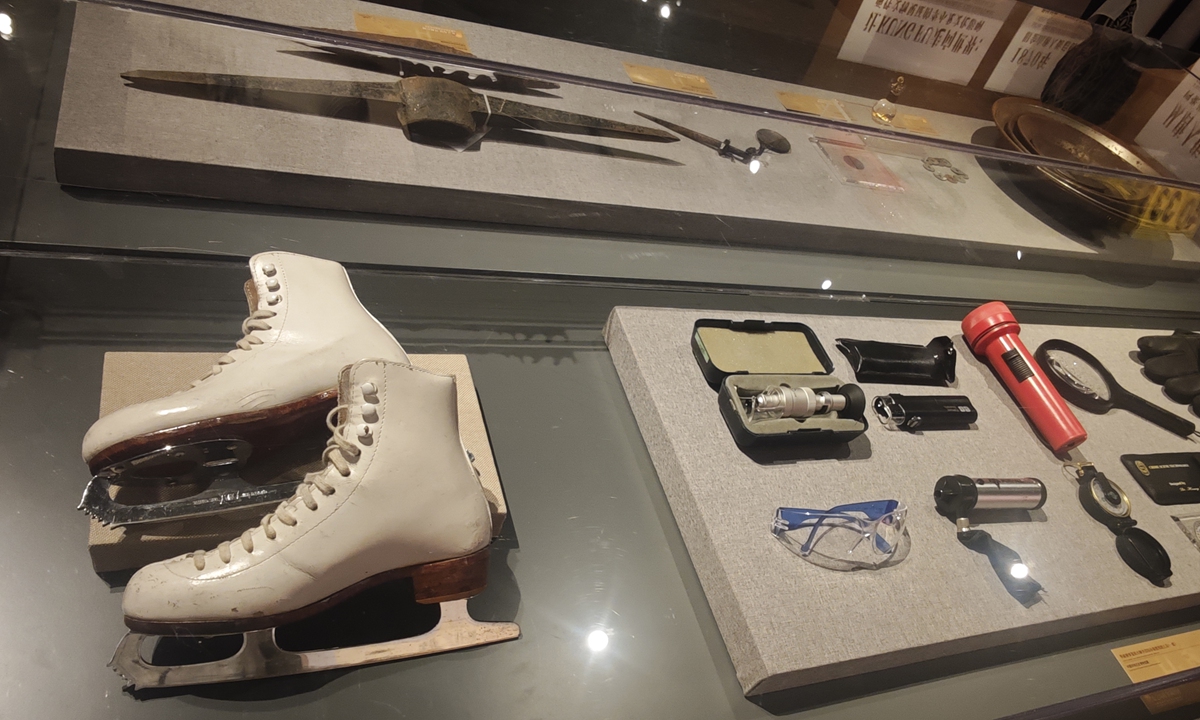
A pair of skates belonging to former world champion and Chinese-American figure skater Michelle Kwan on exhibit Photo: Chen Xi/GT
Grassroots effortsUnlike Purl's short-term experience in China, Alexander Witherspoon, a PhD candidate at Beijing Foreign Studies University who has lived in China for over a decade, has witnessed in-depth grassroots exchanges through long-term immersion and field research.
Focusing on practical cross-border cooperation, he cited two outstanding figures embodied in the exhibition's relics: Liu Jinnong and William Hinton.
Liu introduced traditional Chinese agricultural techniques to the US and made innovative breakthroughs in US citrus planting, while Hinton, a US farmer, brought modern US grain planting and mechanization technologies to rural China.
His book Fanshen: A Documentary of Revolution in a Chinese Village recorded China's rural transformations, helping generations of US readers understand China's grassroots development and earning him the title of "an old friend of China."
Witherspoon told the Global Times that he has visited three villages familiar to Hinton in the provinces of Shanxi and Hebei, experiencing the evolution of China's rural development and bilateral grassroots cooperation.
He noted that modern transportation, language education and policy openness have greatly facilitated cross-border exchanges compared with Hinton's era, creating unprecedented opportunities for two-way interactions.
Engaged in the global promotion of Chinese tea culture and rural economic cooperation for years, Witherspoon has run overseas blogs and online stores to promote Chinese tea, and organized cross-border volunteer exchanges.
He said that effective friendship between ordinary people relies on in-depth grassroots participation rather than superficial travel and visits.
As a researcher studying China's collective economy and geographical indication protection, he hopes to share China's rural development experiences and feasible solutions with the world via cross-cultural exchanges.
Amid the trend of "becoming Chinese" on Chinese social media, Witherspoon observed that US youths' interest in Chinese culture has diversified, covering not only traditional intangible heritage but also vibrant modern urban culture.
Authentic life experiences and inclusive cultural integration have become the most attractive charms of China for global young people.
"For generations, China's rich cultural sphere was largely out of reach for many people overseas, but digital media has now brought it within easy access. The appeal to dabble in a brand-new, little-known cultural world is the fundamental driver behind the viral 'living the Chinese way' trend sweeping global social media."
RELATED ARTICLES