ARTS / TV
Red-themed micro dramas draw young viewers into heroic stories
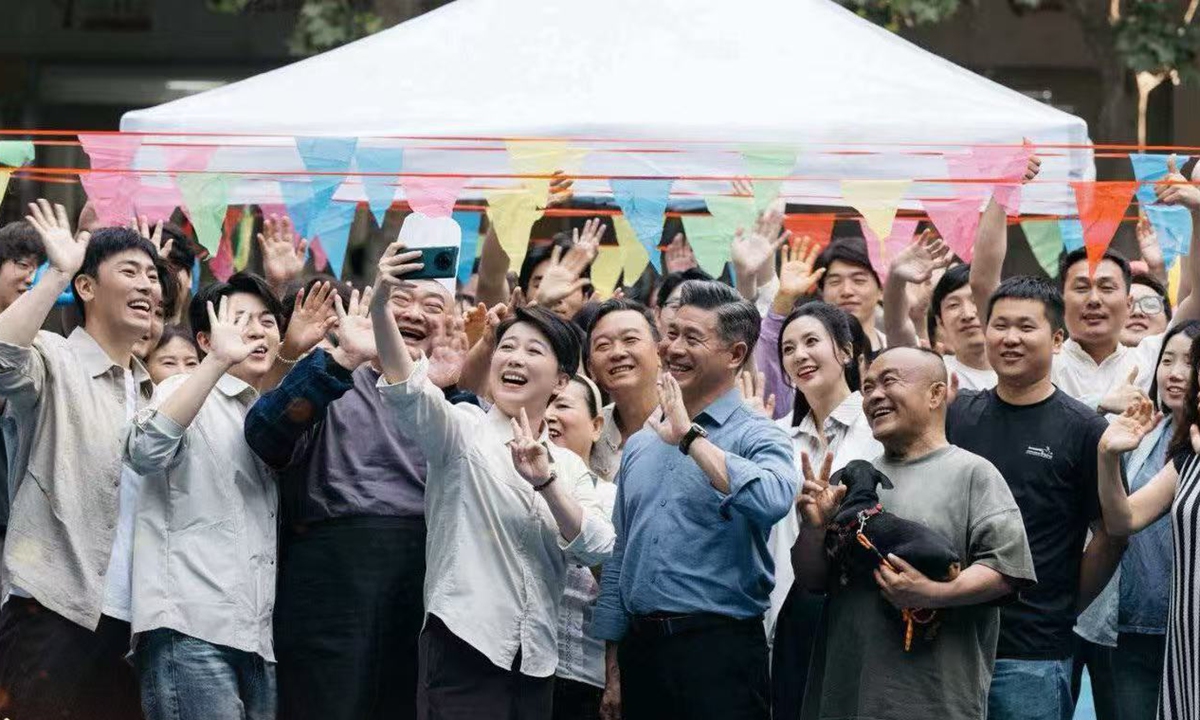
A poster of No Small Matter in Every Neighborhood : Xingyao Yunjian Photo: Courtesy of Henan Mobile Newspaper on Sina Weibo
Red-themed micro dramas have gained popularity across major domestic streaming platforms lately, sparking a fresh viewing frenzy among audiences.These productions build on the strengths of the micro-drama format, using concise storytelling, fast-paced narratives and technological innovation to present red-themed stories in ways that better align with contemporary viewing habits.
Recent releases illustrate the diversity of this trend. Shanghai-produced Hou Shaoqiu: Xingyao Yunjian revisits the life of early Communist martyr Hou Shaoqiu through AI-assisted reconstruction of historical settings.
The short drama The Message is adapted from writer Mai Jia's acclaimed spy franchise. While retaining the original focus on underground intelligence work, covert operations and the struggles of a hidden front, the series moves beyond a conventional remake approach by introducing new elements such as soul-swapping while preserving the original story's focus on underground resistance and revolutionary sacrifice.
Meanwhile, No Small Matter in Every Neighborhood turns its attention to grassroots lives. Drawing on real community cases in Zhengzhou, capital of Central China's Henan Province, the series offers a glimpse into the daily work of grassroots Party members serving local communities by centering on everyday community affairs, including fire safety upgrades and more for seniors and neighborhood dispute resolution.
Although their settings differ, these productions share a common creative strategy: telling larger historical and social stories through individual experiences, local communities and relatable characters.
The format itself also plays an important role. Its short episodes are well suited to today's viewing habits, allowing historical and contemporary themes to reach audiences in a more accessible format.
Micro dramas invite viewers into historical stories through digestible installments that can be watched on mobile devices during everyday moments. This format gives creators more ways to tell red-themed stories.
Cross-temporal storytelling, AI-assisted historical reconstruction and genre experimentation introduce fresh narrative approaches while remaining rooted in historical subjects.
The trend also reflects broader changes in China's rapidly expanding micro drama industry. Once largely associated with romance, the format is increasingly being adopted to serve the public interest.
Beyond revolutionary history, micro dramas are now being used to educate people about the law, science and more, suggesting that short-form storytelling is becoming a versatile medium for both entertainment and public service.
Sun Jiashan, a critic with the Beijing Federation of Literary and Art Circles, told the Global Times that micro dramas are becoming an established part of China's mainstream media landscape. They have the potential to promote cultural tourism while expanding into areas such as science popularization.
To fully realize that potential, he suggests strengthening policy support, improving industry standards, and enhancing copyright protection.
The rise of red-themed micro dramas shows the growing acceptance of short-form video as a platform for serious themes. When creators combine compelling storytelling with authentic human experiences, micro dramas demonstrate that small screens and short episodes can still tell stories of lasting historical significance, he added.
The challenge, however, is ensuring that rapid growth does not come at the expense of quality. The success of red-themed micro dramas will ultimately depend on the stories and storytelling. Historical authenticity, compelling characters and strong scripts remain essential regardless of episode length, noted Sun.
The author is a reporter with the Global Times. life@globaltimes.com.cn
RELATED ARTICLES