China to end vehicle, vessel tax breaks for some energy-saving, NEV models in 2027, amid rising NEV industry
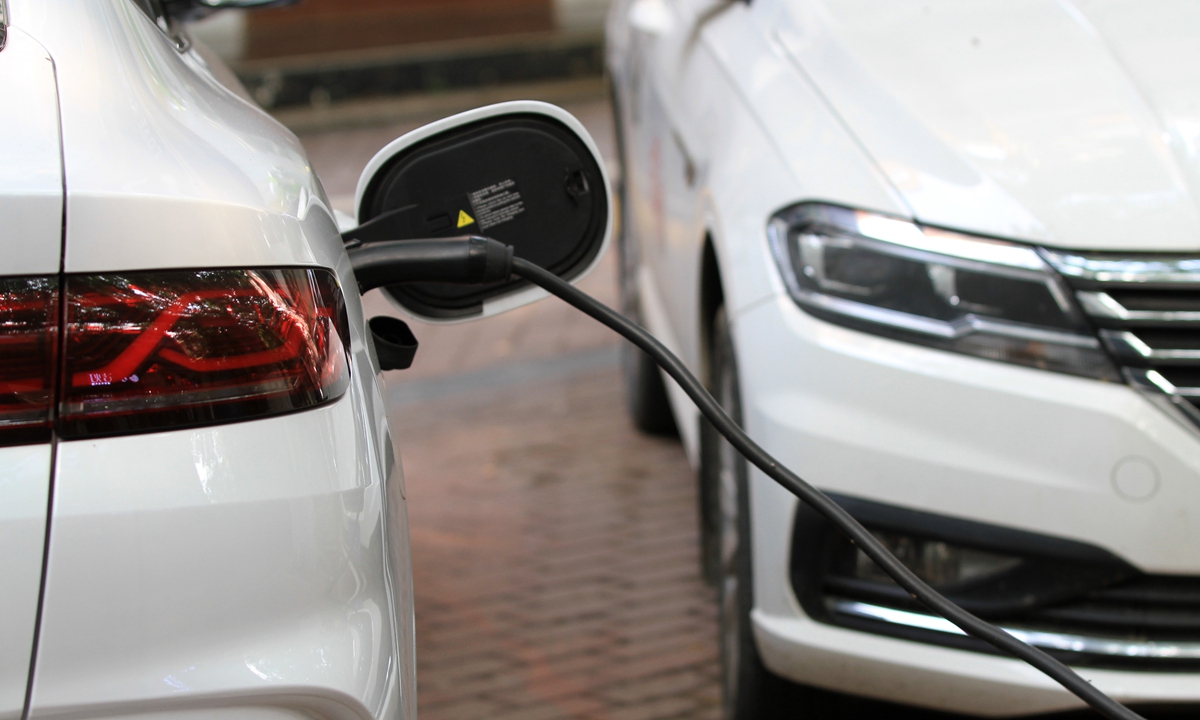
New-energy vehicles charge at a charging station in Huai'an, East China's Jiangsu Province on June 24, 2026. Photo: VCG
Chinese authorities announced on Friday that they will cancel preferential vehicle and vessel tax treatment for energy-saving vehicles and some new-energy commercial vehicles in 2027, pointing to the rapid development of the country's new-energy (NEV) industry and the need to promote tax fairness and strengthen the regulatory role of taxation in income distribution.
Starting from January 1, 2027, the policy of levying vehicle and vessel tax at half rate on energy-saving vehicles will be canceled, according to an announcement by the Ministry of Finance, the State Taxation Administration, and the Ministry of Industry and Information Technology on Friday.
Additionally, the vehicle and vessel tax exemption policy for pure electric commercial vehicles, plug-in (including range-extended) hybrid vehicles, and fuel cell commercial vehicles, will be abolished, read the announcement.
Those tax breaks were initially implemented to support the development of the NEV industry and promote energy conservation and emission reduction. Since its implementation in 2012, the preferential policy has played a positive role in encouraging consumers to purchase new energy and energy-saving vehicles and in promoting the development of the automobile industry, officials with the relevant department said.
In recent years, China's automobile industry, particularly the NEV sector, has developed rapidly. In 2025, China's NEV sales reached 16.49 million units, with NEVs accounting for more than 50 percent of domestic new vehicle sales.
Pure electric commercial vehicles, plug-in hybrid electric vehicles, fuel cell commercial vehicles, energy-saving vehicles, and conventional fuel vehicles are all high-value assets. According to relevant data, in 2025, the average selling price of plug-in hybrid passenger vehicles was 218,000 yuan, with some models priced at over one million yuan.
"Restoring the collection of vehicle and vessel tax on the above-mentioned types of vehicles will help promote tax fairness and strengthen the regulatory role of taxation in income distribution," said the officials.
According to the officials, pure electric passenger vehicles and fuel cell passenger vehicles are not within the scope of vehicle and vessel tax and are therefore exempt from the tax.
Global Times
RELATED ARTICLES