China, Europe ramp up engagements amid complex trade ties; observers say intensive high-level dialogue signals pragmatic posture
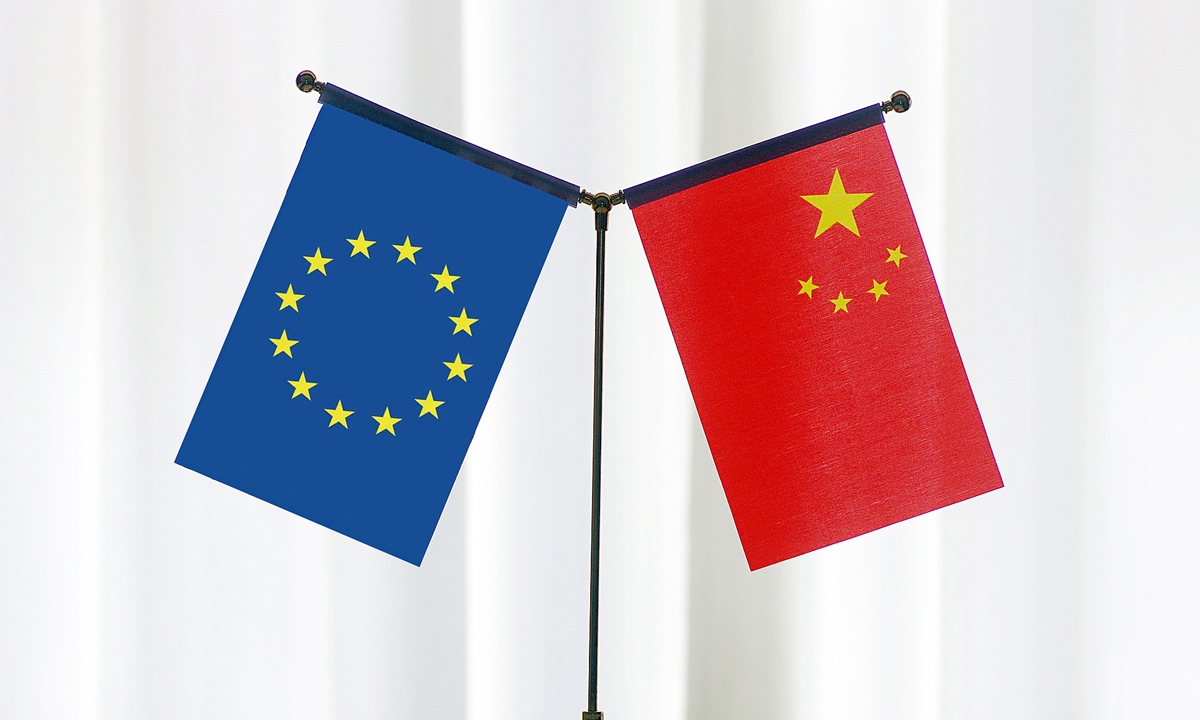
Photo: VCG
Amid complex economic and trade ties, China and Europe have stepped up high-level meetings and consultations. Chinese experts view these interactions as a sign of pragmatism, indicating that both sides are willing to resolve differences through dialogue at various levels and via bilateral mechanisms. However, they also urged Europe to approach relations with China rationally and respond seriously to China's concerns so as to allow engagements to yield meaningful outcomes.
China is ready to strengthen cooperation with Denmark in emerging areas such as the green economy, innovation and artificial intelligence, while deepening people-to-people exchanges to enhance friendship between the two peoples, Chinese Foreign Minister Wang Yi said on Friday during a meeting with Danish King Frederik X in Copenhagen, according to the Xinhua News Agency.
During his talks with Danish Foreign Minister Lars Lokke Rasmussen in Copenhagen on Thursday, Wang also noted that China and the EU are partners rather than rivals, and cooperation should remain the defining feature of China-EU relations, and expressed hope that Denmark will play a constructive role in promoting the sound and steady development of EU-China relations, Xinhua reported.
Wang's visit to Europe comes as a series of new interactions that China and Europe have been engaged in recent days, particularly after China and the EU have confirmed the official establishment of China-EU trade and investment consultation mechanism, according to a joint statement on Tuesday.
Europe's continued trade pressure on China has been met with a degree of pragmatism, as Europe's internal divisions and economic pressures prompt it to weigh the risks of an all-out trade conflict, Chinese experts said, noting that calls for practical cooperation are gaining traction as the deeply intertwined nature of China-Europe supply chains becomes increasingly difficult to ignore.
Engagement
During Wang's visit to Denmark, he said that China is ready to work with Denmark to expand trade and investment cooperation, launch discussions on a new version of the green joint work program, and deepen cooperation in scientific research and innovation, green shipping and health care, according to Xinhua.
In a world where uncertainties abound, Rasmussen said, Denmark attaches importance to China's role as a major country and is ready to strengthen communication and coordination with China through the United Nations and other platforms, uphold multilateralism and free trade, address various global challenges, and play a positive role in promoting EU-China dialogue and cooperation, per Xinhua.
The visit comes after a period of frequent European trade pressure on China. Chinese experts said the consensus reached between the two sides could serve as a reminder and example for European countries to return to a more rational approach toward trade with China.
On Thursday local time, Chinese Minister of Commerce Wang Wentao and UK Secretary of State for Business and Trade Peter Kyle co-chaired the 15th meeting of the China-UK Joint Economic and Trade Commission in London, where the two sides exchanged in-depth views on trade, investment, and regional and multilateral cooperation, according to China's Ministry of Commerce's (MOFCOM) official announcement on Friday.
Wang said that early this year, the leaders of China and the UK reached important consensus on developing a long-term and stable China-UK comprehensive strategic partnership, setting the direction for bilateral economic and trade cooperation. The two sides should make full use of the China-UK Joint Economic and Trade Commission mechanism to further advance trade and investment cooperation between the two countries, according to Wang.
Kyle said economic and trade cooperation is an important pillar of UK-China relations. The UK side is also ready to make good use of the UK-China WTO working group, strengthen policy communication and coordination with China, and promote positive progress on issues including WTO reform and e-commerce, Kyle said.
Current China-Europe economic and trade dialogue is essentially a form of management against the backdrop of long-standing structural tensions, but the fact that both sides are still willing to communicate through bilateral mechanisms and create a platform for problem-solving is itself a positive signal, Jian Junbo, director of the Center for China-Europe Relations at Fudan University's Institute of International Studies, told the Global Times on Friday.
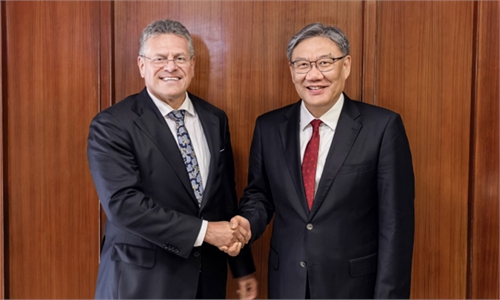
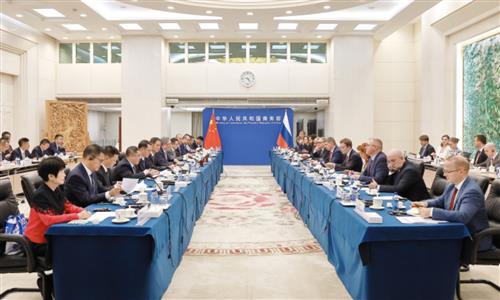
Just on Monday, Wang and European Commissioner for Trade and Economic Security and Interinstitutional Relations and Transparency Maros Šefčovič co-chaired the first meeting of China-EU trade and investment consultation mechanism in Brussels, Belgium, according to MOFCOM's another official announcement.
The two sides held comprehensive, in-depth, and constructive discussions on major China-EU economic and trade issues, and confirmed the official establishment of the China-EU trade and investment consultation mechanism, according to MOFCOM.
MOFCOM spokesperson He Yadong said Thursday when briefing on the first meeting of the China-EU trade and investment consultation mechanism that the mechanism is a newly established regular exchange platform between China and the EU in the economic and trade field, and that the two sides have agreed to hold one to two ministerial-level meetings each year.
For Europe, the more important question is how to manage differences in a rational and pragmatic way, rather than turning trade issues into political or security issues, Jian said. "If Europe truly wants to resolve problems through dialogue, it needs to respond more seriously to China's concerns and advance consultations on the basis of mutual respect and mutual benefit, instead of seeking cooperation on one hand while continuing to exert pressure on the other," he said.
Inseparable trade ties
Alongside the intensified high-level interactions, public sentiment also appears reluctant to see Europe stand on the opposite side of China.
In a survey conducted in June by pollster Public First across 24 EU countries, respondents in eight countries leaned toward stronger relations with China, nine favored the US and seven were effectively split between the two, according to Politico's Thursday report.
What's more — Europeans see China, and not the US, as the future. In the poll, 43 percent of respondents said they expected China to be Europe's most important trading partner in 10 years, according to the survey, the report said. Just 27 percent picked the US, it added.
However, the recent trade posture adopted by some European politicians toward China appears to run counter to public sentiment.
In recent years, Europe's trade protectionist practices toward China have moved beyond traditional tariff barriers toward a more complex containment approach that combines regulatory barriers, green barriers and long-arm jurisdiction.
This year, Europe has taken a series of trade protectionist measures targeting China, including, but not limited to, cross-border investigative practices targeting Chinese entities in its probe into Nuctech, the Industrial Acceleration Act, as well as the proposed revision of the Cybersecurity Act.
On Wednesday, new EU measures for protecting the European steel industry and limiting e-commerce small parcels took effect, essentially targeting Chinese firms and imports, according to a Thursday report by the Associated Press.
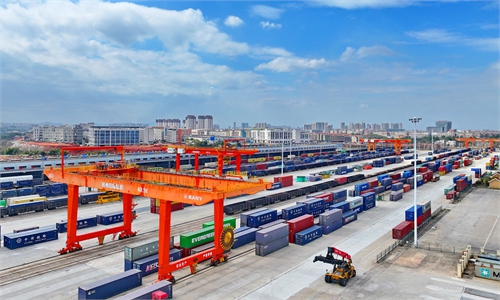
Jian said the high complementarity of China-Europe industrial chains means Europe remains closely tied to China in many areas, including climate response, energy transition and broader supply chain stability.
Jian said the complexity of China-Europe economic and trade ties lies in a basic reality: while some structural differences are difficult to avoid, the two sides have already become deeply connected through highly complementary supply and industrial chains.
One of the most telling recent examples is Europe's limited ability to cope with extreme heat.
Recent heatwaves sweeping across Europe have driven surging demand for Chinese-made cooling products, including air conditioners, fans and sun hats, leaving many items in short supply.
In fact, the EU has previously imposed tariff barriers on Chinese air conditioners on environmental grounds. However, these measures neither enhanced the competitiveness of European manufacturers nor meaningfully improved people's quality of life.
China-Europe economic and trade ties are inseparable because the two sides have built a mutually beneficial and deeply intertwined trade and industrial relationship over the years, Zhang Jian, a vice president of the China Institutes of Contemporary International Relations, told the Global Times on Friday. "Some in Europe have attempted to pursue so-called de-risking, or even decoupling, but reality has shown that the European market needs Chinese goods, while China's supply chains continue to help Europe address real-world problems," Zhang said.
China-Europe economic and trade cooperation is not a one-sided benefit, but a mutually beneficial relationship based on genuine market demand and complementary strengths, he noted.
RELATED ARTICLES