ARTS / CULTURE & LEISURE
New book presents Mawangdui tomb findings in easy-to-understand narrative
Making archaeology accessible
By Published: Jul 05, 2026 11:32 PM
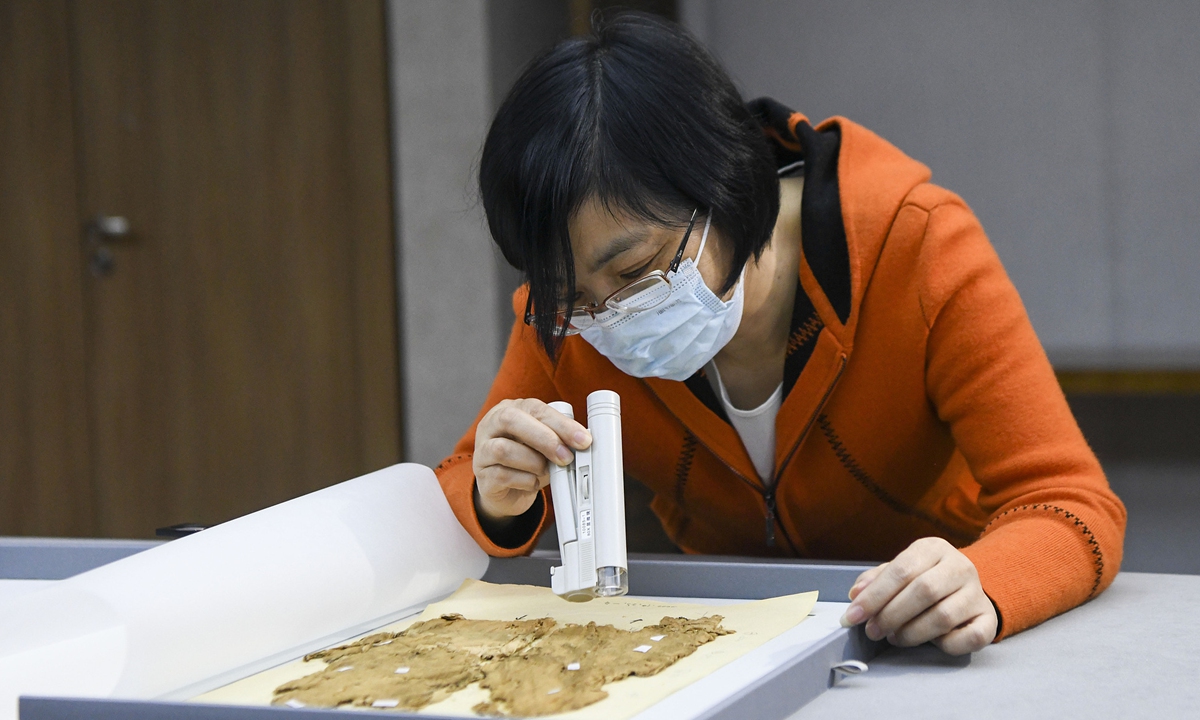
Yu Yanjiao examines silk textiles at Hunan Museum, Central China's Hunan Province. Photo: VCG
A new landmark publication is bringing the fruitful archaeological achievements from the excavation of the world-famous Mawangdui, an ancient Chinese tomb complex from the Western Han Dynasty (206BC-AD25), out of academic archives and into the hands of general readers. The publishing of Archaeological Report for Everyone: The Mawangdui Han Tombs of Changsha - led by Yu Yanjiao, one of the most influential Chinese archaeologists in contemporary Mawangdui research - offers the first popularized, visually enriched archaeological report dedicated to the iconic tomb site from over 2,000 years ago.
Transforming decades of obscure, jargon-heavy academic findings into approachable narratives, illustrations and interactive content, the book unpacks the tomb's milestone achievements in ancient Chinese medicine, craftsmanship and geographical cognition, allowing laypersons worldwide to access the site's underexplored cultural value, according to the book's introduction.
Mawangdui in Changsha, Central China's Huanan Province is home to the grand tombs of the Marquis of Dai of the Han Dynasty, as well as his wife and son. The site gained international attention in the 1970s when researchers opened a coffin and found a female corpse that showed no signs of decay. The corpse, now preserved in the museum, is said to be that of a woman named Lady Xin Zhui, the wife of the Marquis of Dai, per the Xinhua News Agency.
The project to publish the book was headed by Yu, widely regarded as China's preeminent authority on Mawangdui studies. As director of Hunan Museum Mawangdui Han Dynasty Tombs and Collections Research and Exhibition Center, Yu has dedicated more than four decades exclusively to unraveling the site's secrets, placing her at the center of every major post-excavation study, technical verification and academic revision since the original dig.
"This book takes what we have confirmed so far, corrects mistakes made in the original 1970s reports, and tries to explain why Mawangdui matters - not just for China, but for the world," Yu told the Global Times in an exclusive interview.
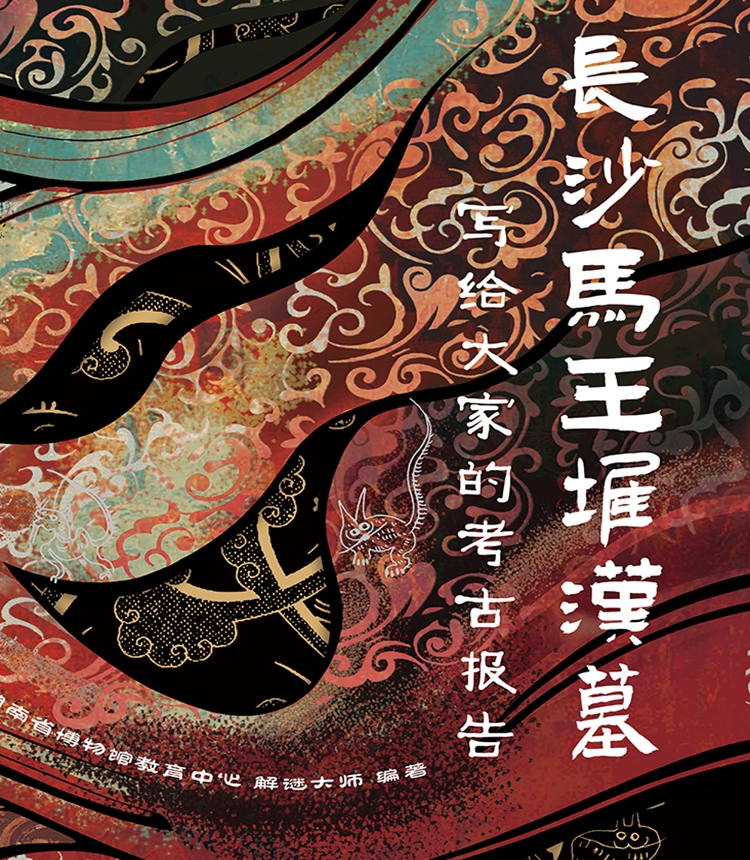
The cover of Archaeological Report for Everyone: The Mawangdui Han Tombs of Changsha Photo: Courtesy of Yilin Press
Ancient medical wisdom
While Mawangdui's gossamer-thin silk garments and intricate T-shaped silk paintings have long captured public attention, the tomb's ancient medical and wellness relics stand out as its most internationally influential and academically groundbreaking treasures, according to Yu.
She noted that unlike the widely showcased artworks, these less known medical artifacts have become the core focus of overseas research, best embodying the Han Dynasty's sophisticated scientific and technological prowess.
"Previously, Western academia generally believed that systematic wellness medicine took shape only in later centuries. The massive finds at Mawangdui push the maturity of China's systematic health preservation, meridian medicine and dietary therapy directly back to the early Western Han Dynasty," Yu said.
The new book dedicates a special chapter to interpreting the iconic Daoyin Tu (Daoyin Illustration) unearthed from Mawangdui Tomb No.3, the earliest existing colored painting of traditional Chinese qigong and therapeutic body exercises.
As an ancient health regimen inherited from traditional Chinese medicine (TCM) and Taoist practices, Daoyin combines regulated breathing and physical movement to treat illnesses and maintain wellness. The scroll features 44 figures of diverse ages and genders performing varied exercises, covering sitting, standing, stretching and exercising with simple tools. Covering daily fitness conditioning and targeted medical treatment, the 31 accompanying textual annotations clearly record each movement's name and therapeutic functions, presenting a complete scientific health system two millennia ahead of its time, according to the book's introduction.
"Daoyin Tu can specifically treat various physical and mental diseases and is regarded as a 'fitness map of the Han Dynasty' from 2,000 years ago," Yu said.
Far from obsolete ancient records, this Han medical wisdom remains practically viable today. Health formulas derived from Mawangdui manuscripts have been clinically applied for decades as a living inheritance of TCM.
Most notably, pathological analysis of the tomb owner, the Lady Xin Zhui, further proves the maturity of Han healthcare philosophy. Despite suffering from coronary disease, gallstones and parasitic infections, the Han noblewoman lived a rather long life, having benefited from the dynasty's preventive, mind-body holistic wellness concepts.
"These findings have overturned Western stereotypes that dismiss ancient Eastern medicine as mere primitive empiricism, revealing its rigorous, systematic scientific logic," Yu said.
Accessible public knowledge
For generations, Mawangdui's extraordinary discoveries have been locked away in dense, jargon-heavy academic publications, creating a wide gap between groundbreaking research and public understanding. It is this divide that the new book sets out to close, marking a pioneering effort to translate leading archaeological achievements into accessible public knowledge.
Dai Ying, one of the co-authors, told the Global Times that many museum visitors struggle to connect ancient artifacts with modern life, viewing them as distant, irrelevant relics of the past. To fix this disconnection, the book abandons dry itemized data lists and favors visual storytelling, incorporating high-definition restorations, interactive fold-out pages and contextual scene diagrams. It unpacks the daily functions, decorative meanings and burial traditions behind each relic.
"Every detail is rigorously vetted and updated with half a century of accumulated research," said Dai.
"Mawangdui is not just a Chinese heritage site. It belongs to anyone in the world who wants to understand how a brilliant civilization lived, healed and imagined the cosmos. This book is an invitation," Yu said.
RELATED ARTICLES