ARTS / CULTURE & LEISURE
New regulations to strengthen protection of UNESCO-listed ancient Silk Road tombs in China
By Published: Jul 06, 2026 11:25 PM


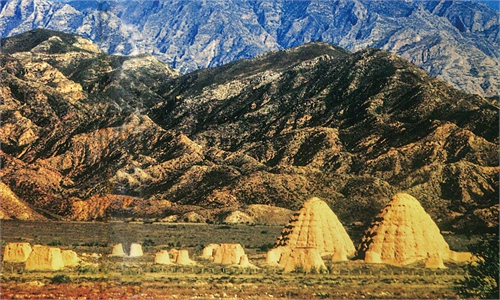
The Xixia Imperial Tombs in Yinchuan, Northwest China's Ningxia Hui Autonomous Region Photo: VCG
As the Xixia Imperial Tombs in Yinchuan, Northwest China's Ningxia Hui Autonomous Region, celebrate the first anniversary of their inclusion on the UNESCO World Heritage List, brand-new local regulations are set to take effect on Saturday that will provide them improved protection.The new regulations represent a legal shield specifically designed for the World Cultural Heritage site, aligning with UNESCO conventions and international standards.
Known as the "Oriental Pyramids," the Xixia Imperial Tombs stand at the eastern foothills of the Helan Mountains. The site contains the largest, highest-ranked, and best-preserved royal mausoleum complex of the Tangut-led Xixia Dynasty (1038-1227) still in existence.
In July 2025, the tombs were officially inscribed on the World Heritage List, raising the need for higher protection standards than those required by previous local regulations. In response, local authorities spent nine months developing these comprehensive new regulations, according to the China News Service.
The updated rules establish a concept of "holistic protection," broadening the scope of protected elements to include not just the imperial tombs themselves but also associated burial sites, northern architectural relics, flood control works, unearthed relics, historical and natural landscapes, and any environmental features reflecting the site's outstanding universal value, as reported by Ningxia Daily.
Facing growing pressures from rain erosion in the arid and semi-arid region and threats posed by nearby construction, the regulation adopts a differentiated management strategy. Based on heritage management planning, the site is divided into core heritage zones and buffer areas.
Activities like grazing, land reclamation, soil extraction, and sand mining are banned. Even unauthorized driving into the heritage zone, an action that could damage surface relics, faces defined penalties for the first time.
To further encourage the study, interpretation, and use of this heritage, the new rules actively promote research in the fields of Xixia studies, archaeology, and history.
Heritage revitalization and sustainability are also highlighted. The regulations state that management authorities should build smart museums and digital display platforms for the site, enabling digital protection and presentation. Interactive, immersive, and experiential exhibitions are encouraged. Activities such as artistic creations and cultural product development must be carried out in accordance with the law.
"The launch of these regulations is of great significance," Liu Zheng, a member of the Chinese Society of Cultural Relics, told the Global Times on Monday.
Liu noted out that the new rules mark a major step up from previous laws, not only protecting the relics themselves but also coordinating the protection of the surrounding ecosystem, human environment, and the site's overall appearance.
Du Jianlu, dean of the School of Ethnology and History at Ningxia University, also sees the regulations as a key tool for improved protection.
He told the Global Times that the rules draw on experience of heritage protection efforts across China, and that their drafting included wide public consultation and expert input.
RELATED ARTICLES